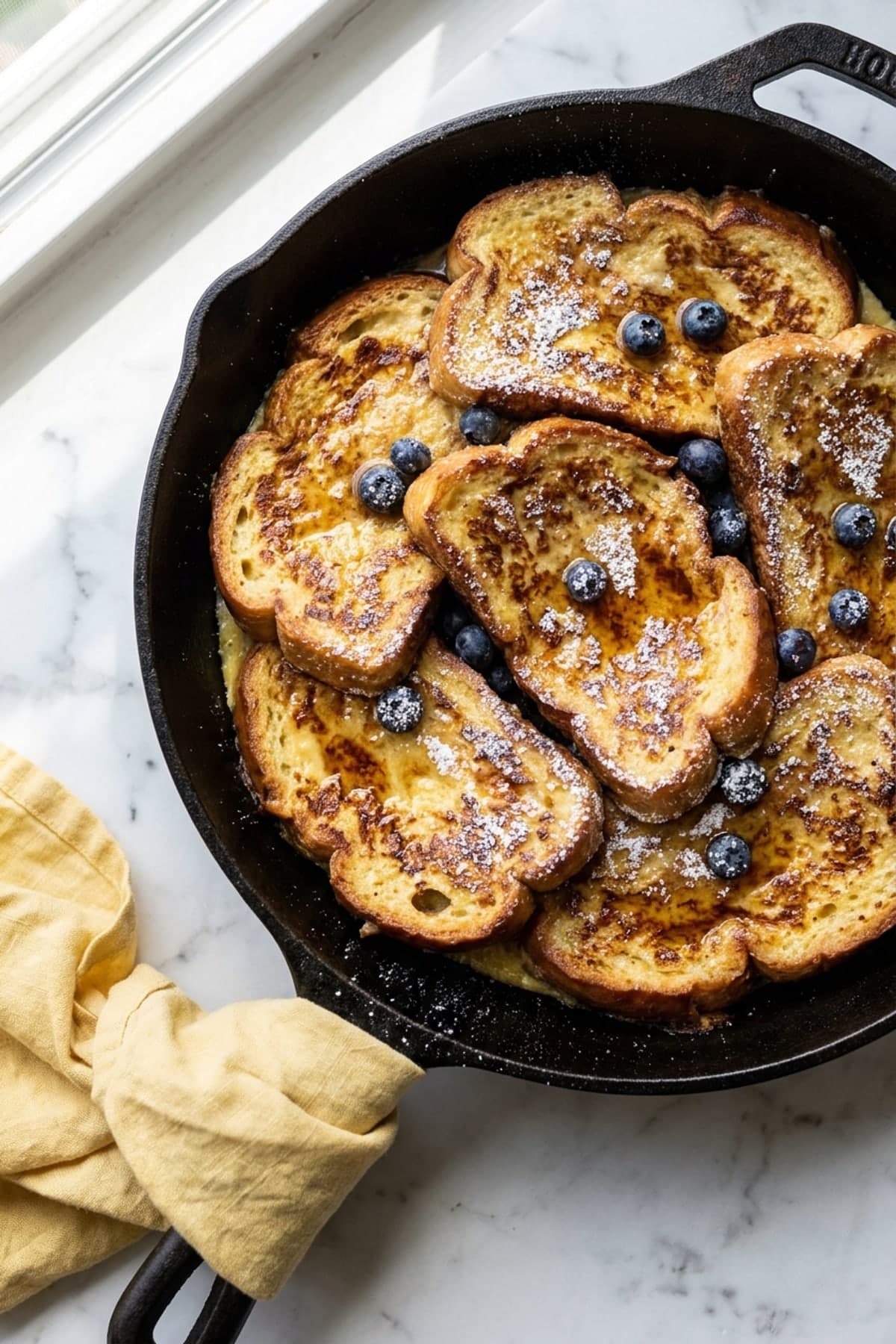
Brioche French Toast With a Shorter Soak
35 min total4 servings15 min prep20 min cookServes 4Category: French Toast Pancakes
- Make-ahead
Brioche absorbs custard quickly because its crumb is rich and tender. A 20-second soak on each side makes the slices heavier without surrendering their straight corners. Medium-low skillet heat then builds mottled amber surfaces while the vanilla center has time to set softly.
Four servings move through the skillet in uncrowded batches, then rest on a rack instead of a stack. The rack also makes freezing flat straightforward. For Tuesday breakfast, reheat a portion for 60 seconds and check the middle; a toaster oven gives the browned edge more resilience.
Why this works
- Weighted ingredients produce a plush center without the collapse caused by an overly long soak, keeping the recipe's moisture balance repeatable.
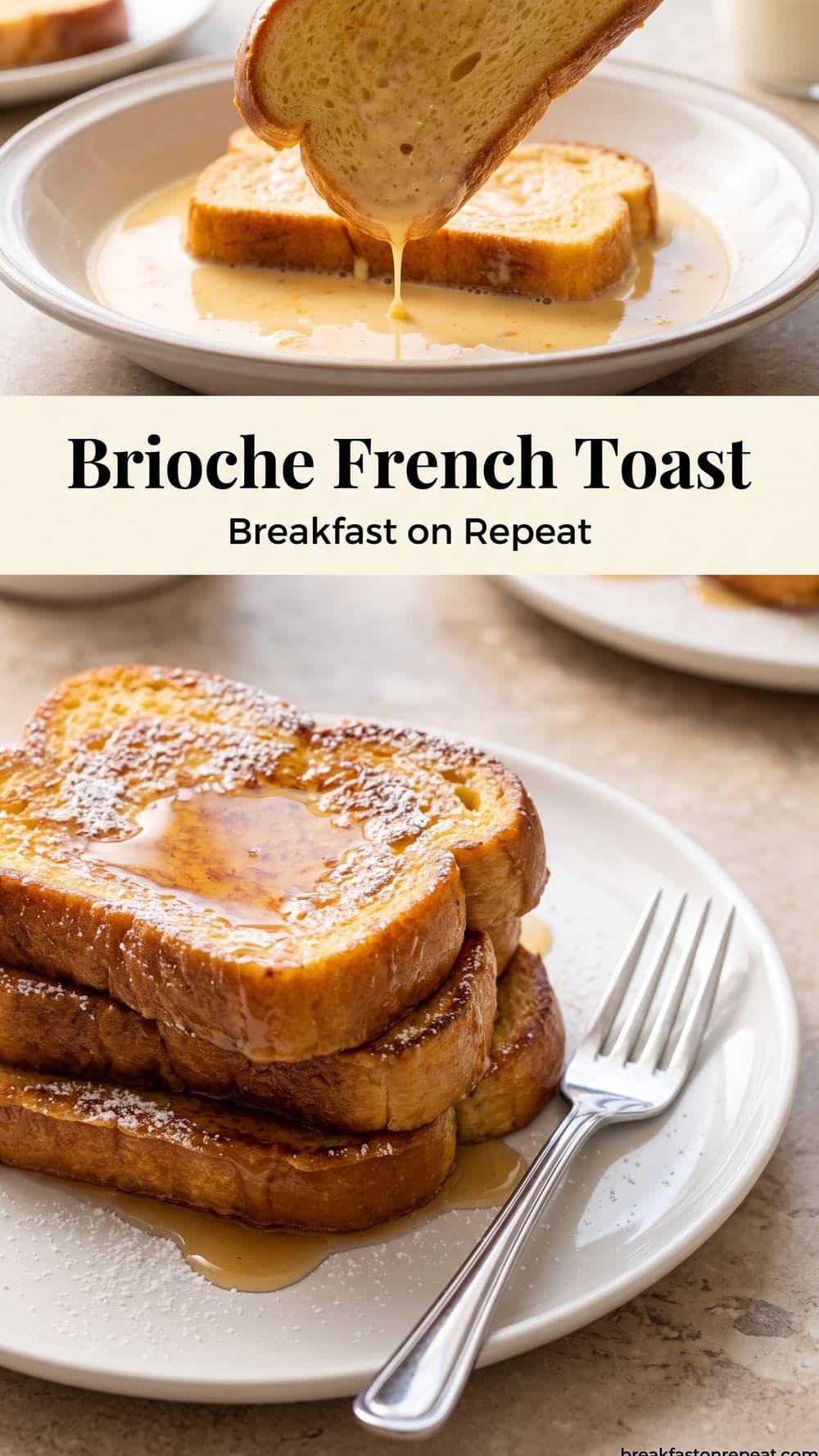
- A brioche slice after 20 seconds per side in custard, heavier and evenly damp but still straight at the corners provides an assembly checkpoint before the final texture is fixed.
- The chosen large cast-iron skillet matches the depth and heat path used by the timing, which makes the center cue more dependable.
- Storage directions distinguish the first-day ideal from realistic leftovers, while the 60-second method keeps weekday work brief.
Ingredients
- 8 slices brioche, 1 inch thick (480 g)
- 4 large eggs (200 g)
- 1 cup whole milk (240 g)
- 1/2 cup heavy cream (120 g)
- 2 tablespoons granulated sugar (25 g)
- 2 teaspoons vanilla extract (10 g)
- 1 teaspoon ground cinnamon (3 g)
- 1/2 teaspoon fine salt (3 g)
- 3 tablespoons unsalted butter, divided (42 g)
- 1 cup strawberries for serving (150 g)
- 2 tablespoons maple syrup (40 g)
Ingredient notes
- 8 slices brioche, 1 inch thick: Use the exact listed form and weight because it supplies the recipe's main structure. Pieces can vary naturally, but keep their overall size close enough to hydrate or cook at the same pace.
- Eggs and dairy: Whisk until no distinct egg-white strands remain. A uniform mixture reaches corners and gaps evenly; casual extra liquid would delay the center and weaken the portion after cooling.
- Flavoring: Measure the salt, spice and sweetener instead of correcting heavily at the end. The goal is to support the breakfast's main ingredient, not cover the contrast that makes this version specific.
- Texture additions: Keep cheese, fruit, vegetables or meat in the condition stated in the ingredient list. Drain or dry-cook wet additions, and hold crisp toppings separately when the instructions say to do so.
- Vessel choice: The large cast-iron skillet gives the intended depth and exposed surface. Grease or prepare it carefully, especially at edges where egg, bread or oats can cling during portioning.
How to make Brioche French Toast With a Shorter Soak
Prepare the foundation
Whisk eggs, milk, cream, sugar, vanilla, cinnamon and salt in a wide shallow dish until no white streaks remain. Cut the brioche into eight slices about 1 inch thick and place them beside the custard. Heat a large cast-iron skillet over medium-low so the pan is ready as each small batch finishes soaking. Keep the working layer visibly even before moving forward.
Reach the assembly checkpoint
Set two brioche slices in the custard for 20 seconds, turn and soak the second side for 20 seconds. Lift them with a thin spatula and let excess custard drip back. The slices should feel heavier and evenly damp but keep straight corners. Soak only the pieces that can move directly into the skillet. Pause here and correct any obvious dry or crowded patch.
Cook or chill to the center cue
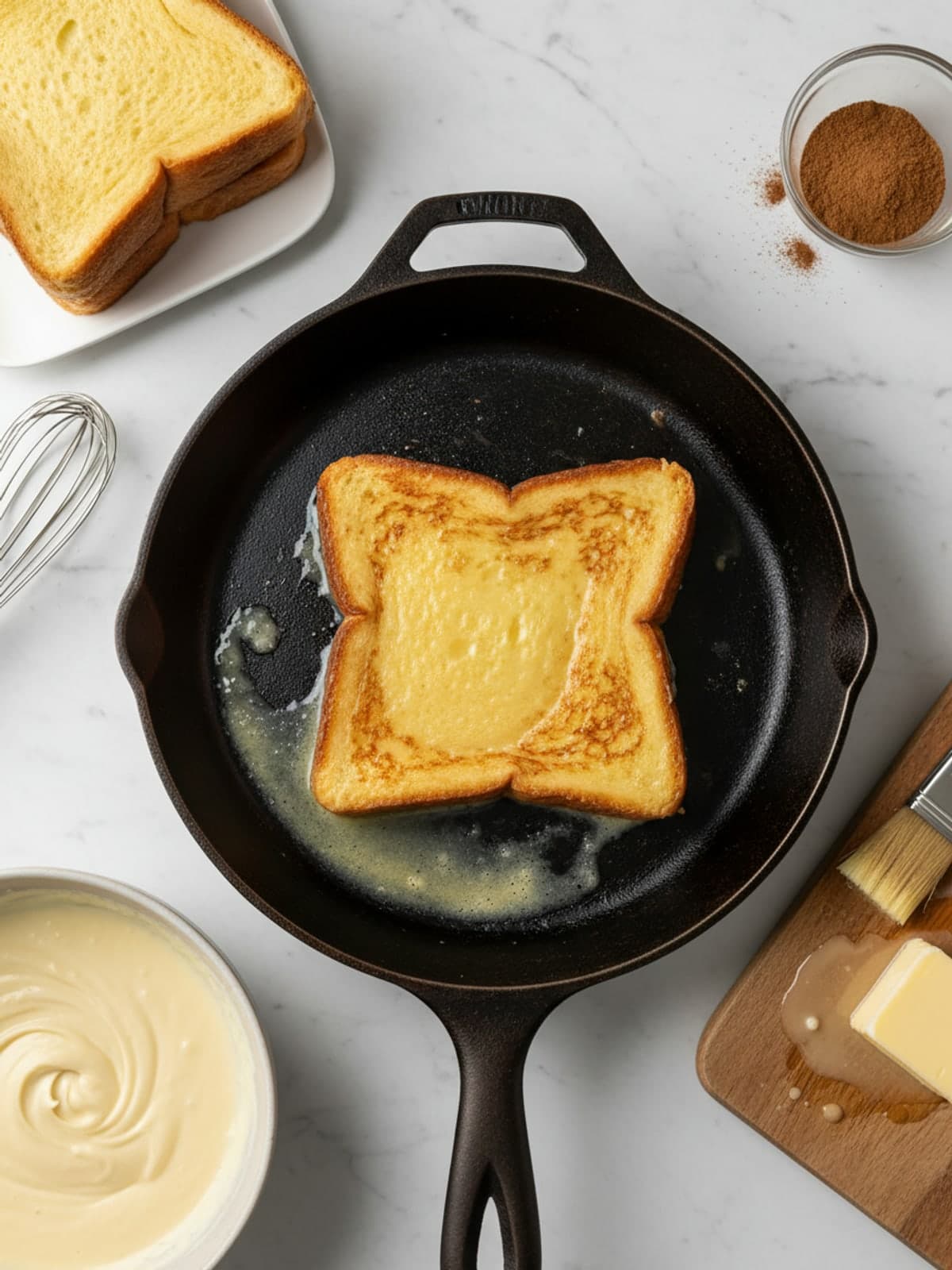
Melt one third of the butter in the skillet and add two or three slices without touching. Cook for about 3 minutes, until the underside has mottled amber patches. Turn and cook for 2 to 3 minutes more. The center should spring back softly under the spatula instead of sloshing. Repeat with fresh butter for the remaining batches. Use the described center evidence before ending this stage.
Finish without losing texture
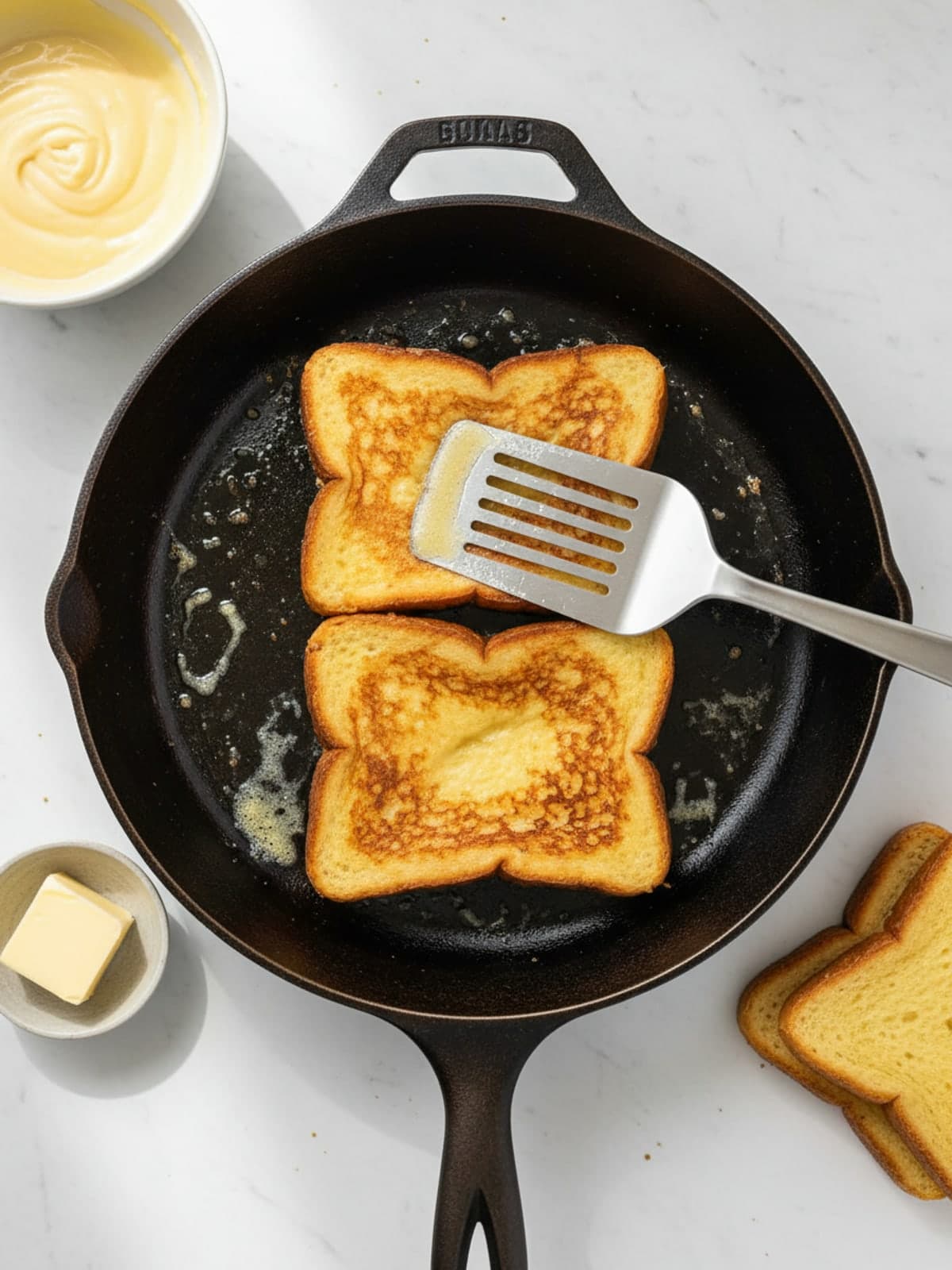
Transfer finished slices to a wire rack over a sheet pan; stacking traps moisture against the crust. Hold the rack in a 200°F (95°C) oven only while the final batch cooks. Serve two slices per person with berries and maple syrup added at the table, preserving the browned surface until the last moment. Handle the first portion gently so its structure remains visible.
The recipe
Brioche French Toast With a Shorter Soak
PrintA practical recipe for thick brioche French toast with vanilla custard and mottled butter-browned edges, with measured ingredients, exact timing, clear assembly order and decisive texture cues for 4 servings.
Course: Breakfast · Cuisine: American
- Prep
- 15 min
- Cook
- 20 min
- Total
- 35 min
- Yield
- 4 servings
Nutrition Facts
Per serving. Recipe yield: 4 servings.
- Calories
- 701 kcal
- Protein
- 20.8 g
- Carbs
- 78.2 g
- Fat
- 33.4 g
- Fiber
- 3.9 g
- Sugar
- 20.7 g
- Sodium
- 855 mg
For 2 servings, scaled from the per-serving figures. Recipe yield: 4 servings.
- Calories
- 1402 kcal
- Protein
- 41.6 g
- Carbs
- 156.4 g
- Fat
- 66.8 g
- Fiber
- 7.8 g
- Sugar
- 41.4 g
- Sodium
- 1710 mg
For 3 servings, scaled from the per-serving figures. Recipe yield: 4 servings.
- Calories
- 2103 kcal
- Protein
- 62.4 g
- Carbs
- 234.6 g
- Fat
- 100.2 g
- Fiber
- 11.7 g
- Sugar
- 62.1 g
- Sodium
- 2565 mg
Ingredients
Instructions
- Prepare. Whisk eggs, milk, cream, sugar, vanilla, cinnamon and salt in a wide shallow dish until no white streaks remain. Cut the brioche into eight slices about 1 inch thick and place them beside the custard. Heat a large cast-iron skillet over medium-low so the pan is ready as each small batch finishes soaking.
- Assemble. Set two brioche slices in the custard for 20 seconds, turn and soak the second side for 20 seconds. Lift them with a thin spatula and let excess custard drip back. The slices should feel heavier and evenly damp but keep straight corners. Soak only the pieces that can move directly into the skillet.
- Cook or chill. Melt one third of the butter in the skillet and add two or three slices without touching. Cook for about 3 minutes, until the underside has mottled amber patches. Turn and cook for 2 to 3 minutes more. The center should spring back softly under the spatula instead of sloshing. Repeat with fresh butter for the remaining batches.
- Finish. Transfer finished slices to a wire rack over a sheet pan; stacking traps moisture against the crust. Hold the rack in a 200°F (95°C) oven only while the final batch cooks. Serve two slices per person with berries and maple syrup added at the table, preserving the browned surface until the last moment.
Notes
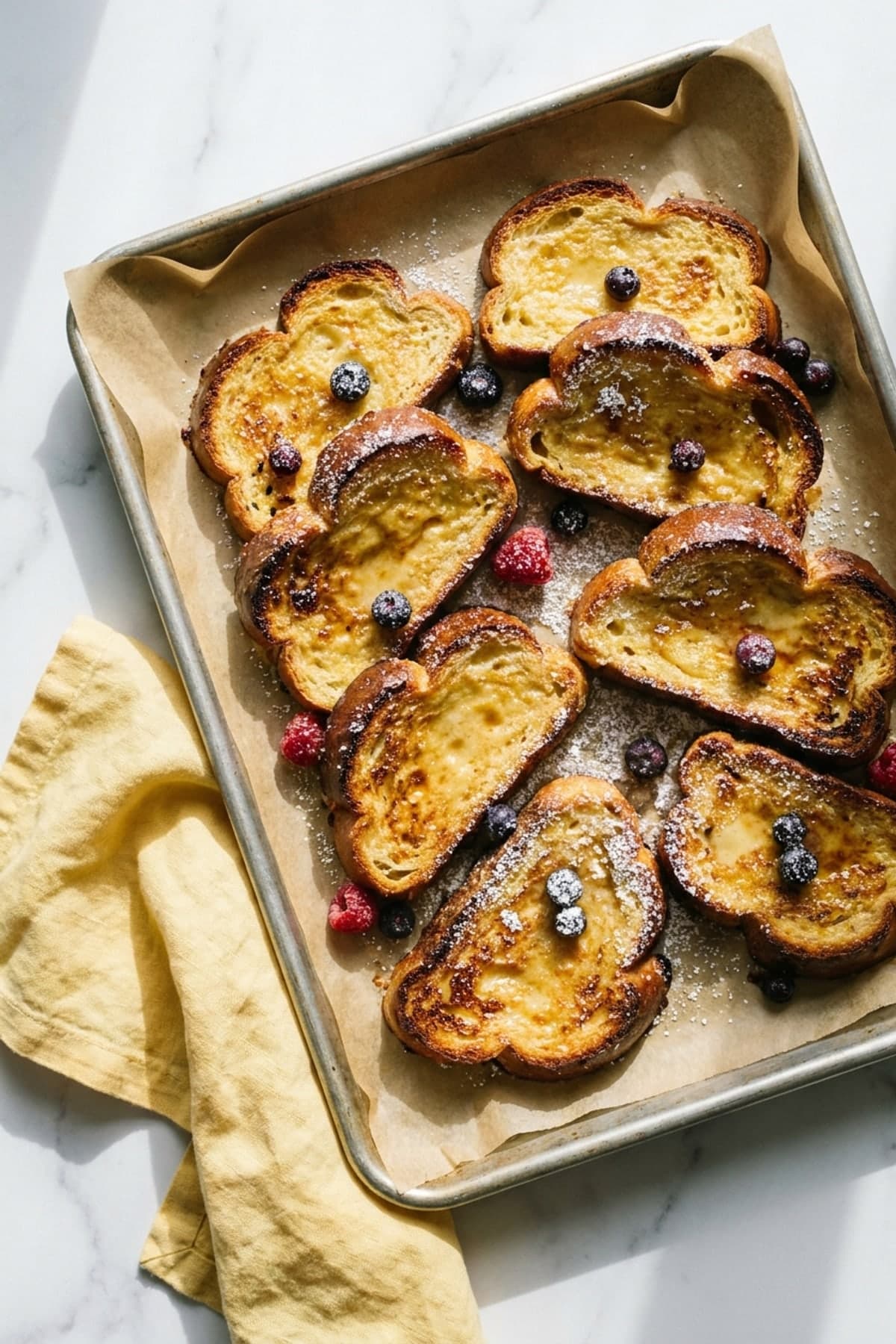
- Use the large cast-iron skillet and preserve the weights. Center cue: French toast in the skillet with mottled amber undersides and centers that spring back softly under a spatula.
- Refrigerate for up to 4 days. Reheat one portion for 60 seconds, check the center and add brief bursts if needed.
- brioche-french-toast
- stovetop-breakfast
- custard
- brunch
- make ahead breakfast
Tips
- Use the listed large cast-iron skillet; its depth and exposed area are part of the stated timing and center cue.
- Weigh the main liquid and structural ingredient. Small ratio changes can turn a tender breakfast either loose or unnecessarily firm.
- Watch the physical checkpoint as well as the clock. Bread dryness, refrigerator temperature and appliances create normal timing differences.
- Keep toppings separate until serving. Early syrup, fruit or a closed lid can soften the surface or loosen a chilled base.
- Use a broad spatula beneath portions. Supporting the base preserves visible layers instead of compressing them during the first lift.
Serving and storage
Serve two slices per person with a contrasting side that does not flood the finished surface. Tart berries, orange segments or a crisp green salad keep a rich breakfast balanced. Add syrup, yogurt or hot sauce at the table. On later mornings, portion only what you plan to eat, keep crisp garnishes separate and return the remainder to the refrigerator promptly.
Questions people ask
How do I know when brioche french toast with a shorter soak has the right texture?
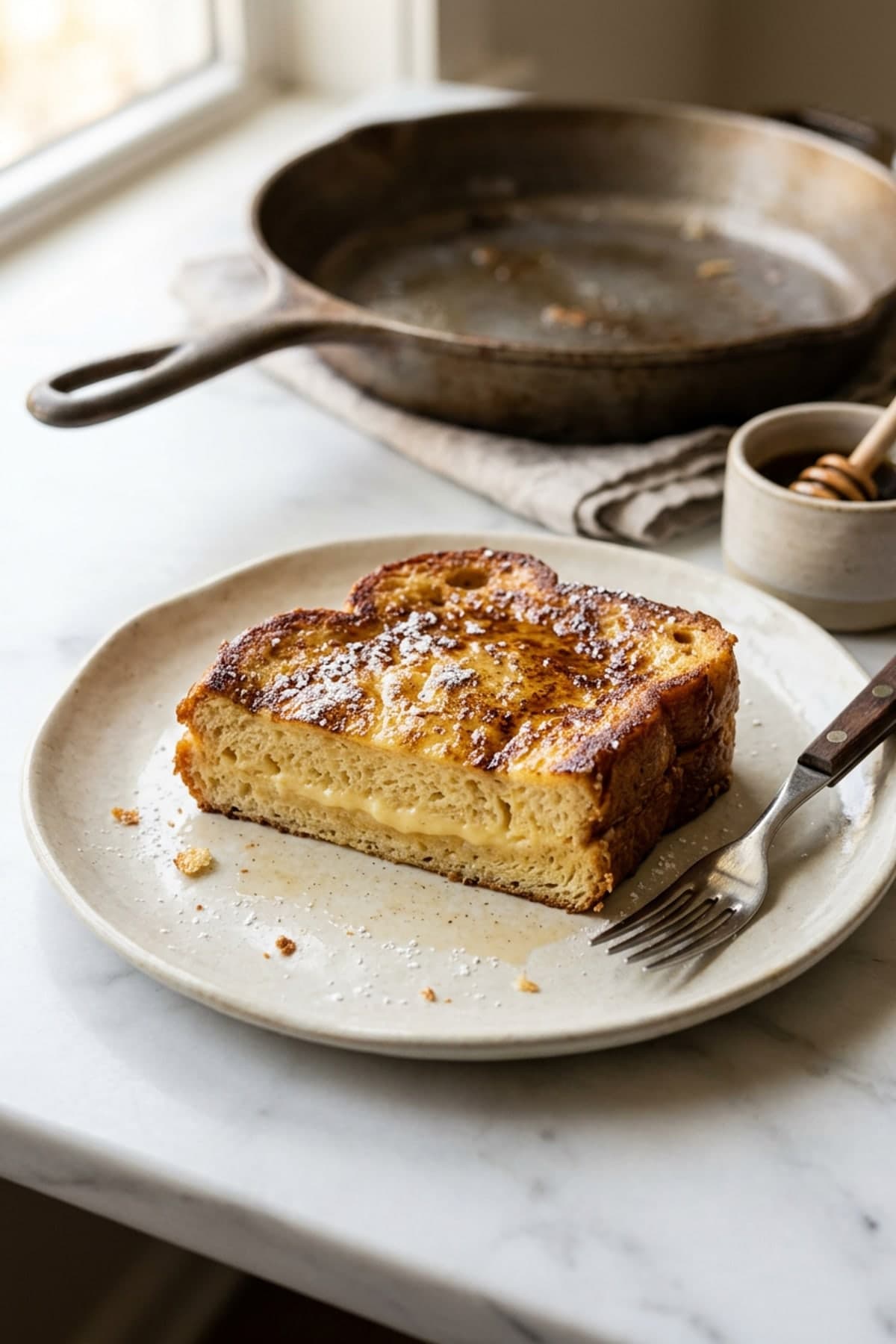
Use the decisive cue: French toast in the skillet with mottled amber undersides and centers that spring back softly under a spatula. The clock gives a checking point, but the visible and tactile signs determine whether the center has reached the intended texture.
Can I prepare this breakfast ahead and still keep the texture?
Yes. Follow the stated chill or cooling sequence, then cover and refrigerate for up to 4 days. Keep wet or crisp toppings separate, and use the 60-second reheat only for the portion you plan to eat.
Ratings and reviews
No ratings yet. If you have cooked this, yours would be the first.
Thank you. Your rating has been counted.
You have already rated this recipe, so this one was not counted.
Please choose between one and five stars.
Reviews are limited to 600 characters. Nothing was saved.
Names are limited to 40 characters. Nothing was saved.
That is a lot of ratings in one hour. Please try again later.
Before you go
Brioche French Toast With a Shorter Soak connects a measured ratio to visible evidence. Preserve the working layer, look for French toast in the skillet with mottled amber undersides and centers that spring back softly under a spatula, and portion gently. Storage, freezing and the 60-second reheat make the method useful on repeat mornings.
Save this for later
Brioche French Toast
Tags
- brioche-french-toast
- stovetop-breakfast
- custard
- brunch
Read next
French Toast Pancakes
- Make-ahead
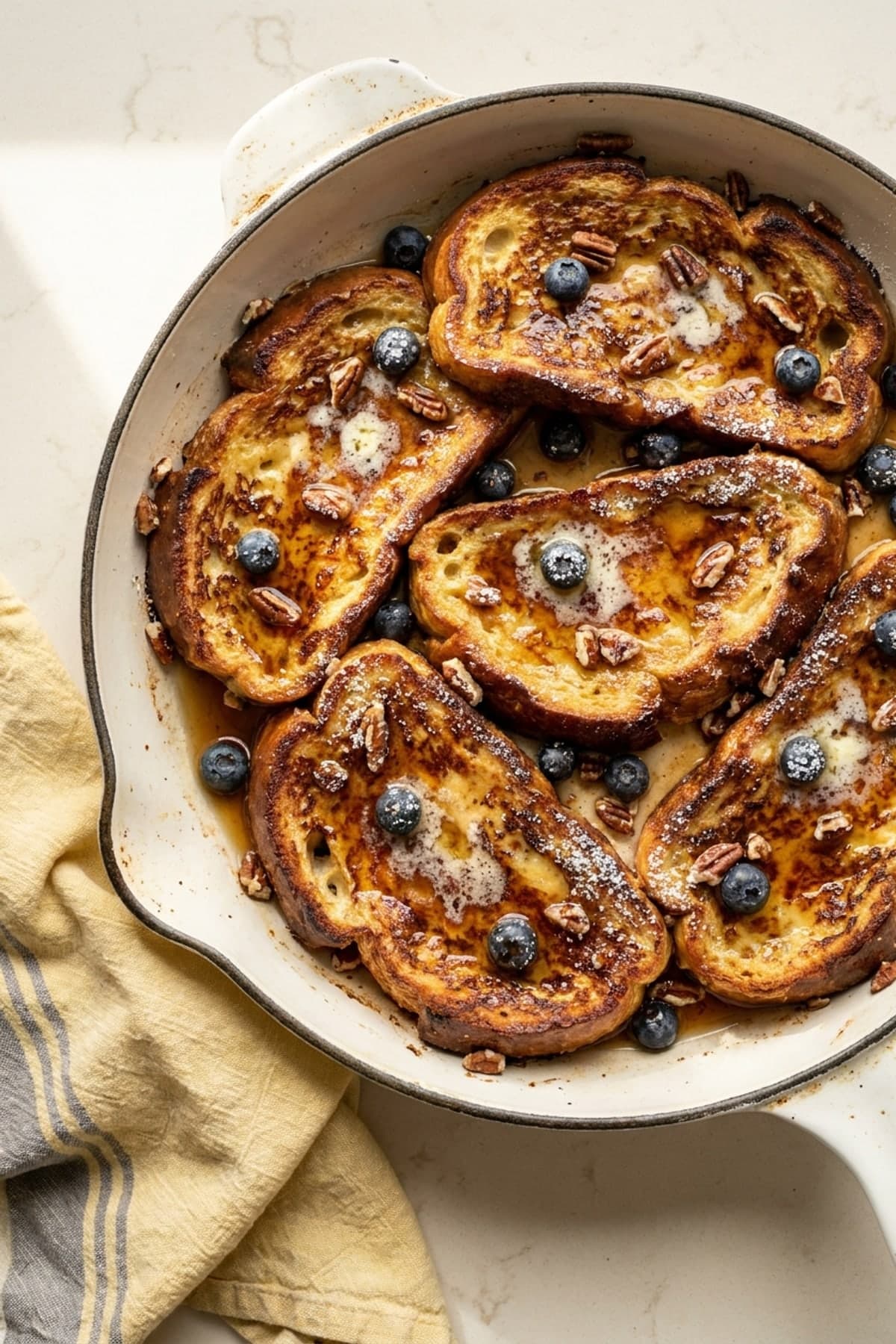
French Toast Recipe With Custard That Soaks All the Way In
35 min total4 servingsServes 415 min prep
Measured ingredients, decisive texture cues, exact timing, freezing guidance, and a practical reheat make this french toast dependable.
French Toast Pancakes
- Make-ahead
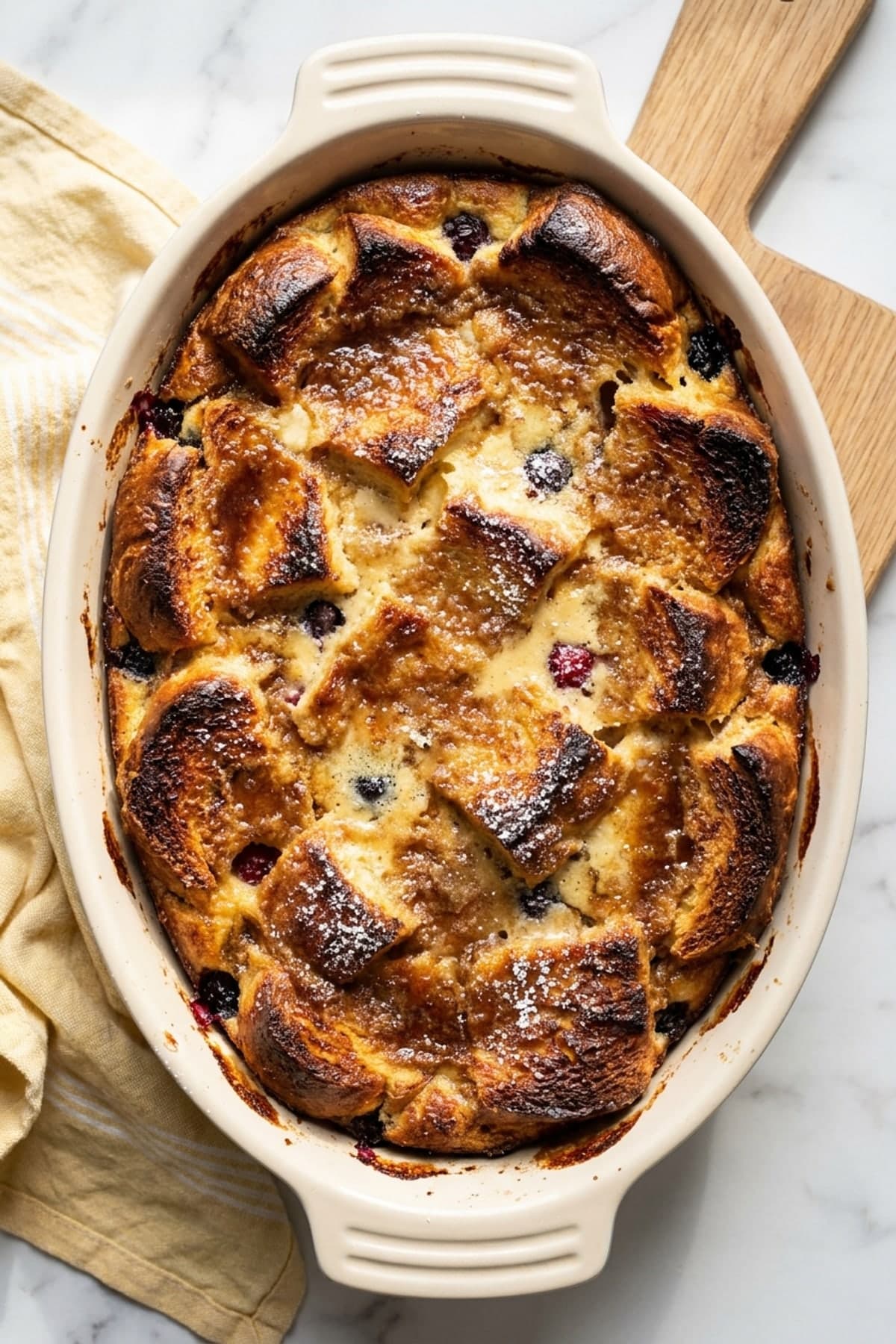
French Toast Bake With a Crackly Brown Sugar Top
1 hr 10 min total8 servingsServes 820 min prep
Measured ingredients, decisive texture cues, exact timing, freezing guidance, and a practical reheat make this french toast bake dependable.
French Toast Pancakes
- Make-ahead
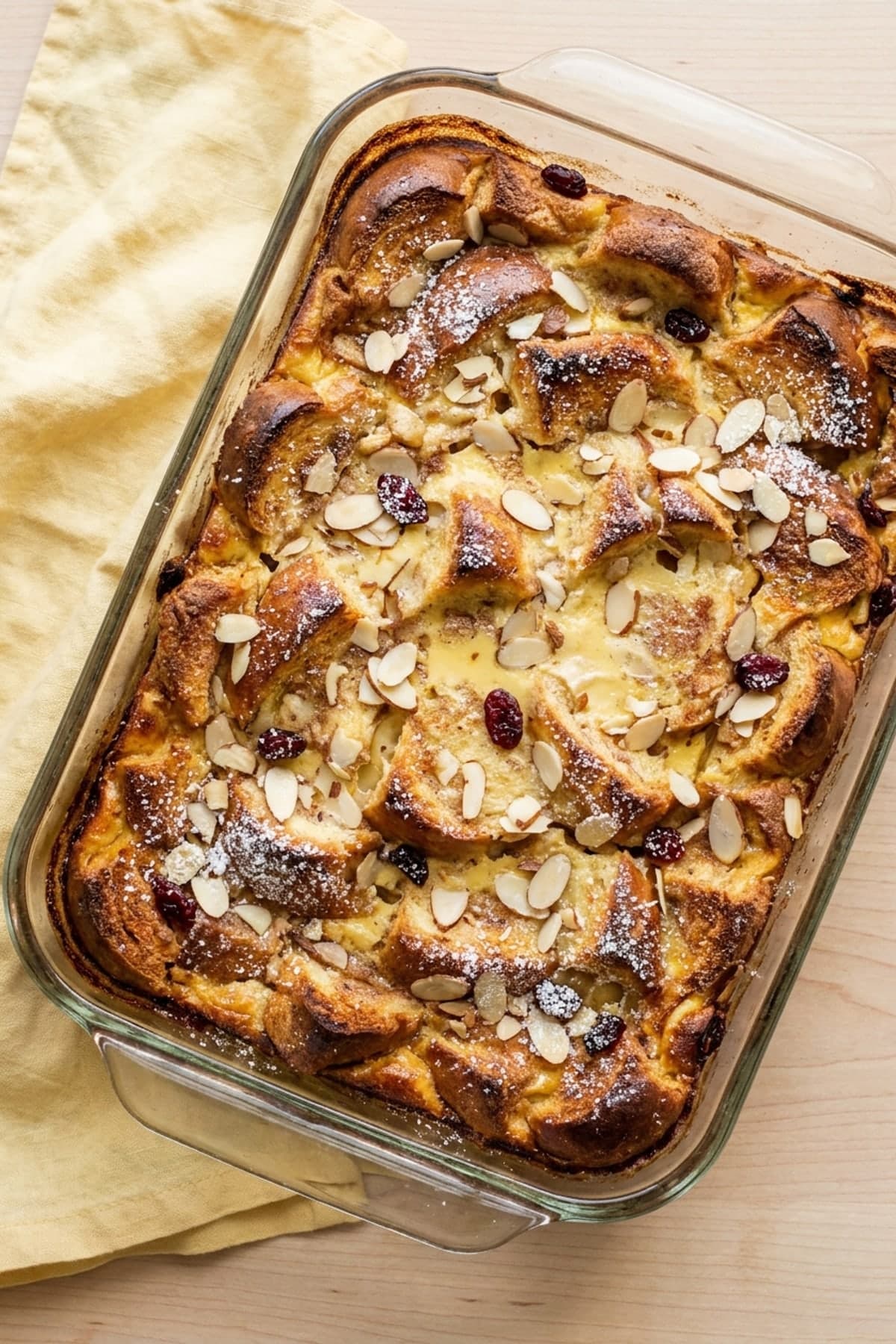
Overnight French Toast Casserole That Soaks Eight Hours
9 hr 5 min total8 servingsServes 88 hr 20 min prep
Measured ingredients, decisive texture cues, exact timing, freezing guidance, and a practical reheat make this overnight french toast dependable.
French Toast Pancakes
- Sheet pan
Baked French Toast That Skips the Skillet Entirely
35 min total4 servingsServes 415 min prep
Measured ingredients, decisive texture cues, exact timing, freezing guidance, and a practical reheat make this baked french toast dependable.

French Toast Pancakes
- Feeds a crowd
Blueberry French Toast Casserole With Berries Between
80 min total12 servingsServes 1225 min prep
This blueberry french toast casserole layers berries between sturdy bread cubes, lemon custard, and a buttery brown sugar topping for easy portions.

French Toast Pancakes
French Toast Bake Overnight for an Eight O’Clock Oven
70 min total6 servingsServes 620 min prep
This french toast bake overnight uses challah, vanilla custard, and a cinnamon crumb topping for an easy eight o’clock oven plan.