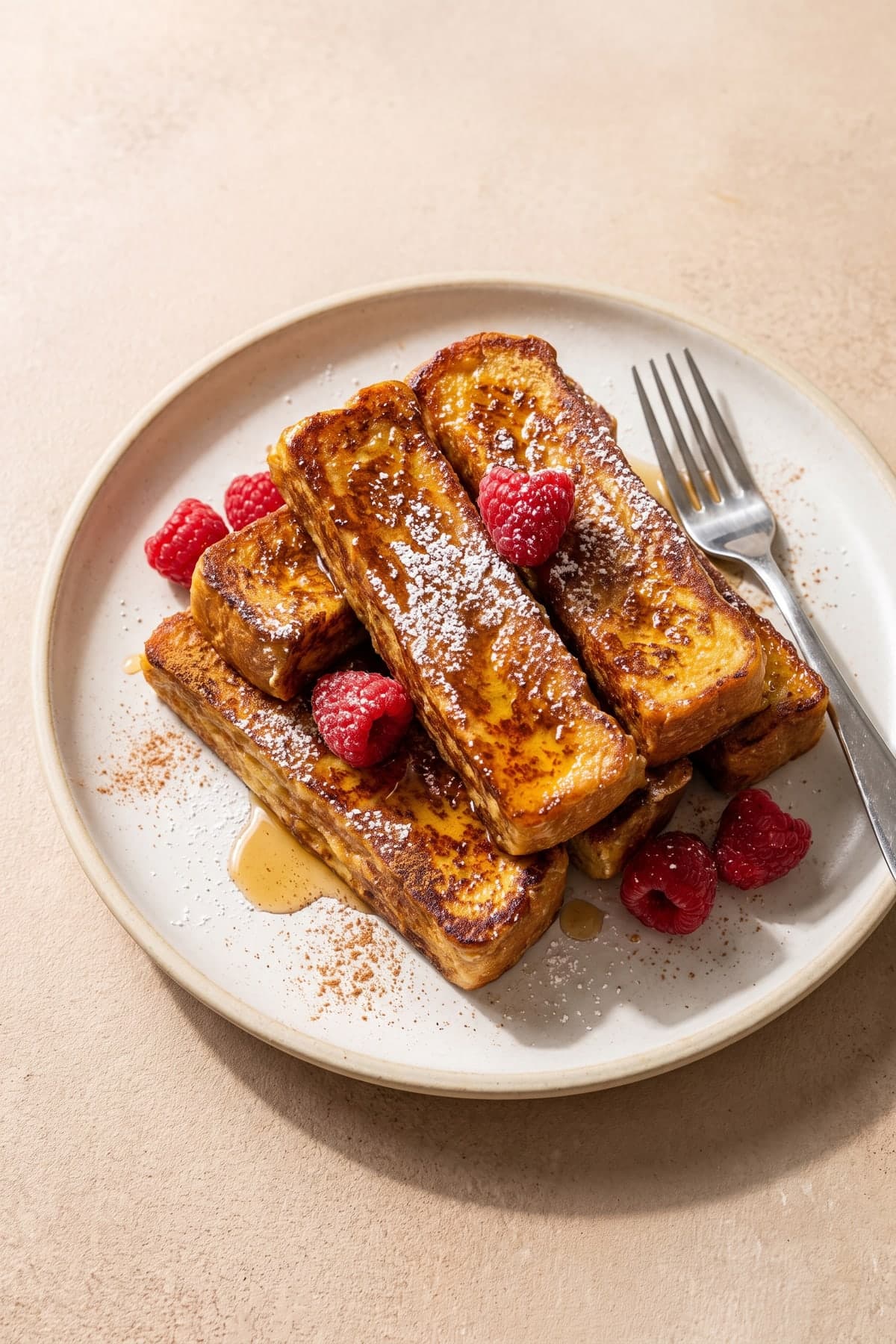
French Toast Sticks for the Freezer
40 min total18 sticks, serves 420 min prep20 min cookServes 4Category: French Toast Pancakes
- Sheet pan
- Make-ahead
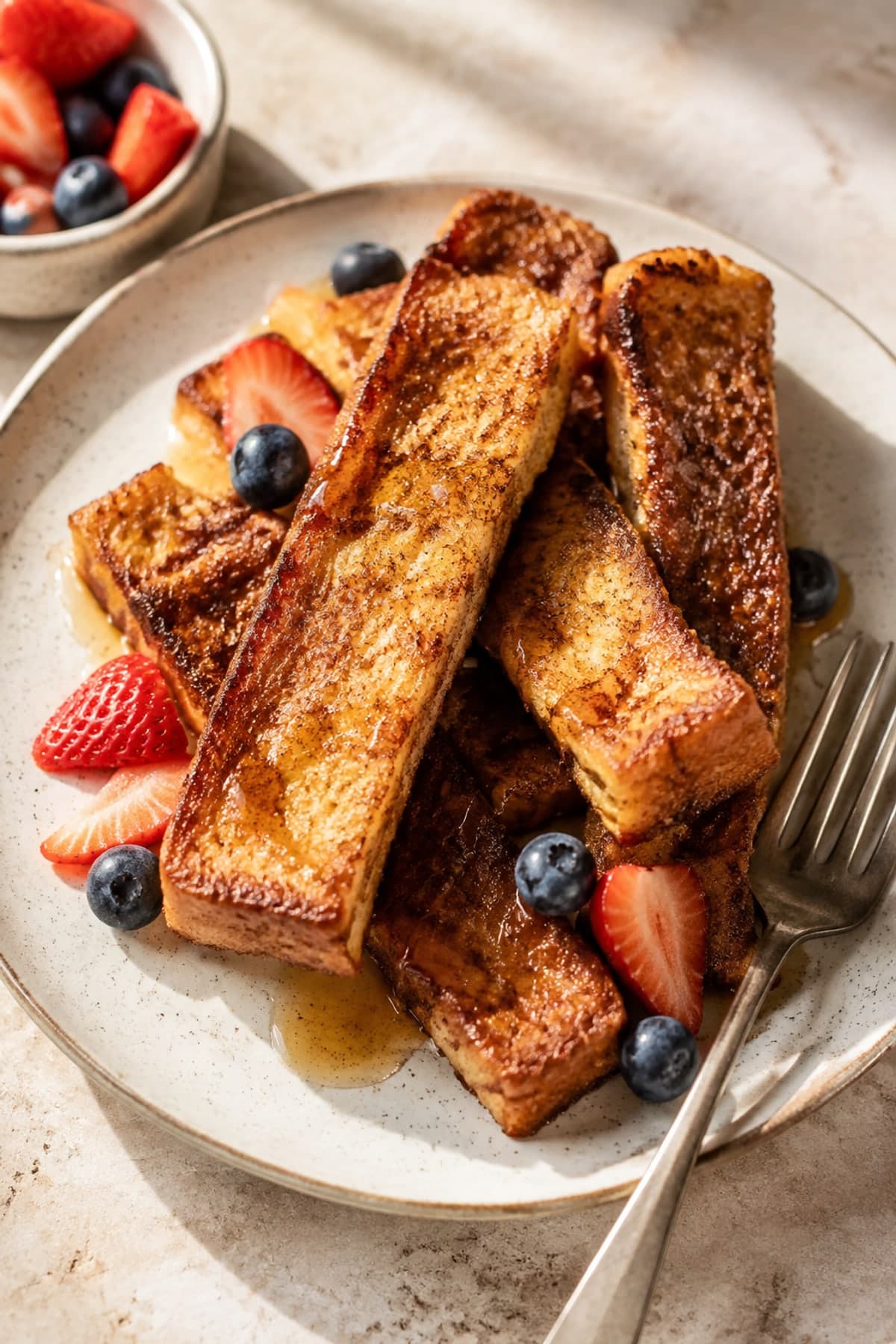
French toast sticks solve the part of breakfast that usually falls apart: getting something warm, hand-held, and not messy onto a weekday schedule. Thick bread, a modest custard, and a hot sheet pan give these strips browned edges while keeping the centers tender enough for syrup or fruit.
Instead of stacking slices in a container while they are still warm, freeze the cooked sticks separately first. That simple sheet-pan pause keeps portions loose, so you can pull out only what the morning needs. The method is practical, especially when plates are not part of the plan.
Why this works
- The sticks are cut before soaking, so each piece gets custard without requiring a long rest or awkward slicing after cooking.
- A preheated sheet pan gives the undersides direct heat, which helps the bread brown instead of steaming against a cool pan.
- Freezing the sticks in one layer before bagging keeps them separate, making small portions easier to heat when schedules shift.
- The ingredient list stays focused on bread, eggs, milk, cinnamon, and butter, with no filling that can leak during reheating.
Ingredients
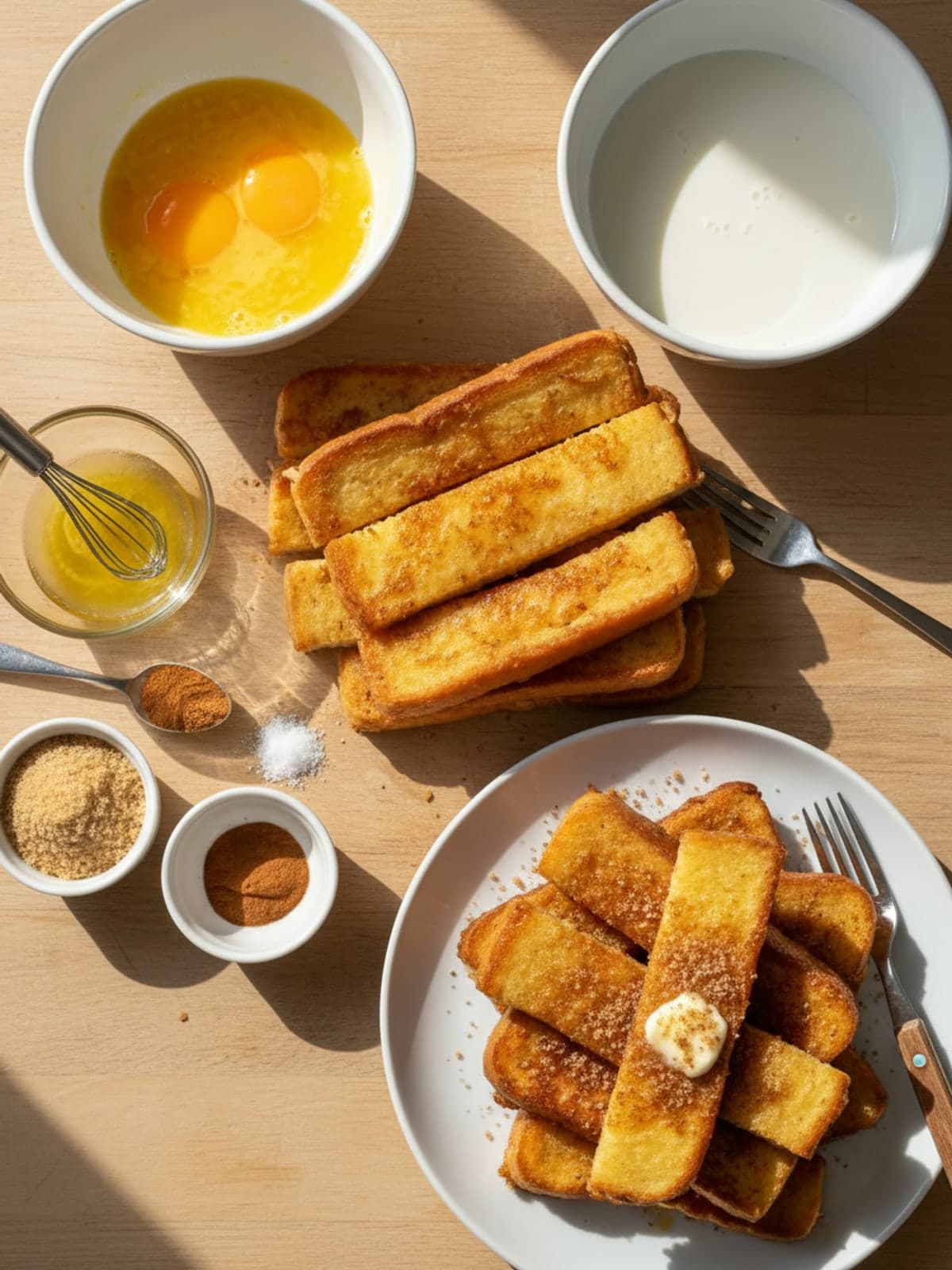
- 6 slices thick Texas toast, day-old preferred, each sliced into three sticks (360 g)
- 4 large eggs, beaten (200 g)
- 3/4 cup whole milk (180 g)
- 2 tablespoons packed light brown sugar (25 g)
- 1 teaspoon pure vanilla extract (5 g)
- 1 teaspoon ground cinnamon (3 g)
- 1/4 teaspoon fine sea salt (1 g)
- 2 tablespoons unsalted butter, melted and divided (28 g)
- 1/2 cup warm maple syrup, for serving (120 g)
Ingredient notes
- Thick, stale Texas toast is useful because it holds the custard without shredding. Slice each piece into three even batons; regular sandwich bread works, but use a gentle hand when turning it on the pan.
- Use large eggs and whisk until no clear strands remain, which gives the milk and flavorings an even base. For a smaller batch, halve every custard ingredient but keep the same baking temperature and approach.
- Whole milk makes a fuller custard, although 2% milk fits the method well. Avoid very low-fat milk if possible; its thinner mixture leaves less coating on the bread and produces paler sticks overall.
- Ground cinnamon and a little brown sugar flavor the custard rather than forming a heavy coating. If your cinnamon is old and dusty, replace it; this small amount is noticeable in every bite once baked.
- Melted butter helps the underside brown and keeps the parchment from feeling redundant. Use unsalted butter, then season the custard with salt; salted butter is workable, but reduce the added salt slightly for balance there.
How to make French Toast Sticks for the Freezer
Heat the pan
Set a rimmed sheet pan on the middle rack and heat oven to 425°F. Let the pan warm for at least 10 minutes. Line it with parchment after heating, leaving enough overhang to lift the sticks later, then brush lightly with melted butter all over.
Cut the bread
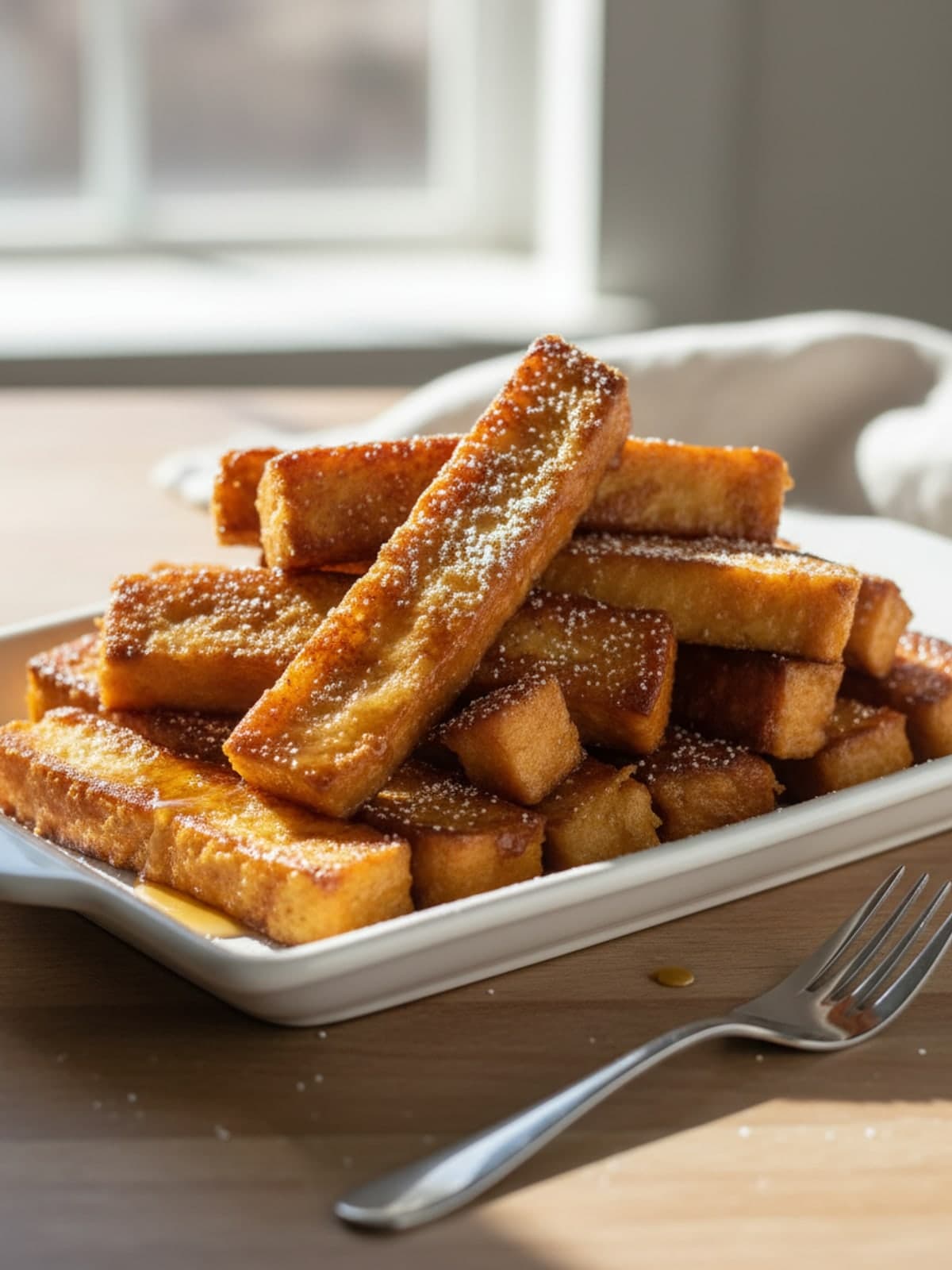
Stack the bread slices and cut each one lengthwise into three sturdy sticks. Aim for similar widths so they bake at the same pace. Keep the strips in a single layer on a cutting board while you make the custard.
Whisk the custard
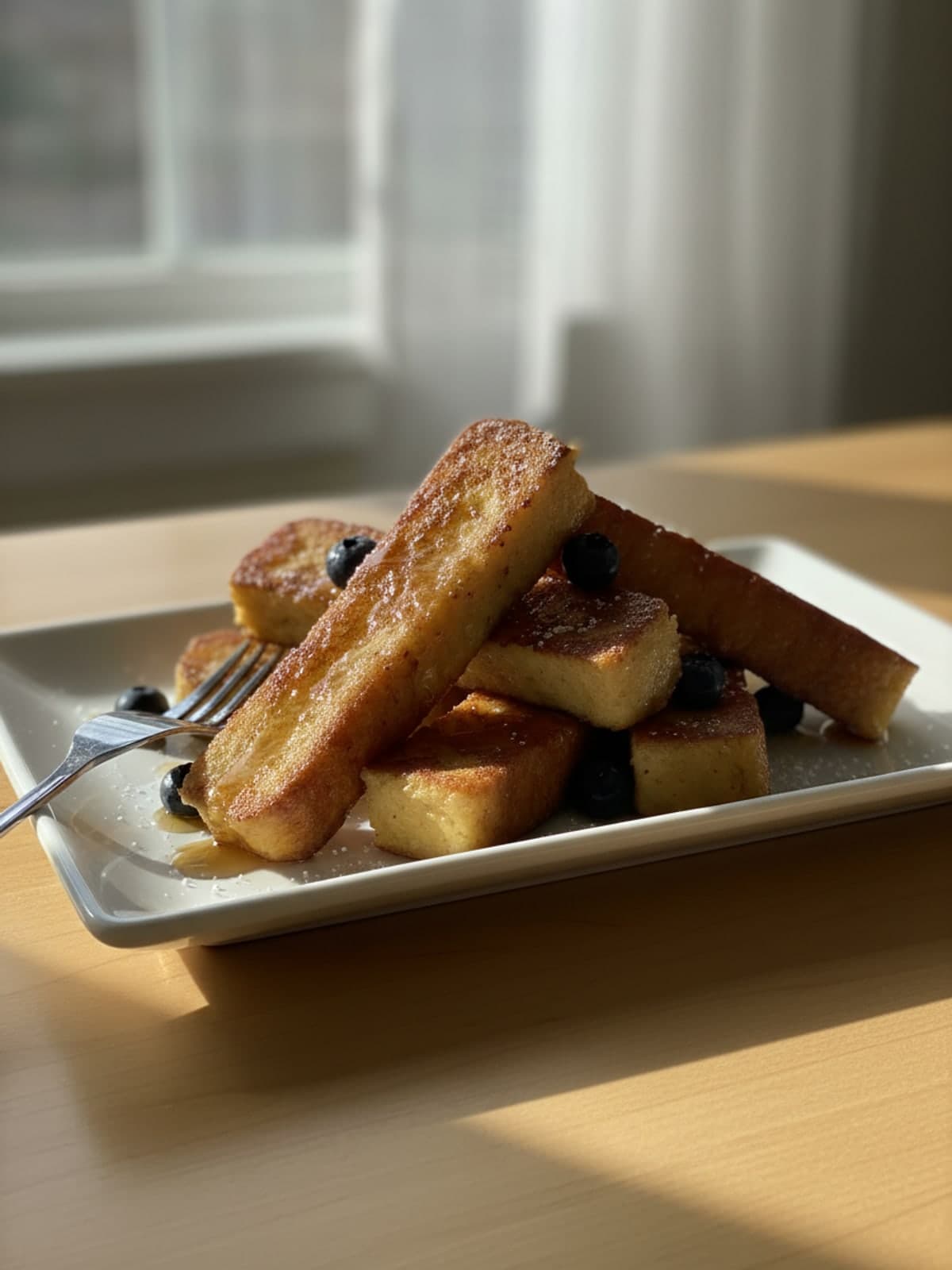
Whisk eggs, milk, brown sugar, vanilla, cinnamon, and salt in a shallow dish until smooth. The cinnamon will float slightly; whisk once more just before dipping. Set the melted butter nearby for brushing the tops.
Dip quickly
Dip each bread stick in the custard, turning it once and letting excess drip back into the dish. Do not leave the bread submerged. Arrange the coated sticks on the hot prepared pan with a little room between them.
Bake and turn
Bake for 10 minutes, then use a thin spatula to turn every stick. Brush the tops with remaining butter and bake 8 to 10 minutes more, until both sides are browned and the centers reach 160°F.
Cool and freeze
Cool the sticks completely on the pan. Freeze them uncovered in one layer until firm, about 1 hour. Transfer the frozen sticks to a labeled freezer bag, press out excess air, and return the bag to the freezer.
The recipe
French Toast Sticks for the Freezer
PrintCinnamon French toast sticks bake on a hot sheet pan, freeze separately for easy portions, and warm quickly with tender centers and browned edges on busy weekday mornings.
Course: Breakfast · Cuisine: Other
- Prep
- 20 min
- Cook
- 20 min
- Total
- 40 min
- Yield
- 18 sticks, serves 4
Nutrition Facts
Per serving. Recipe yield: 18 servings.
- Calories
- 110 kcal
- Protein
- 3.3 g
- Carbs
- 16.7 g
- Fat
- 3.3 g
- Fiber
- 0.6 g
- Sugar
- 7.1 g
- Sodium
- 141 mg
For 2 servings, scaled from the per-serving figures. Recipe yield: 18 servings.
- Calories
- 220 kcal
- Protein
- 6.6 g
- Carbs
- 33.4 g
- Fat
- 6.6 g
- Fiber
- 1.2 g
- Sugar
- 14.2 g
- Sodium
- 282 mg
For 3 servings, scaled from the per-serving figures. Recipe yield: 18 servings.
- Calories
- 330 kcal
- Protein
- 9.9 g
- Carbs
- 50.1 g
- Fat
- 9.9 g
- Fiber
- 1.8 g
- Sugar
- 21.3 g
- Sodium
- 423 mg
Ingredients
Instructions
- Preheat pan. Place a rimmed sheet pan on the middle rack and heat the oven to 425°F. Let the pan preheat for 10 minutes. Carefully line it with parchment, then brush the parchment lightly with melted butter.
- Slice bread. Cut each slice lengthwise into three even sticks, making 18 pieces. Keep widths similar so they brown together, and arrange the pieces in one layer beside the custard dish.
- Make custard. Whisk eggs, milk, brown sugar, vanilla, cinnamon, and salt in a shallow dish until smooth, with no visible egg strands. Whisk again before dipping if cinnamon gathers on the surface.
- Coat sticks. Dip each bread stick into the custard, turn it once, and let excess drip back. Set it on the hot prepared pan, leaving space between pieces. Do not soak the bread, or it may tear when turned.
- Bake and turn. Bake for 10 minutes, then turn every stick with a thin spatula. Brush the tops with remaining butter and bake 8 to 10 minutes longer, until both sides are browned and the centers reach 160°F.
- Freeze portions. Cool the sticks completely on the pan, then freeze them uncovered in one layer for about 1 hour, until firm. Transfer them to a labeled freezer bag, press out excess air, and store the bag flat when possible.
Notes
- Texas toast holds its shape, but thick-cut white bread or brioche works. Avoid very soft sandwich bread, which can tear after dipping and make turning frustrating.
- For refrigeration, cool sticks fully and keep covered up to 4 days. Reheat four chilled sticks for 45 seconds in the microwave.
- A hot pan browns bottoms promptly. Starting cold can leave them pale and make custard-coated bread stick over parchment.
- french toast sticks
- freezer breakfast
- sheet pan french toast
- cinnamon toast sticks
Tips
- Use bread that is a day old, or leave fresh slices uncovered for 30 minutes before cutting. Drier bread absorbs enough custard to taste rich without collapsing when moved from dish to pan.
- Keep the custard in a shallow dish rather than a bowl. You can turn each stick quickly, and the bread will not soak longer while you fish it out.
- Work in batches if your sheet pan is crowded. Touching sticks trap steam between them, which softens the sides and makes turning less tidy.
- Let the finished sticks cool fully before freezing. Any warmth sealed into the bag creates frost, which can leave the reheated surface damp instead of browned.
Serving and storage
Serve four or five sticks with warm maple syrup in a small cup for dipping, not poured over the top. Apple slices, orange segments, or berries keep the plate simple and add something fresh beside the cinnamon. For a fuller meal, pair them with scrambled eggs or plain yogurt. If packing a breakfast box, tuck syrup into a leakproof container and add fruit after the sticks have cooled completely.
Questions people ask
Can I freeze the sticks before baking?
This method is designed for freezing after baking. Raw custard-coated bread can become soft and difficult to separate, while cooked sticks freeze individually on the pan and portion more cleanly. Bake the full batch first, cool it completely, then freeze in one layer before bagging.
Why did my French toast sticks turn out soft?
The usual causes are bread that was very fresh, a pan that was not fully heated, or crowded pieces. Use thick bread, let the sheet pan preheat, and leave space between sticks. A brief toaster-oven finish after microwaving also restores firmer edges.
Ratings and reviews
No ratings yet. If you have cooked this, yours would be the first.
Thank you. Your rating has been counted.
You have already rated this recipe, so this one was not counted.
Please choose between one and five stars.
Reviews are limited to 600 characters. Nothing was saved.
Names are limited to 40 characters. Nothing was saved.
That is a lot of ratings in one hour. Please try again later.
Before you go
Keep this one filed for the weeks when cereal feels too thin and a skillet feels like too much cleanup. The freezer step is the useful part: one baking session leaves you with flexible portions instead of a container of stuck-together slices. Save the method, then adjust the spices when you need a small change.
Save this for later
Freezer French Toast Sticks
Tags
- french-toast-sticks
- freezer-breakfast
- sheet-pan-breakfast
- make-ahead-breakfast
Sources
- Egg dishes should be cooked to 160°F.What You Need to Know About Egg Safety | FDA
Read next
French Toast Pancakes
- Make-ahead
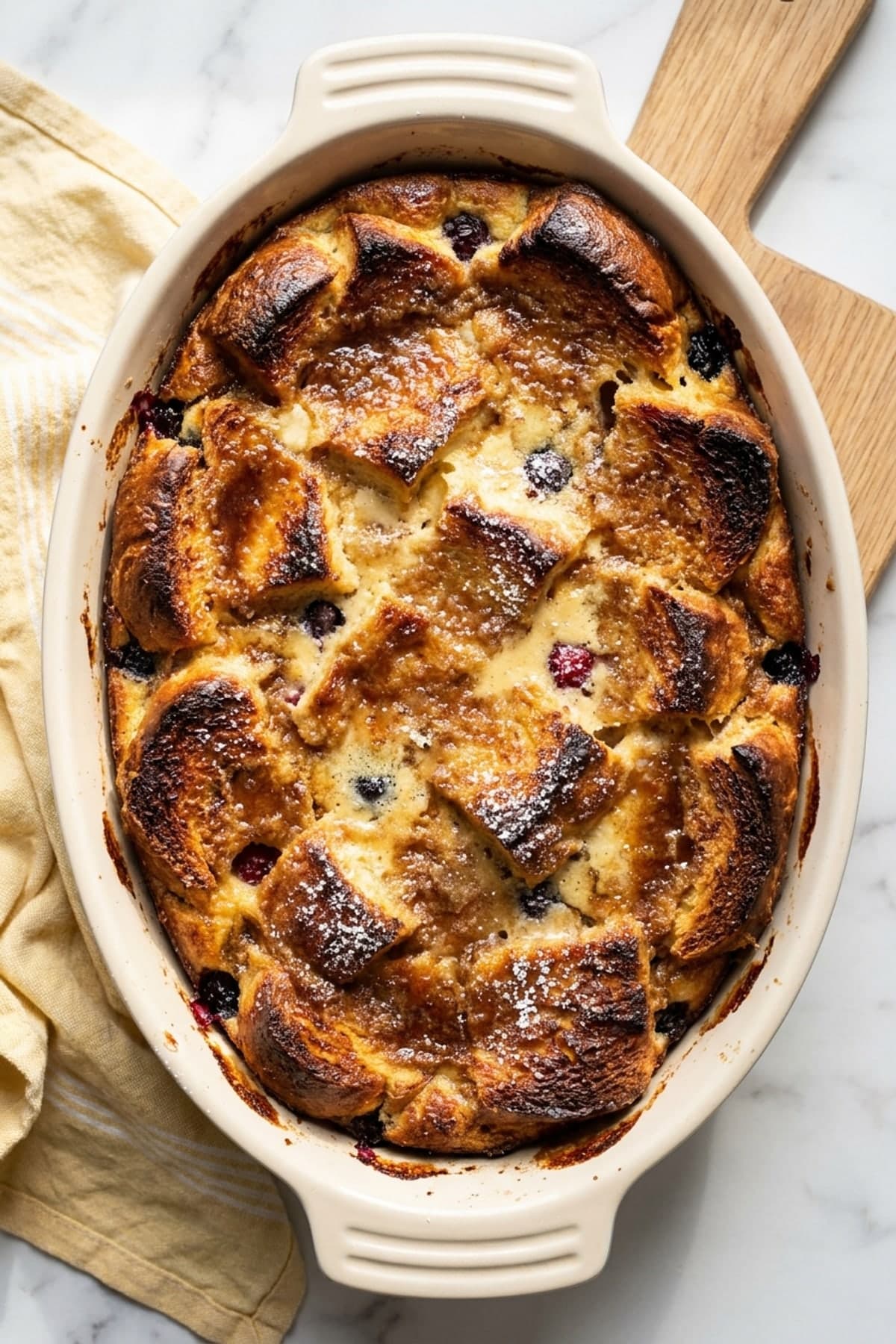
French Toast Bake With a Crackly Brown Sugar Top
1 hr 10 min total8 servingsServes 820 min prep
Measured ingredients, decisive texture cues, exact timing, freezing guidance, and a practical reheat make this french toast bake dependable.
French Toast Pancakes
- Make-ahead
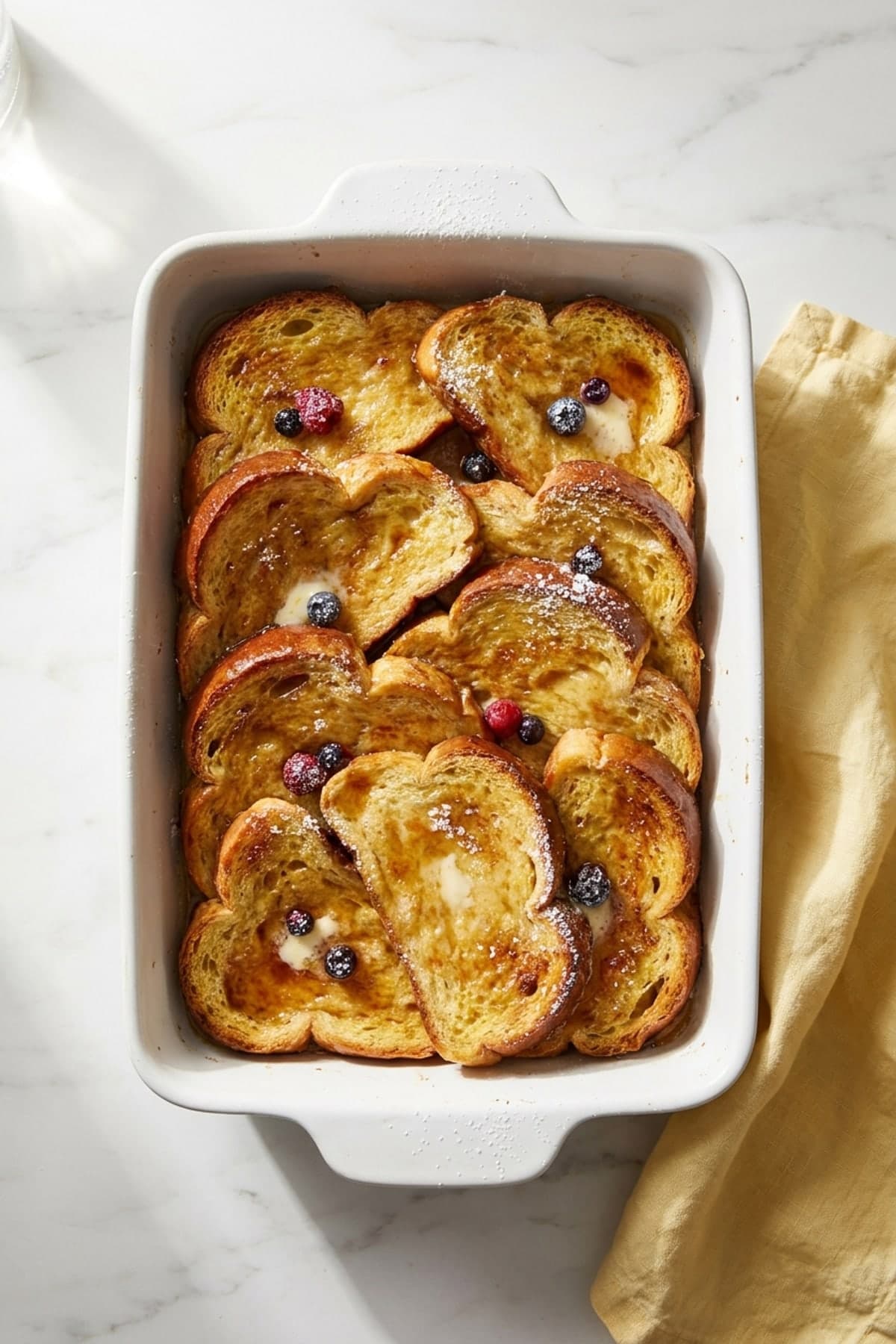
Overnight French Toast You Cover and Forget
8 hr 50 min total4 servingsServes 48 hr 15 min prep
Measured ingredients, decisive texture cues, exact timing, freezing guidance, and a practical reheat make this overnight french toast dependable.
French Toast Pancakes
- Sheet pan
Baked French Toast That Skips the Skillet Entirely
35 min total4 servingsServes 415 min prep
Measured ingredients, decisive texture cues, exact timing, freezing guidance, and a practical reheat make this baked french toast dependable.

French Toast Pancakes
- Feeds a crowd
Blueberry French Toast Casserole With Berries Between
80 min total12 servingsServes 1225 min prep
This blueberry french toast casserole layers berries between sturdy bread cubes, lemon custard, and a buttery brown sugar topping for easy portions.
French Toast Pancakes
- Make-ahead
Brioche French Toast With a Shorter Soak
35 min total4 servingsServes 415 min prep
Measured ingredients, decisive texture cues, exact timing, freezing guidance, and a practical reheat make this brioche french toast dependable.

French Toast Pancakes
French Toast Bake Overnight for an Eight O’Clock Oven
70 min total6 servingsServes 620 min prep
This french toast bake overnight uses challah, vanilla custard, and a cinnamon crumb topping for an easy eight o’clock oven plan.