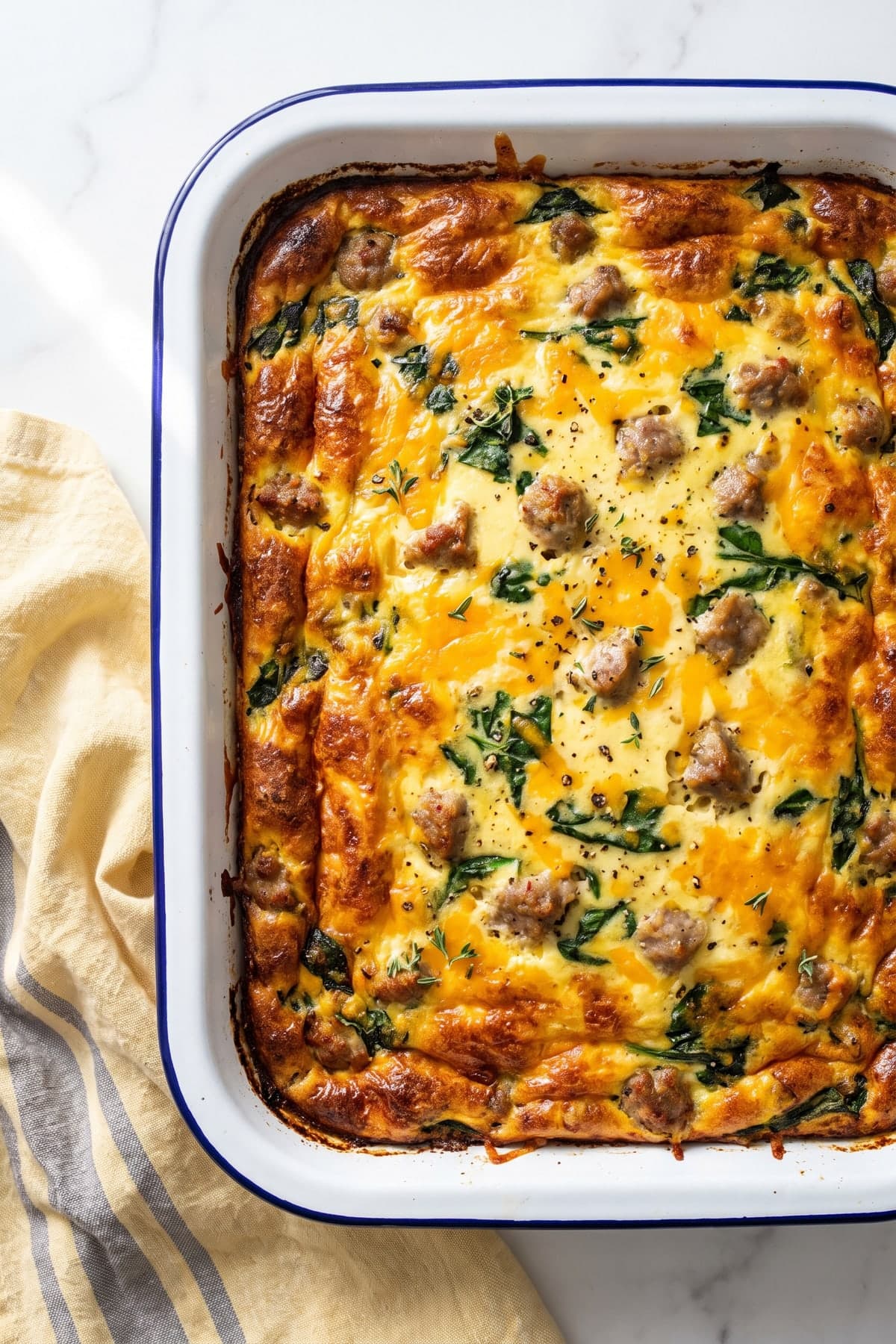
Overnight Breakfast Casserole You Bake Straight From Cold
9 hr 15 min total8 servings8 hr 25 min prep50 min cookServes 8Category: Breakfast Casseroles
- Make-ahead
A genuinely useful overnight breakfast casserole should go from refrigerator to oven without a transfer, a second bowl, or a fragile glass dish. This one uses metal bakeware, dry-cooked sausage and spinach, sturdy sourdough, and a full eight-hour soak. Every choice supports clean squares instead of a watery lower layer.
It serves eight after 50 minutes in the oven, so the morning job is mostly waiting. Pre-cut leftovers cover Tuesday and beyond, starting with a 60-second microwave reheat. The recipe marks the hydrated bread before baking, the gentle central set afterward, and the softer texture to expect after freezing.
Why this works
- A metal dish tolerates the planned refrigerator-to-oven move and conducts heat efficiently into the cold center.
- Cooking onion, spinach, and sausage until dry prevents their overnight liquid from collecting beneath the bread and eggs.
- Day-old sourdough provides structure during the long soak, so portions remain sliceable rather than settling into a heavy uniform layer.
- The method identifies the center checkpoint explicitly, because browned edges alone cannot tell you whether the deepest portion has reached the intended texture.
Ingredients
- 8 cups day-old sourdough cubes (560 g)
- 2 cups whole milk (480 g)
- 1 1/2 cups shredded cheddar (170 g)
- 10 large eggs (500 g)
- 1 medium yellow onion, diced (160 g)
- 1 teaspoon dry mustard (3 g)
- 2 cups chopped baby spinach (60 g)
- 1 1/4 teaspoons fine salt (7 g)
- 1 tablespoon olive oil (14 g)
- 12 ounces cooked breakfast sausage, crumbled (340 g)
Ingredient notes
- Sourdough cubes: The specified weight controls how much custard or filling the dish can hold. Use day-old bread when listed, and keep frozen potatoes frozen when called for; those details protect the intended structure.
- Eggs: Whisk until no distinct whites remain. Uniform eggs set evenly around the other ingredients, while under-mixed whites can leave rubbery streaks beside softer custard. The listed large eggs weigh about 50 g each without shells.
- Milk and dairy: Whole milk supplies moisture without making the mixture thin. Measure by weight for repeatable results. Cheese or cream adds richness, but increasing it casually can delay the center and make the casserole feel heavy.
- Seasoning: Salt the liquid mixture, where it disperses through the entire pan. The measured spice should support the eggs rather than bury their flavor.
- Pan choice: a metal 9-by-13-inch baking dish gives the stated depth and timing. Grease the corners carefully, because that is where egg mixtures attach first and where a clean serving is hardest to lift.
How to make Overnight Breakfast Casserole You Bake Straight From Cold
Prepare the foundation
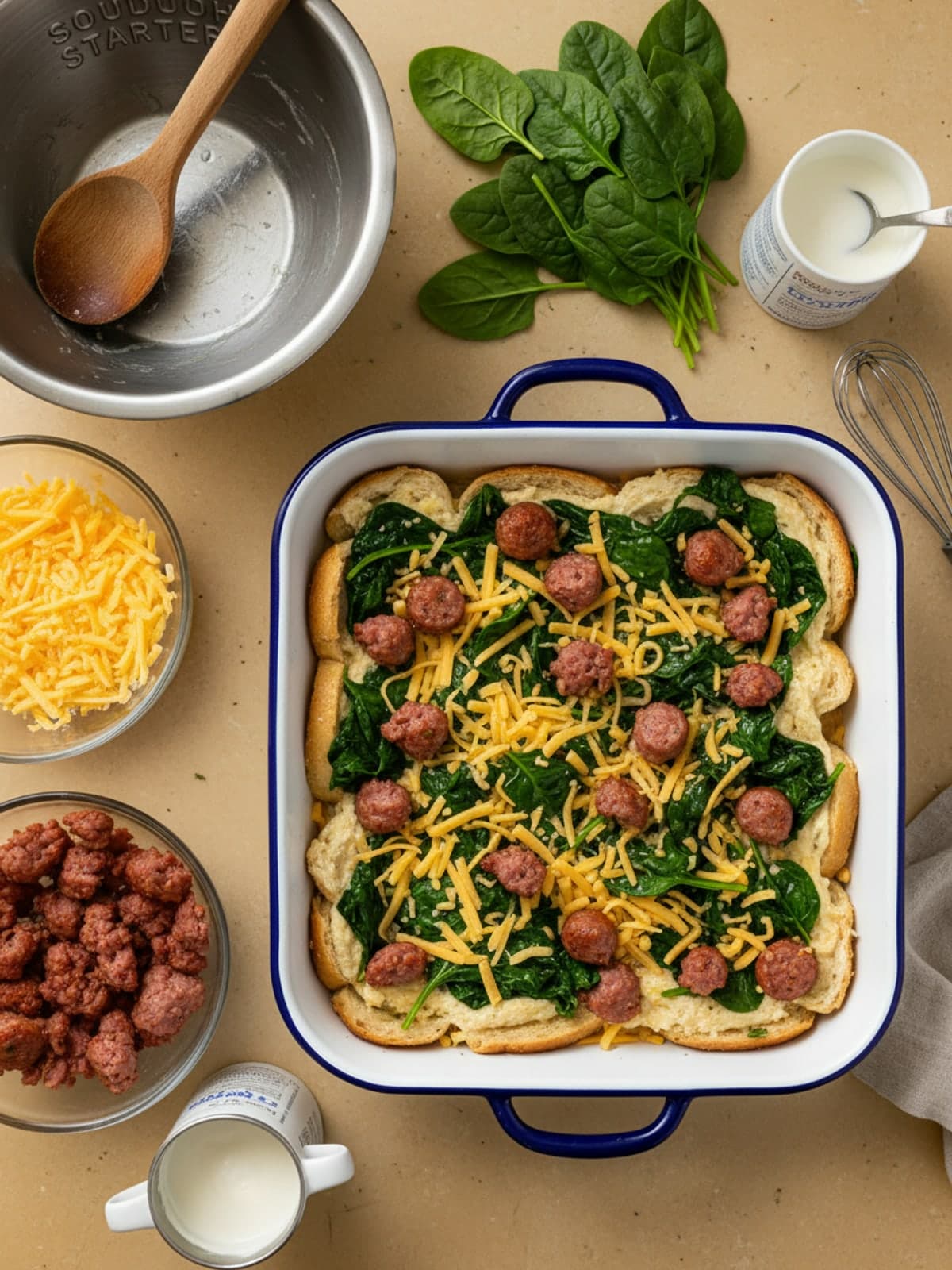
Cook onion in oil until soft. Add sausage and spinach, then continue until the spinach is wilted and the skillet looks dry. Spread sourdough in a greased metal dish and distribute the sausage mixture and cheddar between the cubes. Keep the components loose enough for custard to pass through the gaps. Keep the layer level so the pan cooks at the same pace from edge to center.
Build the decisive layers
Whisk eggs, milk, dry mustard, salt, and pepper until completely blended. Pour slowly over the dish, working from edges to center. Press the bread once, release it, and cover. Refrigerate for 8 hours. Before baking, confirm the bread looks hydrated and no watery vegetable liquid has collected around the perimeter.
Bake toward the center cue
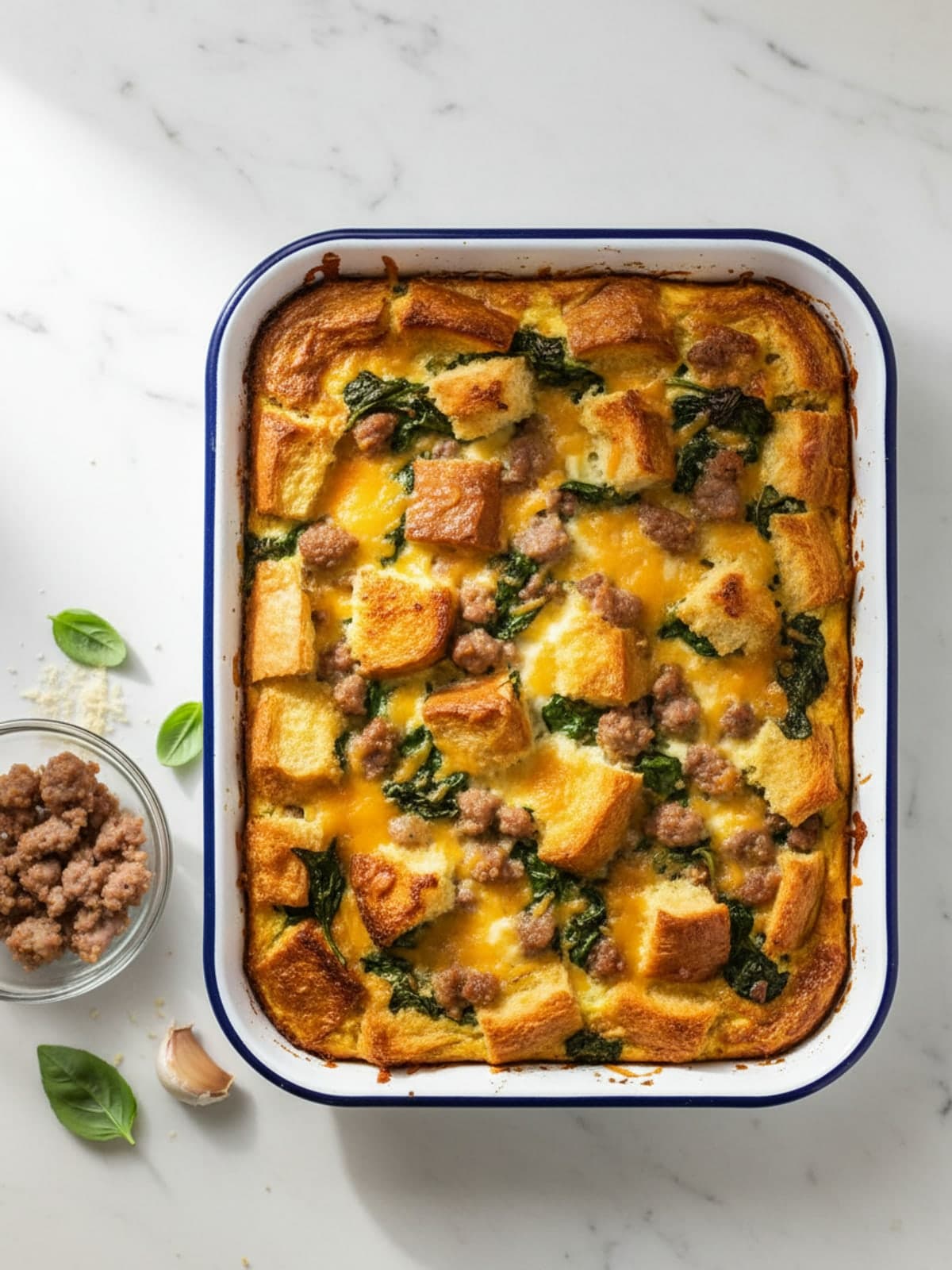
Uncover and move the cold metal dish directly into a 350°F (175°C) oven. Bake for 45 to 50 minutes. The edges should rise slightly away from the sides, and the center should hold a gentle set when nudged. A thin knife inserted into the middle should show tender crumbs without liquid egg.
Check texture and portion
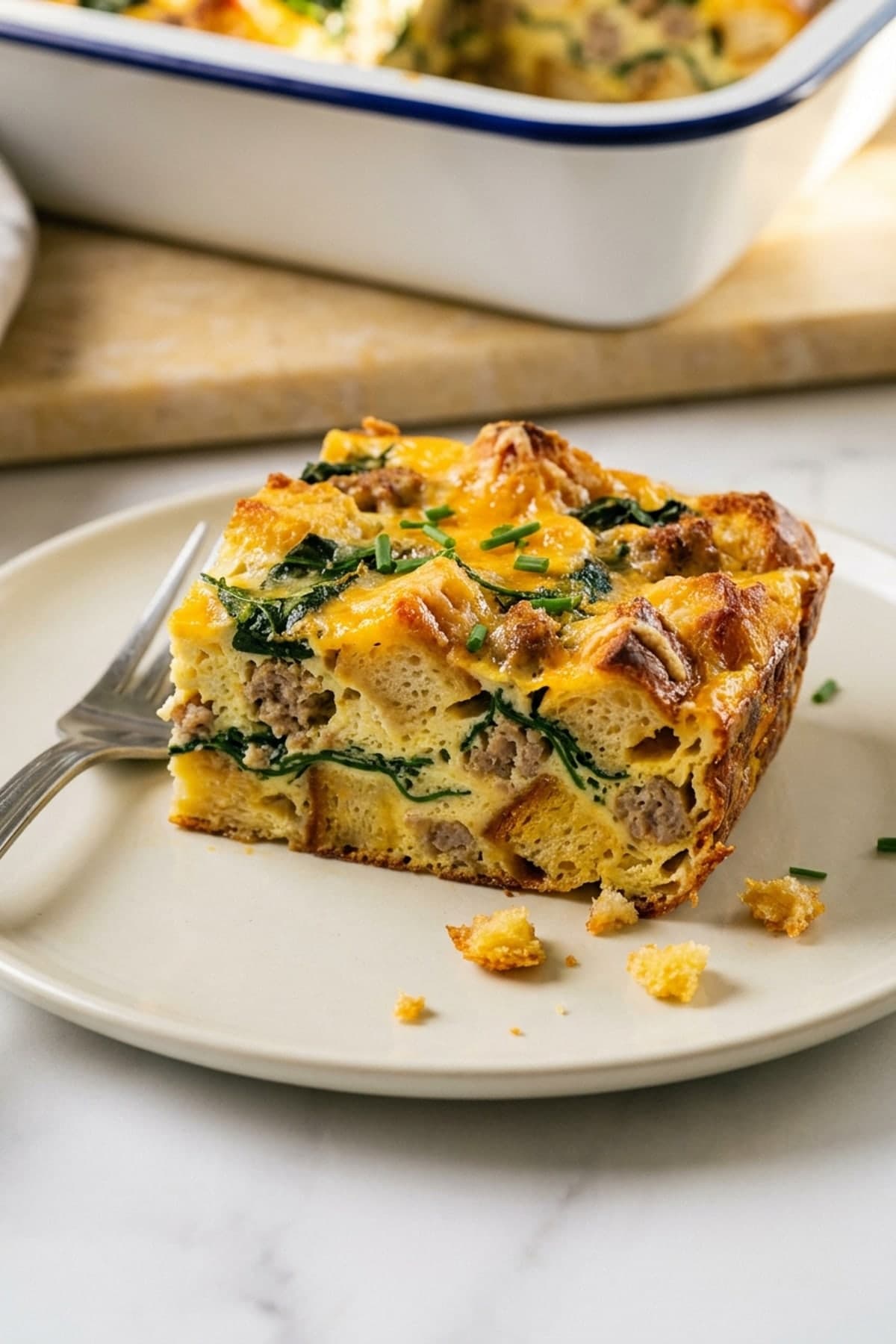
Leave the casserole undisturbed briefly before cutting 8 squares. Run a flexible knife around the perimeter, then lift portions with a broad spatula so the soaked bread and savory filling remain layered. Scatter a few scallion slices over the top. Avoid covering the hot pan, which can make the upper bread soft. Notice both the exposed top and the lowest layer as you lift the first piece.
The recipe
Overnight Breakfast Casserole You Bake Straight From Cold
PrintA practical a fully assembled sausage, spinach, cheddar, and egg casserole for a cold-to-oven morning, with measured ingredients, clear assembly order, and a visual center cue for 8 consistent breakfast servings.
Course: Breakfast · Cuisine: American
- Prep
- 8 hr 25 min
- Cook
- 50 min
- Total
- 9 hr 15 min
- Yield
- 8 servings
Nutrition Facts
Per serving. Recipe yield: 8 servings.
- Calories
- 597 kcal
- Protein
- 27.1 g
- Carbs
- 43.7 g
- Fat
- 34.3 g
- Fiber
- 2.1 g
- Sugar
- 6.5 g
- Sodium
- 1420 mg
For 2 servings, scaled from the per-serving figures. Recipe yield: 8 servings.
- Calories
- 1194 kcal
- Protein
- 54.2 g
- Carbs
- 87.4 g
- Fat
- 68.6 g
- Fiber
- 4.2 g
- Sugar
- 13 g
- Sodium
- 2840 mg
For 3 servings, scaled from the per-serving figures. Recipe yield: 8 servings.
- Calories
- 1791 kcal
- Protein
- 81.3 g
- Carbs
- 131.1 g
- Fat
- 102.9 g
- Fiber
- 6.3 g
- Sugar
- 19.5 g
- Sodium
- 4260 mg
Ingredients
Instructions
- Prepare. Cook onion in oil until soft. Add sausage and spinach, then continue until the spinach is wilted and the skillet looks dry. Spread sourdough in a greased metal dish and distribute the sausage mixture and cheddar between the cubes. Keep the components loose enough for custard to pass through the gaps.
- Assemble. Whisk eggs, milk, dry mustard, salt, and pepper until completely blended. Pour slowly over the dish, working from edges to center. Press the bread once, release it, and cover. Refrigerate for 8 hours. Before baking, confirm the bread looks hydrated and no watery vegetable liquid has collected around the perimeter.
- Bake. Uncover and move the cold metal dish directly into a 350°F (175°C) oven. Bake for 45 to 50 minutes. The edges should rise slightly away from the sides, and the center should hold a gentle set when nudged. A thin knife inserted into the middle should show tender crumbs without liquid egg.
- Finish. Leave the casserole undisturbed briefly before cutting 8 squares. Run a flexible knife around the perimeter, then lift portions with a broad spatula so the soaked bread and savory filling remain layered. Scatter a few scallion slices over the top. Avoid covering the hot pan, which can make the upper bread soft.
Notes
- Choose a metal dish for baking directly from cold. Cook the filling until the skillet is dry, use day-old sourdough, and allow eight hours for hydration. The center is ready when set but still tender.
- Refrigerate for up to 4 days. Reheat one portion for 60 seconds, then check before adding short bursts.
- overnight-casserole
- egg-casserole
- make-ahead
- breakfast
- make ahead breakfast
Tips
- Weigh the main bread or potato component. Volume shifts when pieces are packed, and the liquid ratio depends on the listed amount.
- Distribute solid fillings to every corner before adding eggs. Rearranging them afterward disturbs the layers and creates heavy patches.
- Judge the center, not the browned rim. Edge portions firm first, so the middle provides the useful doneness cue.
- Keep the dish uncovered during baking unless the surface is coloring far ahead of the center. Covering softens carefully exposed edges.
- Use a thin knife for checking and a broad spatula for serving. That combination preserves the layers instead of compressing them.
Serving and storage
Serve squares with tomato wedges, citrus, or a bitter green salad. Hot sauce belongs at the table so every portion can be adjusted without soaking the casserole. On a Tuesday, refrigerate pre-cut pieces in shallow containers; the cold-to-oven work is already done, and breakfast only needs reheating. Portion from both the center and edge over successive meals so one container does not collect only firmer corner pieces.
Questions people ask
How do I know when overnight breakfast casserole you bake straight from cold is done?
Use the center cue rather than the browned edge: the center reaches a gentle set and the edges rise slightly away from the dish. If the center still moves like liquid, continue baking uncovered and check again shortly.
Can I assemble it ahead?
Yes. The stated 8 hours refrigeration is part of the recipe, not optional holding time. Keep the dish covered and follow the cold-pan baking direction.
Ratings and reviews
No ratings yet. If you have cooked this, yours would be the first.
Thank you. Your rating has been counted.
You have already rated this recipe, so this one was not counted.
Please choose between one and five stars.
Reviews are limited to 600 characters. Nothing was saved.
Names are limited to 40 characters. Nothing was saved.
That is a lot of ratings in one hour. Please try again later.
Before you go
Overnight Breakfast Casserole You Bake Straight From Cold works because its layers have separate jobs. Follow the measured liquid, preserve the exposed surface, and use the center cue before taking the pan out. You get 8 useful portions, plus storage and freezing directions that acknowledge texture instead of promising a leftover will be identical to the first serving.

Save this for later
Cold-to-Oven Egg Casserole
Tags
- overnight-casserole
- egg-casserole
- make-ahead
- breakfast
Read next
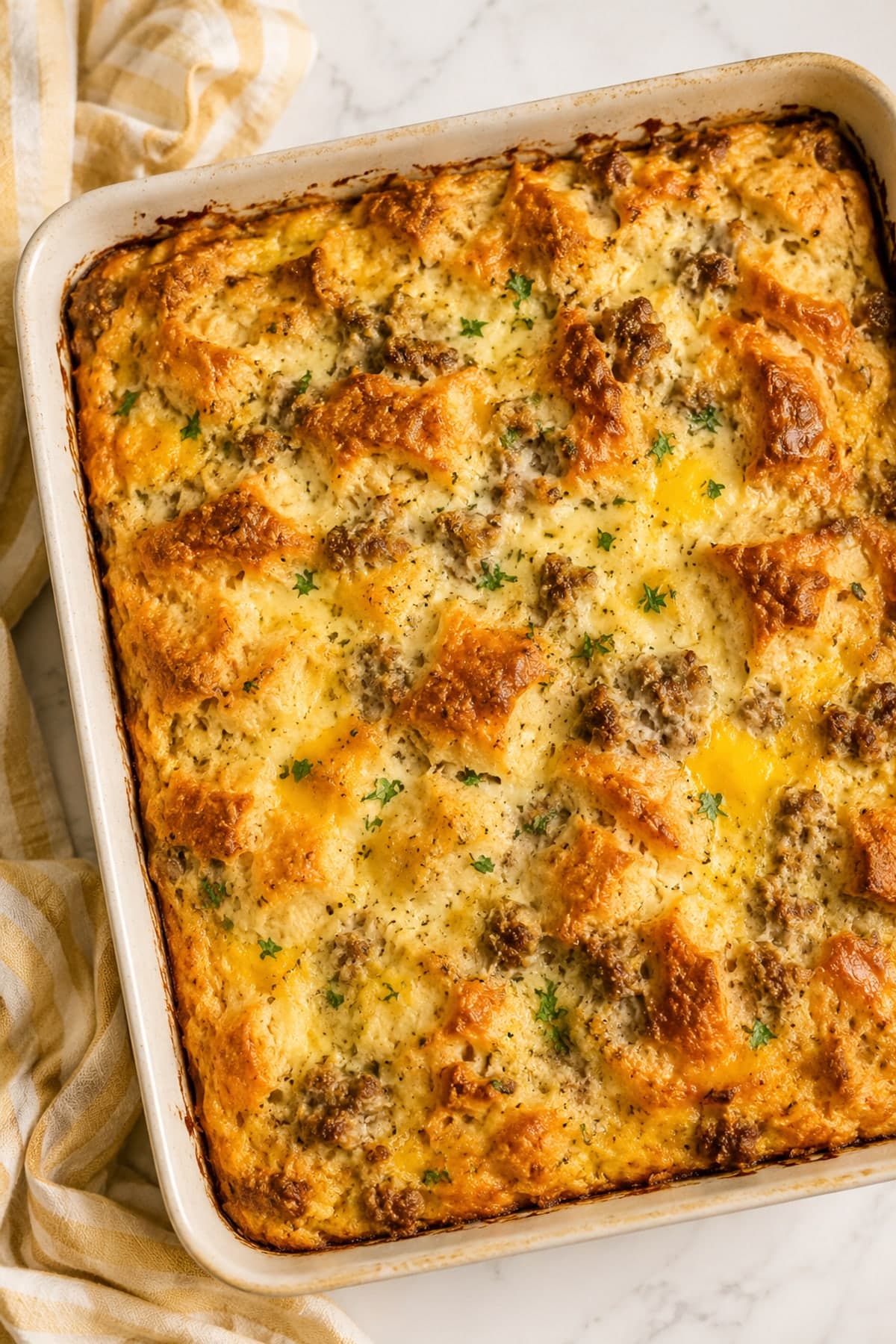
Breakfast Casseroles
- Make-ahead
Biscuits and Gravy Breakfast Casserole in One Dish
1 hr 15 min total8 servingsServes 830 min prep
Measured ingredients, decisive texture cues, exact timing, freezing guidance, and a practical reheat make this biscuits and gravy dependable.
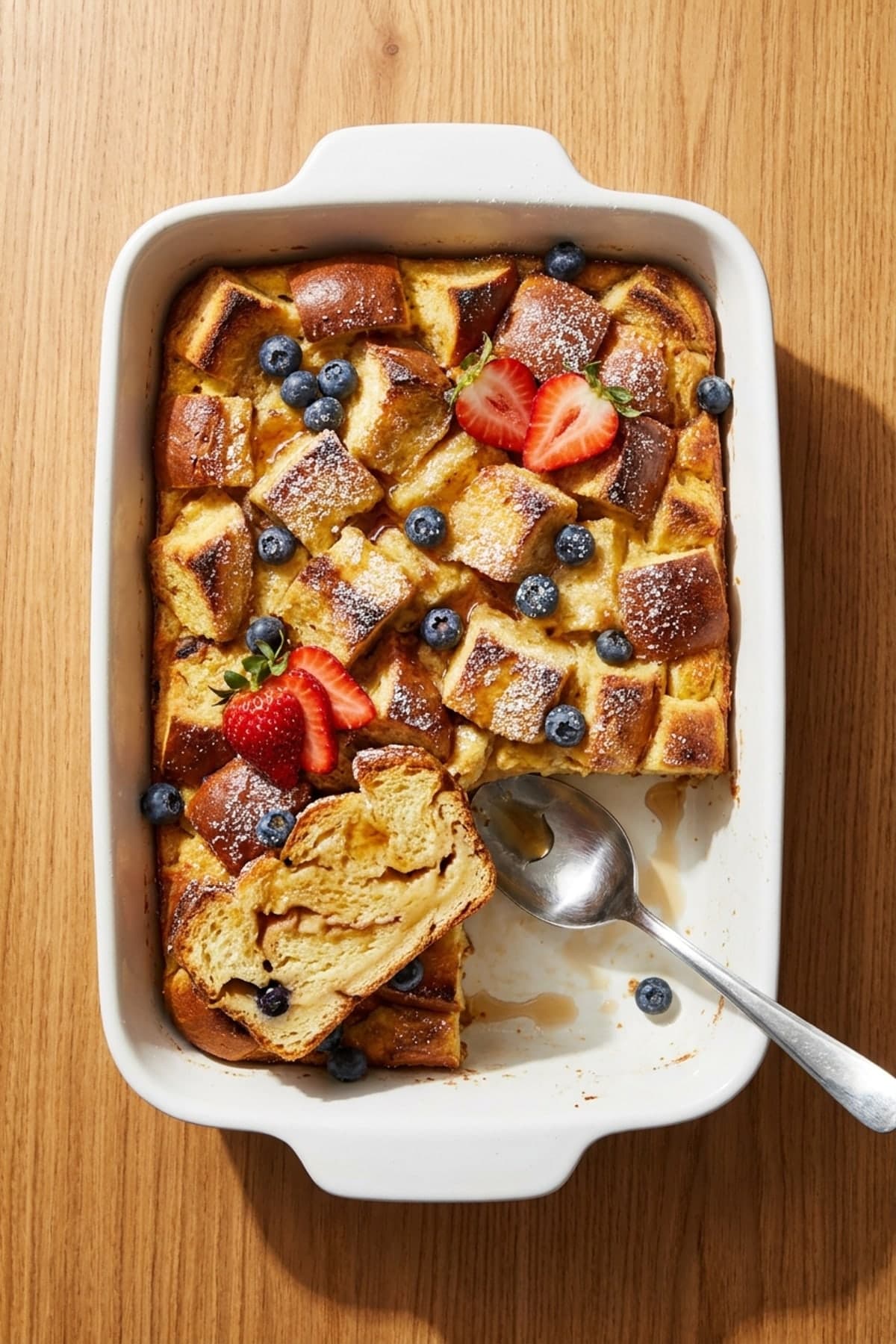
French Toast Pancakes
- Make-ahead
French Toast Casserole Built the Night Before
9 hr total8 servingsServes 88 hr 15 min prep
Measured ingredients, decisive texture cues, exact timing, freezing guidance, and a practical reheat make this french toast casserole dependable.

French Toast Pancakes
- Sheet pan
Baked French Toast That Skips the Skillet Entirely
35 min total4 servingsServes 415 min prep
Measured ingredients, decisive texture cues, exact timing, freezing guidance, and a practical reheat make this baked french toast dependable.

Breakfast Casseroles
Biscuits and Gravy Breakfast Casserole With Layered Biscuits
60 min total8 servingsServes 820 min prep
This biscuits and gravy breakfast casserole layers sausage, peppered gravy, eggs, cheddar, and biscuit pieces into easy-to-cut breakfast squares.

Breakfast Casseroles
- Feeds a crowd
Breakfast Casserole With Biscuits and Chicken Sausage
62 min total12 servingsServes 1220 min prep
Chicken sausage, spinach, cheddar, and eggs form a hearty breakfast casserole with biscuits baked on top for neat, practical portions.
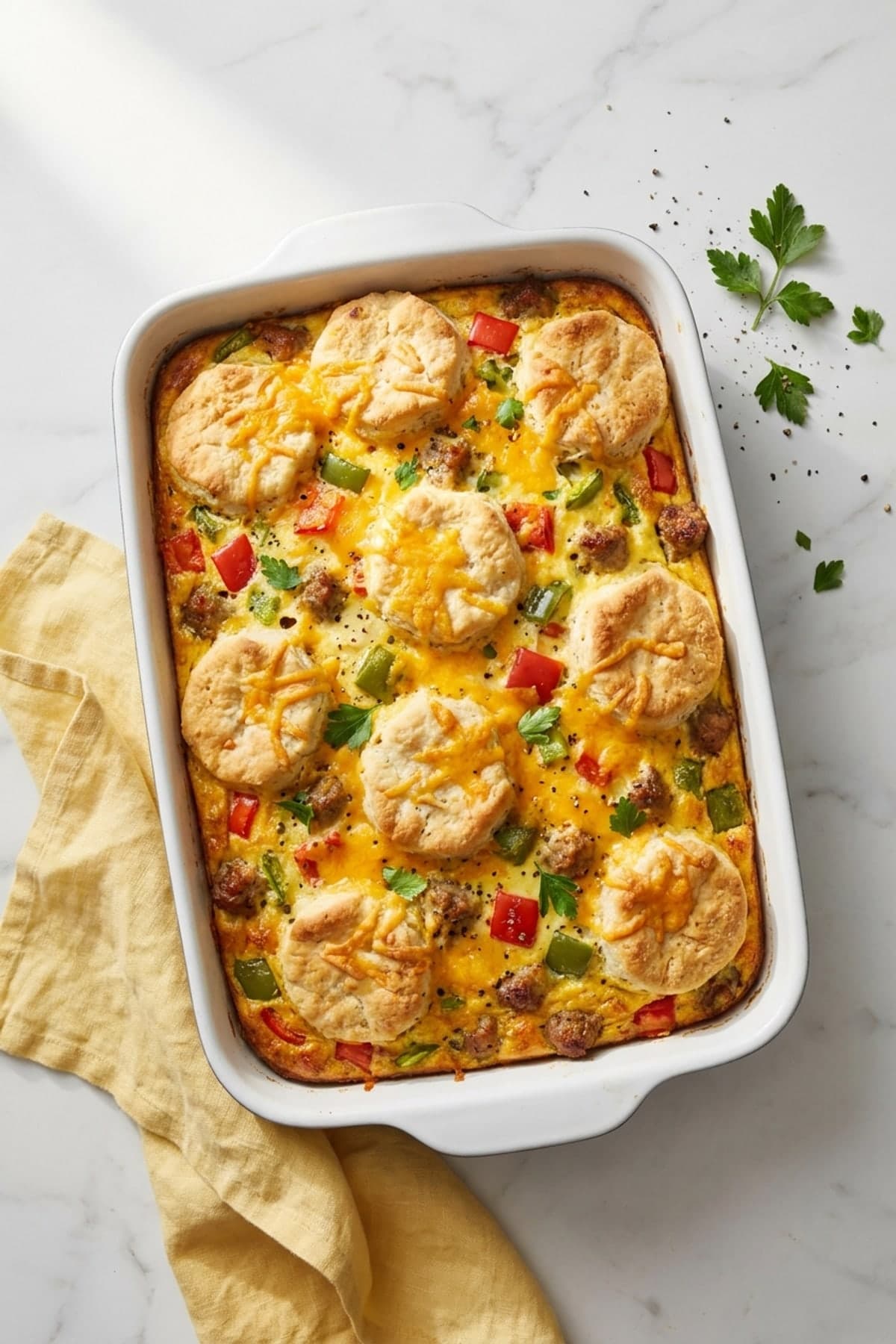
Breakfast Casseroles
- Make-ahead
Breakfast Casserole With Biscuits Baked Right on Top
1 hr 5 min total8 servingsServes 825 min prep
Measured ingredients, decisive texture cues, exact timing, freezing guidance, and a practical reheat make this breakfast casserole with biscuits dependable.