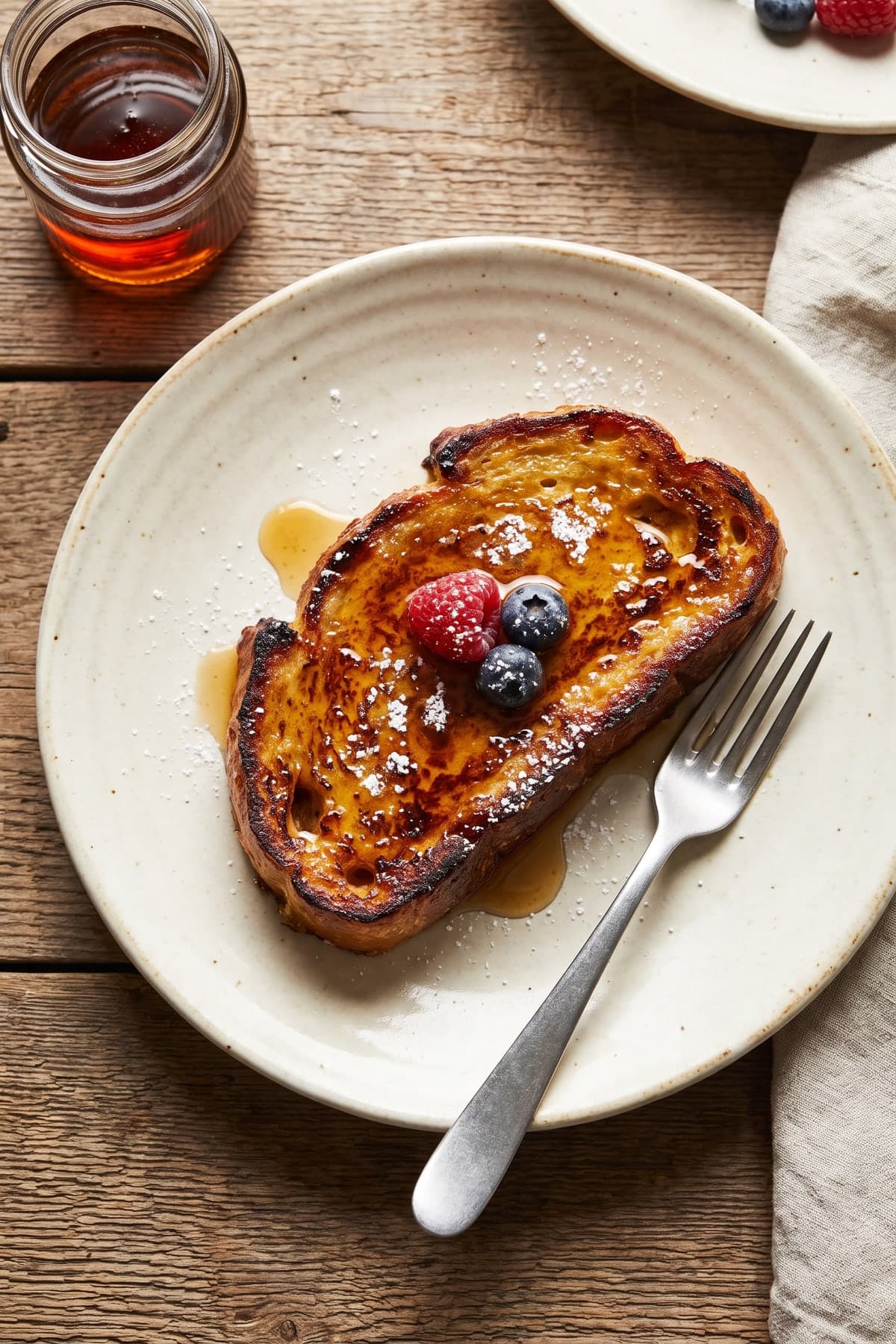
French Toast Recipe With Deep-Soaked Vanilla Custard
44 min total4 servings20 min prep24 min cookServes 4Category: French Toast Pancakes
Good French toast does not depend on a quick egg dip and a scorching pan. It needs bread with enough structure to hold a loose vanilla custard, plus a pause so that mixture reaches the center before cooking. This version uses thick day-old challah, a shallow soaking dish, and moderate heat for slices that stay creamy within and browned outside.
The timing is practical: soak while the skillet warms, then cook batches without compressing bread. Maple syrup is welcome, but the custard carries the flavor. Save extra slices for tomorrow, when a short microwave reheat handles breakfast without another pan.
Why this works
- Day-old challah has a slightly dry crumb that absorbs custard without collapsing as quickly as fresh, soft bread. Thick slices also give the center time to turn tender before the exterior gets dark.
- Using both milk and half-and-half keeps the custard pourable, so it moves through bread during a short soak rather than sitting as a heavy coating. Vanilla, cinnamon, and salt keep the flavor direct.
- Moderate skillet heat is deliberate. It gives the soaked interior time to cook while butter builds an even brown surface, and batches stay manageable on an ordinary weekday.
Ingredients
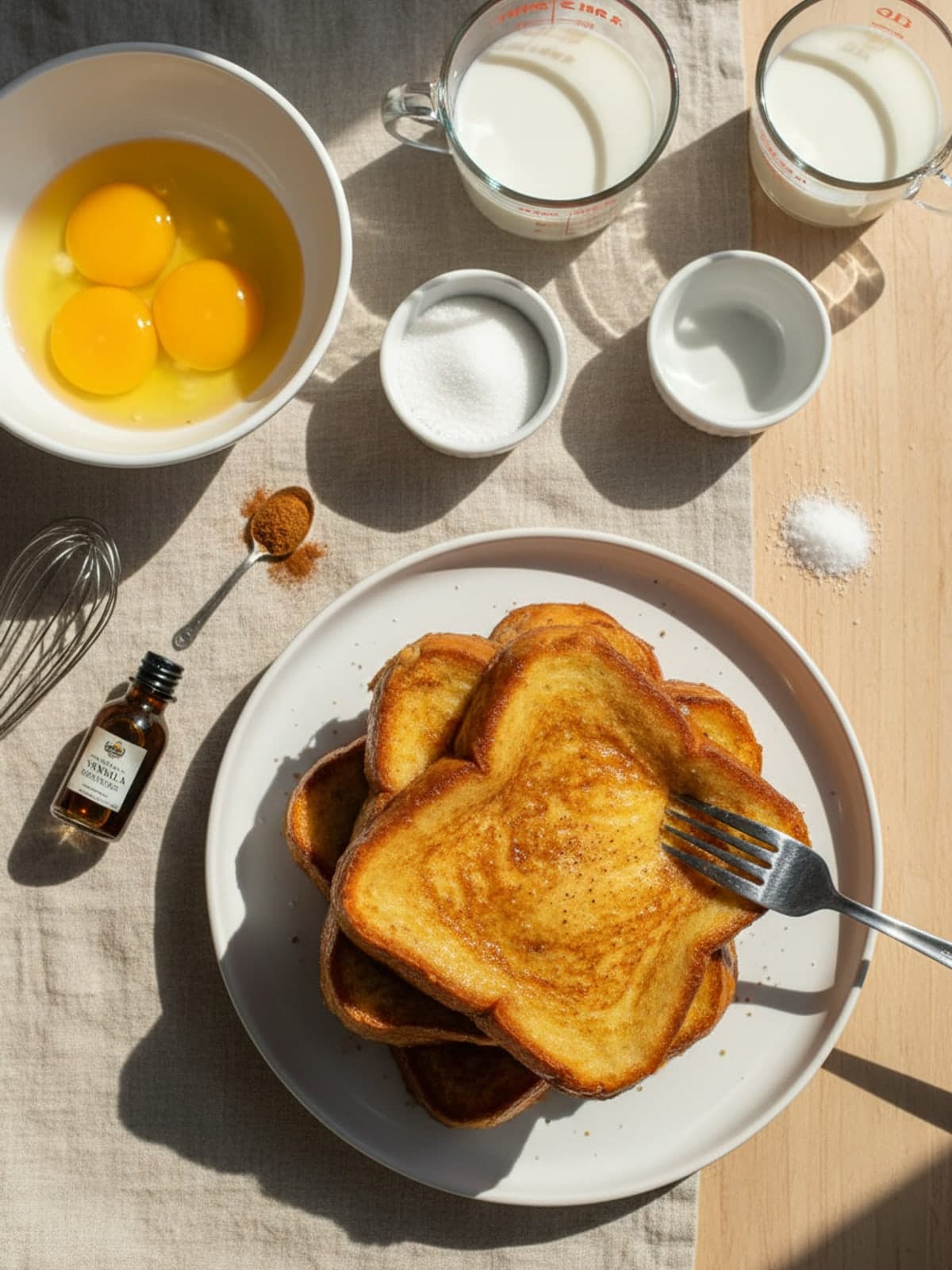
- 8 thick slices day-old challah, about 1 inch thick (450 g)
- 4 large eggs (200 g)
- 1 cup whole milk (240 g)
- 1/2 cup half-and-half (120 g)
- 2 tablespoons granulated sugar (25 g)
- 2 teaspoons pure vanilla extract (10 g)
- 1/2 teaspoon warm ground cinnamon (1 g)
- 1/4 teaspoon kosher salt (1 g)
- 3 tablespoons unsalted butter, divided (42 g)
- 3/4 cup maple syrup and 1 cup berries, for serving (180 g)
Ingredient notes
- Challah is the best fit here because its enriched crumb stays cohesive after soaking. Buy a loaf one day ahead, or leave slices uncovered on a rack for several hours to dry their cut surfaces.
- Whole milk keeps the custard fluid enough to penetrate the bread. Do not replace all of it with cream, which makes a thicker mixture that tends to coat the outside before the middle has absorbed much.
- Half-and-half adds richness without turning the custard dense. If needed, use additional whole milk instead; the finished slices will be lighter, but the soaking method and cooking time remain the same.
- Use large eggs and whisk until no visible strands remain. A thoroughly blended custard cooks more evenly, so the center of each slice has the same tender texture as its edges.
- Vanilla extract, cinnamon, and kosher salt give the custard definition without overwhelming the bread. Freshly grated nutmeg is optional, but use only a small pinch because it can quickly dominate the maple syrup.
- Unsalted butter browns gently and lets you control the salt level. Wipe away very dark bits between batches, then add fresh butter so later slices do not pick up a bitter flavor.
How to make French Toast With Deep-Soaked Vanilla Custard
Dry the bread
Arrange the challah slices on a wire rack and leave them uncovered for at least 2 hours, or use day-old bread. The surface should feel dry while the centers remain soft. Dry bread takes in custard steadily instead of tearing when lifted from the dish.
Whisk the custard
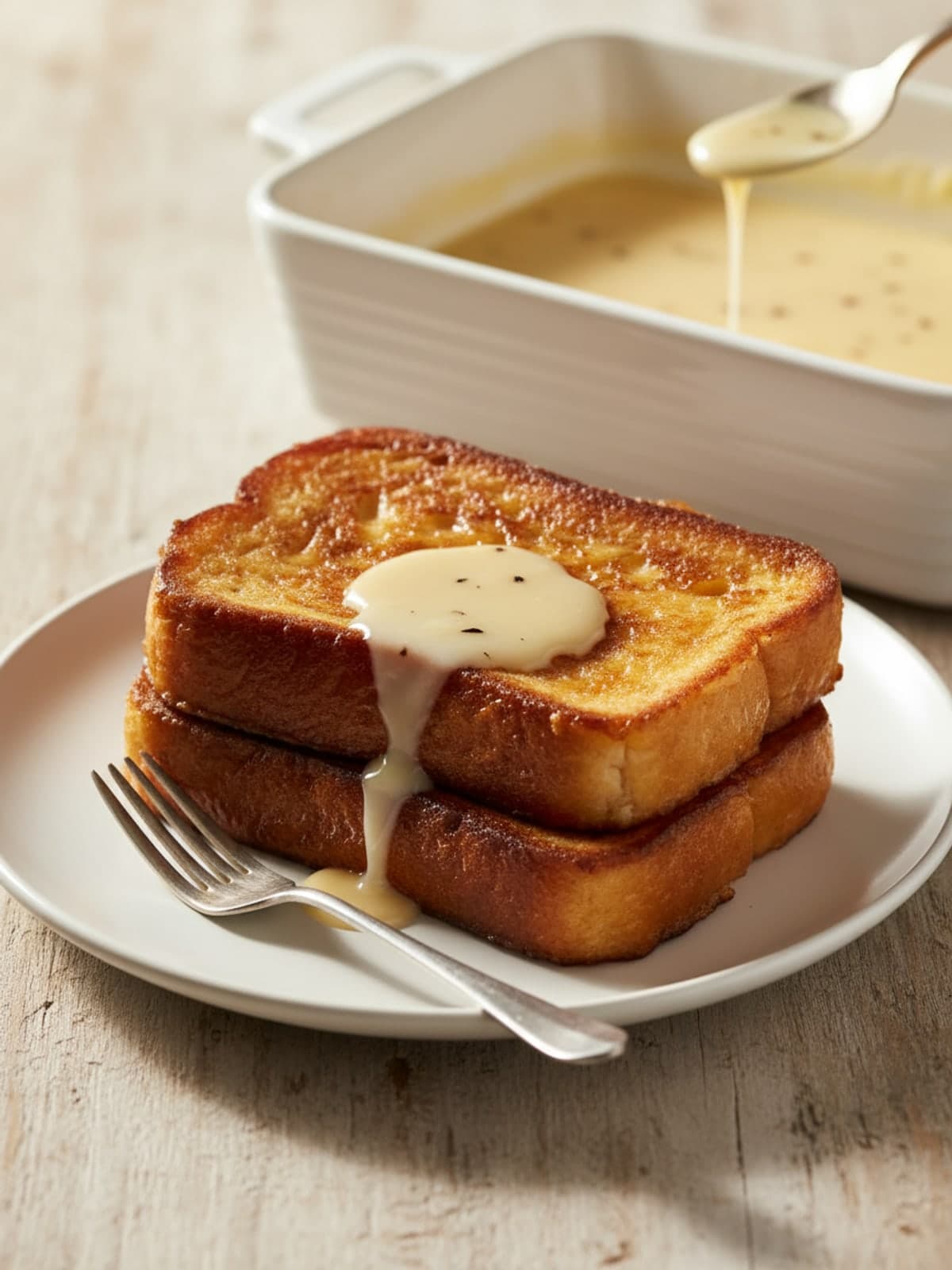
In a wide, shallow baking dish, whisk eggs, whole milk, half-and-half, sugar, vanilla, cinnamon, and salt until smooth. Scrape along the dish corners with the whisk. A shallow dish matters because it exposes both broad sides of every slice to the liquid.
Soak both sides
Lay two slices in the custard without crowding them. Soak 3 minutes, turn carefully, and soak 3 minutes more. Press each slice very lightly with a spatula once after turning; this encourages absorption without squeezing out the bread's interior structure.
Heat the skillet
Set a large nonstick or well-seasoned skillet over medium-low heat for 3 minutes. Add 1 tablespoon butter and swirl when it foams. The butter should sizzle quietly, not smoke. Keep the heat moderate so the custard cooks through before the surface becomes too dark.
Cook gently
Lift soaked bread, letting excess custard drip back into the dish for a few seconds. Cook two slices for 3 to 4 minutes per side, until deeply golden. Check the center of the thickest slice; continue cooking until it reaches 160°F.
Finish in batches
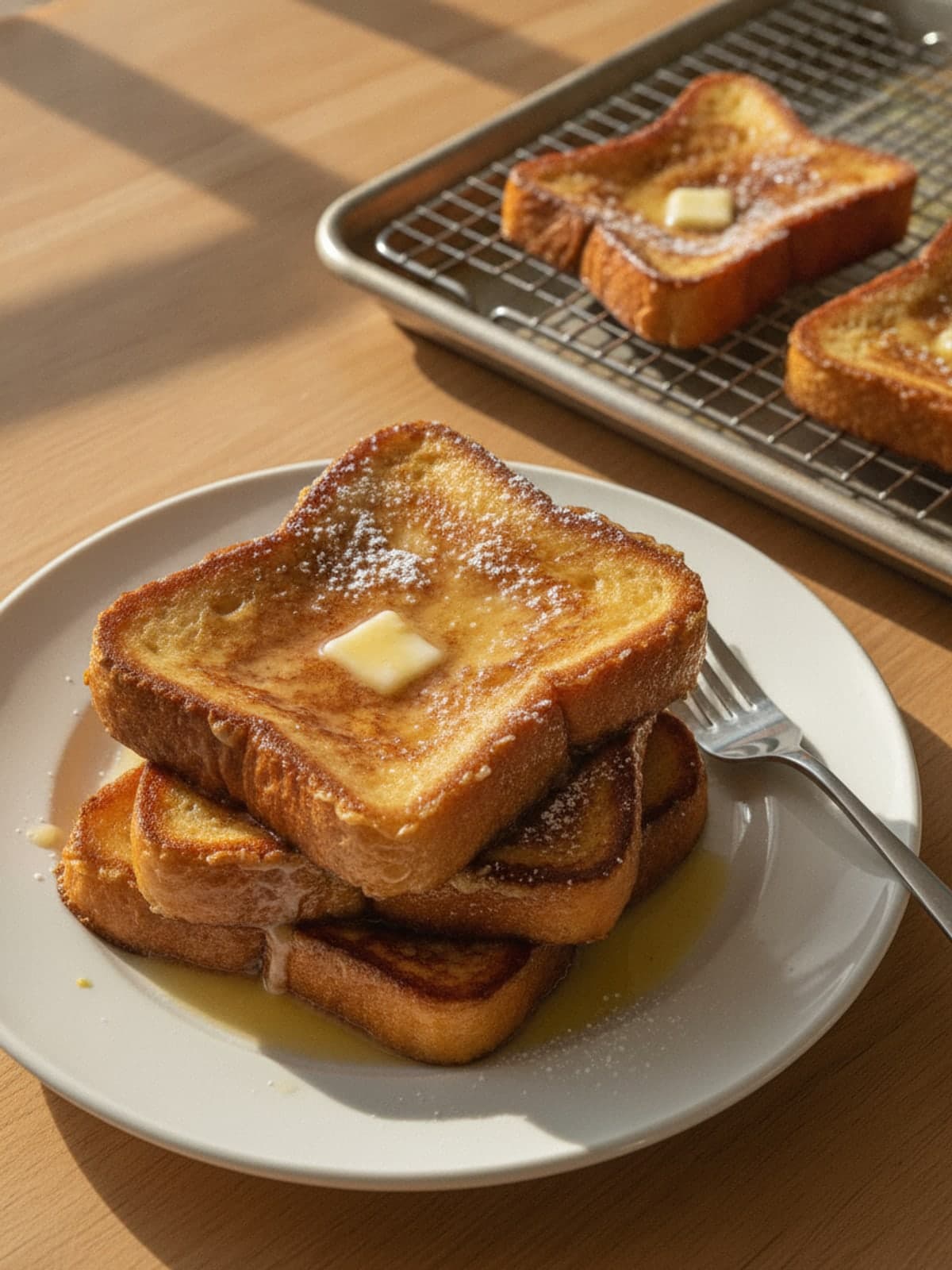
Move cooked slices to a rack set over a sheet pan, not a stacked plate. Add remaining butter and repeat with the last slices. Rest the finished French toast 2 minutes before serving, which lets steam settle and keeps the browned surface from turning damp.
The recipe
French Toast With Deep-Soaked Vanilla Custard
PrintThick challah slices soak in loose vanilla custard before gentle skillet cooking, giving this French toast a tender center, buttery flavor, and an evenly browned exterior for breakfast.
Course: Breakfast · Cuisine: Other
- Prep
- 20 min
- Cook
- 24 min
- Total
- 44 min
- Yield
- 4 servings
Nutrition Facts
Per serving. Recipe yield: 4 servings.
- Calories
- 695 kcal
- Protein
- 19.9 g
- Carbs
- 95.2 g
- Fat
- 25.5 g
- Fiber
- 2.7 g
- Sugar
- 40.2 g
- Sodium
- 647 mg
For 2 servings, scaled from the per-serving figures. Recipe yield: 4 servings.
- Calories
- 1390 kcal
- Protein
- 39.8 g
- Carbs
- 190.4 g
- Fat
- 51 g
- Fiber
- 5.4 g
- Sugar
- 80.4 g
- Sodium
- 1294 mg
For 3 servings, scaled from the per-serving figures. Recipe yield: 4 servings.
- Calories
- 2085 kcal
- Protein
- 59.7 g
- Carbs
- 285.6 g
- Fat
- 76.5 g
- Fiber
- 8.1 g
- Sugar
- 120.6 g
- Sodium
- 1941 mg
Ingredients
Instructions
- Make custard. Whisk eggs, milk, half-and-half, sugar, vanilla, cinnamon, and salt in a shallow baking dish until smooth. Use a dish wide enough for two slices. Set a wire rack over a sheet pan beside the stove.
- Soak challah. Lay two challah slices in custard; soak 3 minutes. Turn carefully with a wide spatula and soak 3 minutes more. Press each slice lightly after turning to encourage absorption without squeezing the crumb. Soak later slices only when the skillet is free.
- Heat skillet. Heat a large nonstick skillet over medium-low for 3 minutes. Add 1 tablespoon butter and swirl when foaming. It should sizzle quietly, not smoke; if it browns quickly, lower heat before adding bread.
- Cook slices. Lift two soaked slices and let excess custard drip into the dish for several seconds. Cook 3 to 4 minutes per side, turning once, until deeply golden. Test the thickest slice; its center must reach 160°F.
- Hold rack. Transfer cooked slices to the prepared rack instead of stacking them on a plate. Air beneath them releases steam and protects the browned crust. Keep the rack in a 200°F oven only while finishing batches.
- Finish serve. Add butter as needed and repeat with remaining challah. Rest all slices on the rack for 2 minutes, then serve warm with maple syrup and berries.
Notes
- Day-old challah absorbs custard without tearing. If fresh, arrange slices on a rack uncovered for 2 to 4 hours before soaking.
- Keep heat medium-low for thick slices and allow four minutes per side. Butter should brown gradually, never darken sharply around the edges.
- Cool leftovers completely on a rack before refrigerating. Microwave one slice for 60 seconds, adding 15-second bursts only when its center remains cool.
- french toast recipe
- challah french toast
- custard french toast
- stovetop breakfast
Tips
- Keep the custard in a shallow dish rather than a bowl. Broad contact with the bread is what makes a six-minute soak useful, and it prevents awkward flipping with dripping slices.
- Do not rush with high heat. If butter browns before a slice has cooked for two minutes, lower the burner and wipe out the skillet before adding fresh butter.
- Use a thin, wide spatula to turn the soaked bread. A narrow utensil can split the softened center, especially with very thick challah slices.
- Hold cooked slices on a wire rack, never directly on a plate. Air underneath preserves the browned exterior while you finish the remaining batches.
Serving and storage
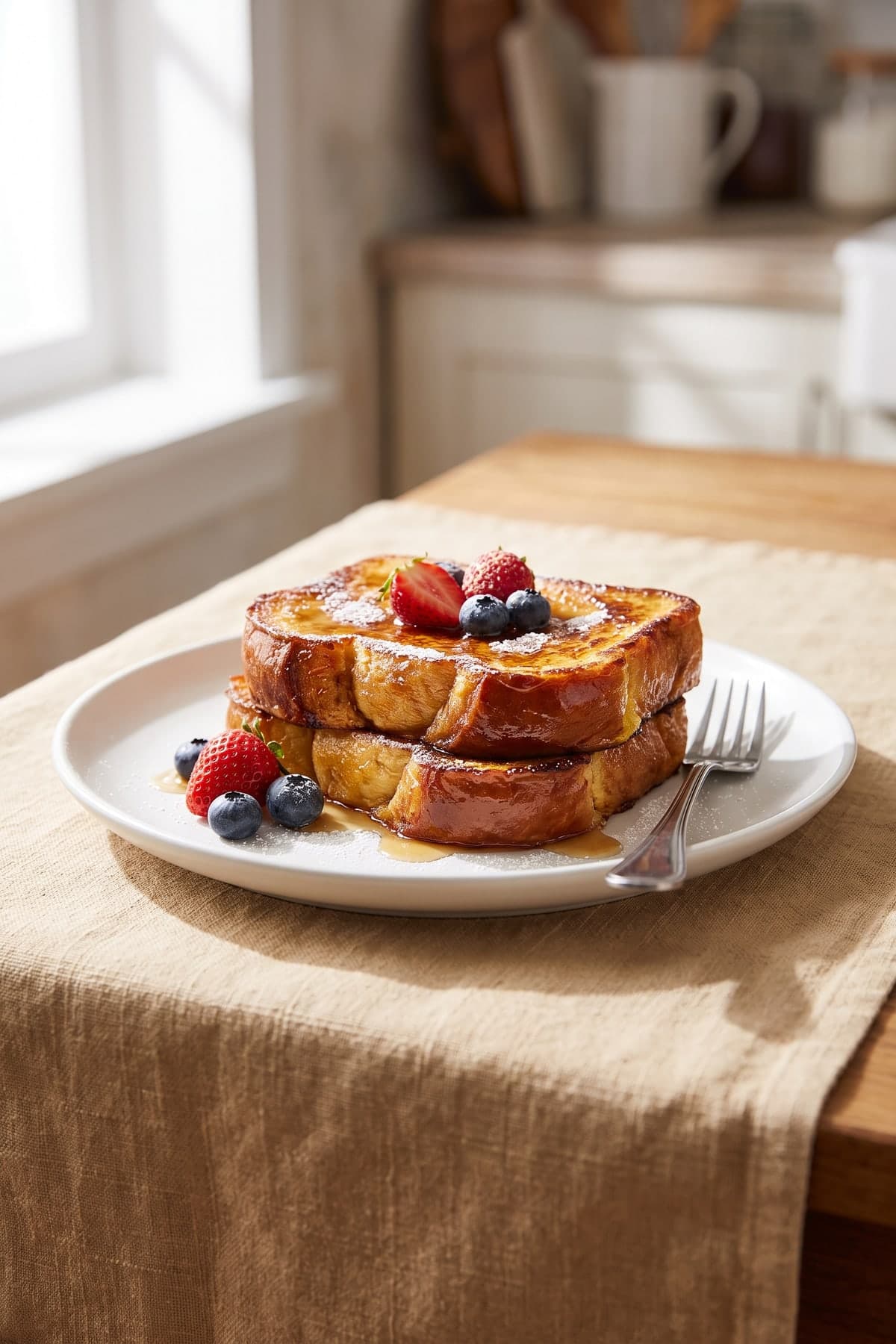
Serve two warm slices with maple syrup, sliced bananas, berries, or a spoonful of Greek yogurt. For a less sweet plate, add crisp bacon or breakfast sausage and keep the syrup at the table. A dusting of powdered sugar is optional, not required. If cooking for several people, place the rack in a 200°F oven while batches finish, then bring everything to the table together with butter and fruit.
Questions people ask
Why does my French toast stay wet in the middle?
The skillet may be too hot, browning the outside before the custard has time to cook through. Use medium-low heat and thick but not oversized slices. Let day-old bread soak for the full time, then cook each side until deeply golden and the center reaches 160°F.
Can I prepare the custard the night before?
Yes. Whisk the custard, cover it, and refrigerate it overnight. Soak the bread shortly before cooking rather than leaving challah submerged overnight; extended soaking can make its crumb difficult to lift and turn. Give the chilled custard another whisk before using it.
Ratings and reviews
No ratings yet. If you have cooked this, yours would be the first.
Thank you. Your rating has been counted.
You have already rated this recipe, so this one was not counted.
Please choose between one and five stars.
Reviews are limited to 600 characters. Nothing was saved.
Names are limited to 40 characters. Nothing was saved.
That is a lot of ratings in one hour. Please try again later.
Before you go
Keep this recipe close for the mornings when a carton of eggs and a loaf of slightly stale challah need a clear assignment. The soak is short enough for a normal morning, and the leftover plan is already handled. Pair it with fruit, freeze a few slices, or set out syrup and call breakfast done.
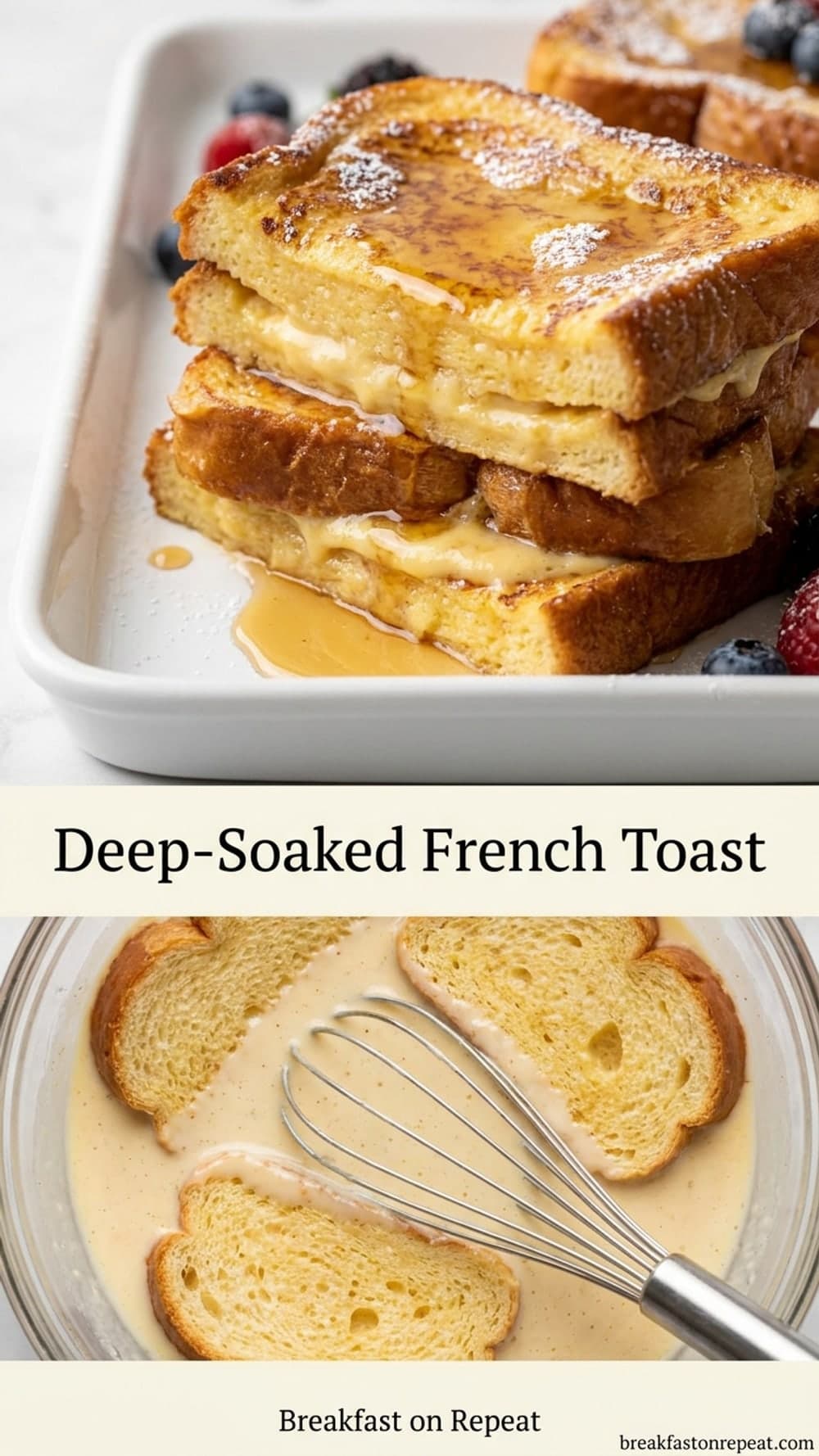
Save this for later
Deep-Soaked French Toast
Tags
- french-toast
- custard
- challah
- stovetop-breakfast
Sources
- Eggs and dishes containing eggs should be cooked until yolks and whites are firm or to 160°F, and kept refrigerated at 40°F or colder.What You Need to Know About Egg Safety | FDA
- Leftovers keep 3 to 4 days in the refrigerator, and perishable food should be refrigerated within 2 hours.Leftovers and Food Safety | Food Safety and Inspection Service
Read next
French Toast Pancakes
- Make-ahead
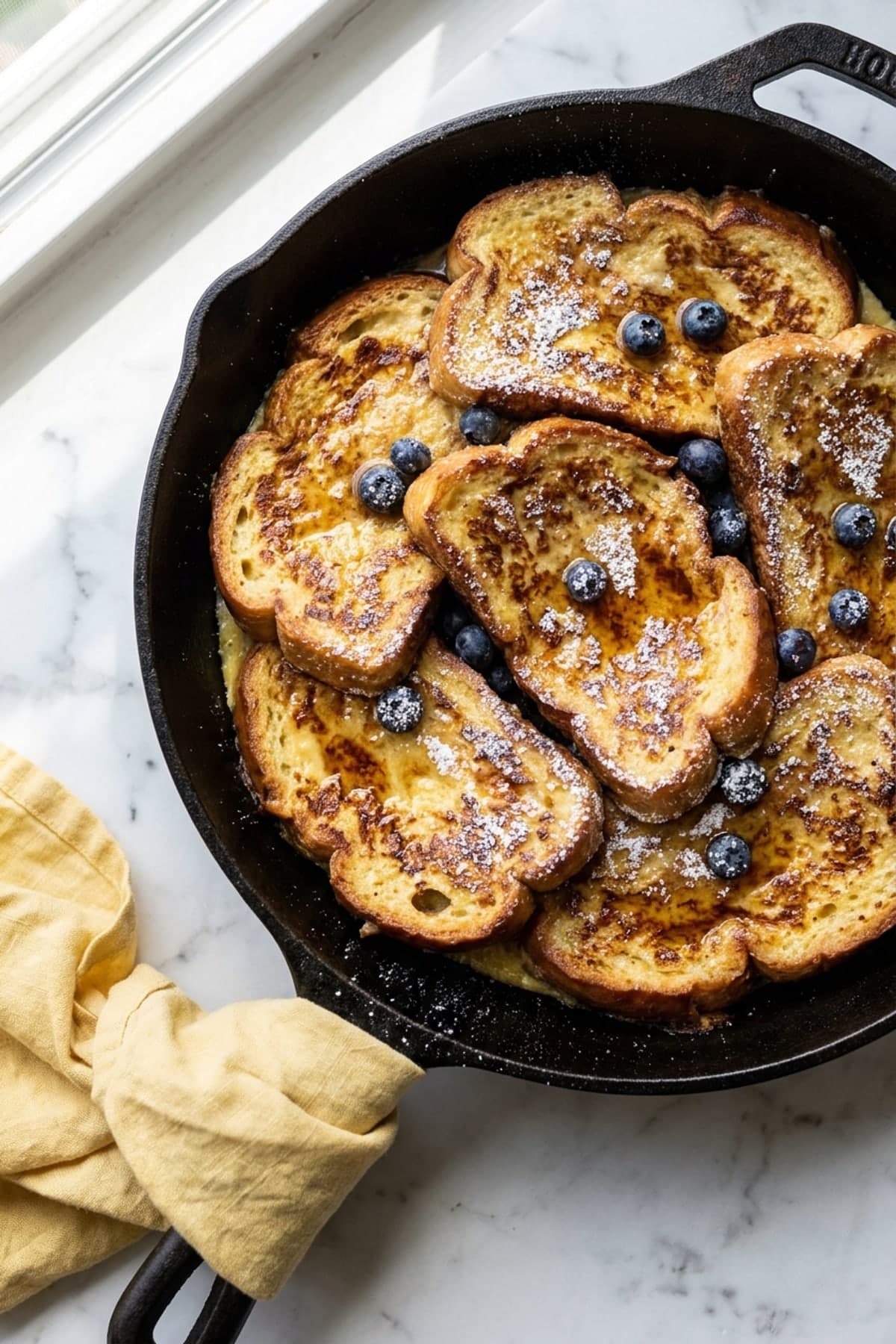
Brioche French Toast With a Shorter Soak
35 min total4 servingsServes 415 min prep
Measured ingredients, decisive texture cues, exact timing, freezing guidance, and a practical reheat make this brioche french toast dependable.
French Toast Pancakes
- Make-ahead
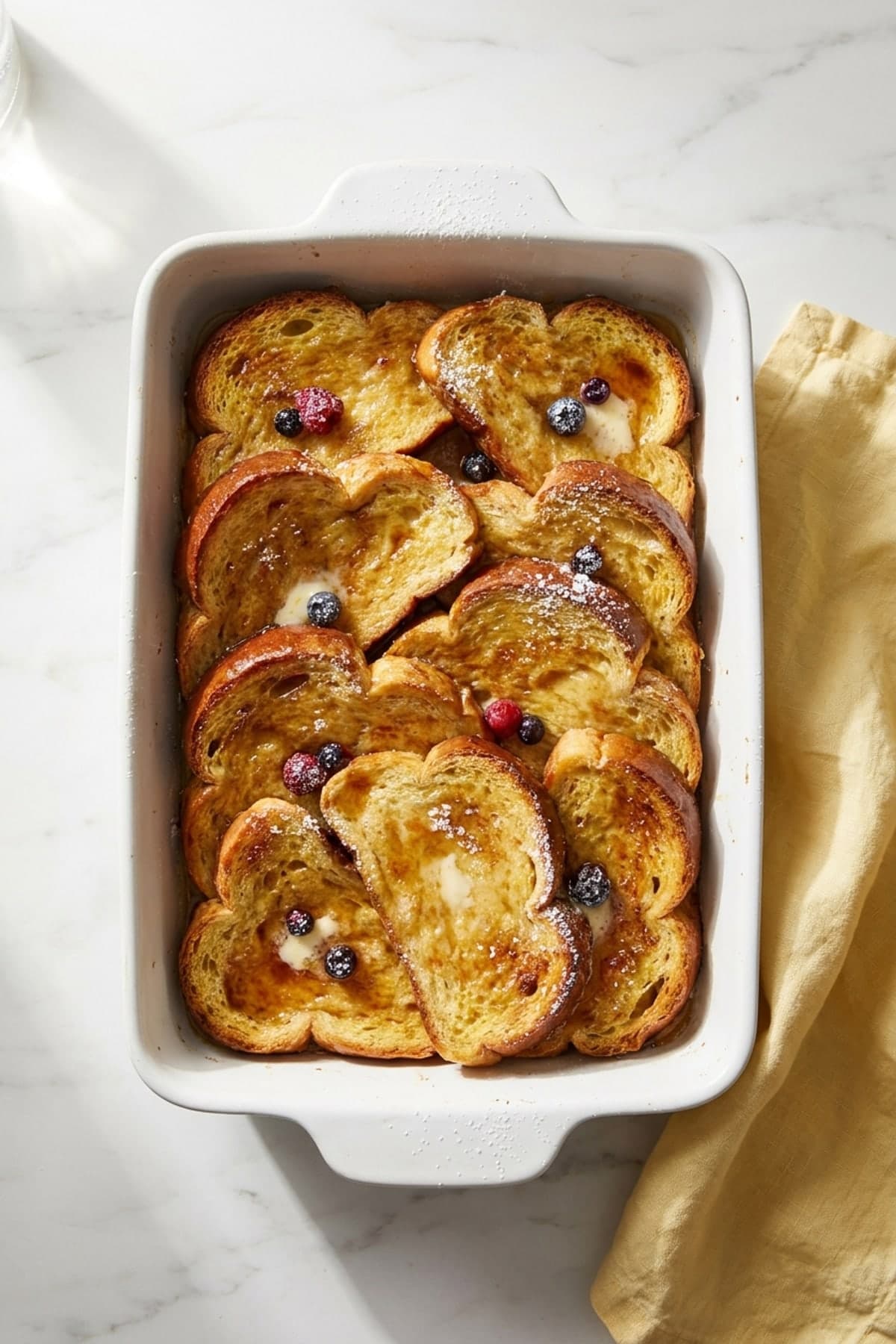
Overnight French Toast You Cover and Forget
8 hr 50 min total4 servingsServes 48 hr 15 min prep
Measured ingredients, decisive texture cues, exact timing, freezing guidance, and a practical reheat make this overnight french toast dependable.

French Toast Pancakes
- Sheet pan
Baked French Toast That Skips the Skillet Entirely
35 min total4 servingsServes 415 min prep
Measured ingredients, decisive texture cues, exact timing, freezing guidance, and a practical reheat make this baked french toast dependable.

French Toast Pancakes
- Feeds a crowd
Blueberry French Toast Casserole With Berries Between
80 min total12 servingsServes 1225 min prep
This blueberry french toast casserole layers berries between sturdy bread cubes, lemon custard, and a buttery brown sugar topping for easy portions.

French Toast Pancakes
French Toast Bake Overnight for an Eight O’Clock Oven
70 min total6 servingsServes 620 min prep
This french toast bake overnight uses challah, vanilla custard, and a cinnamon crumb topping for an easy eight o’clock oven plan.
French Toast Pancakes
- Sheet pan
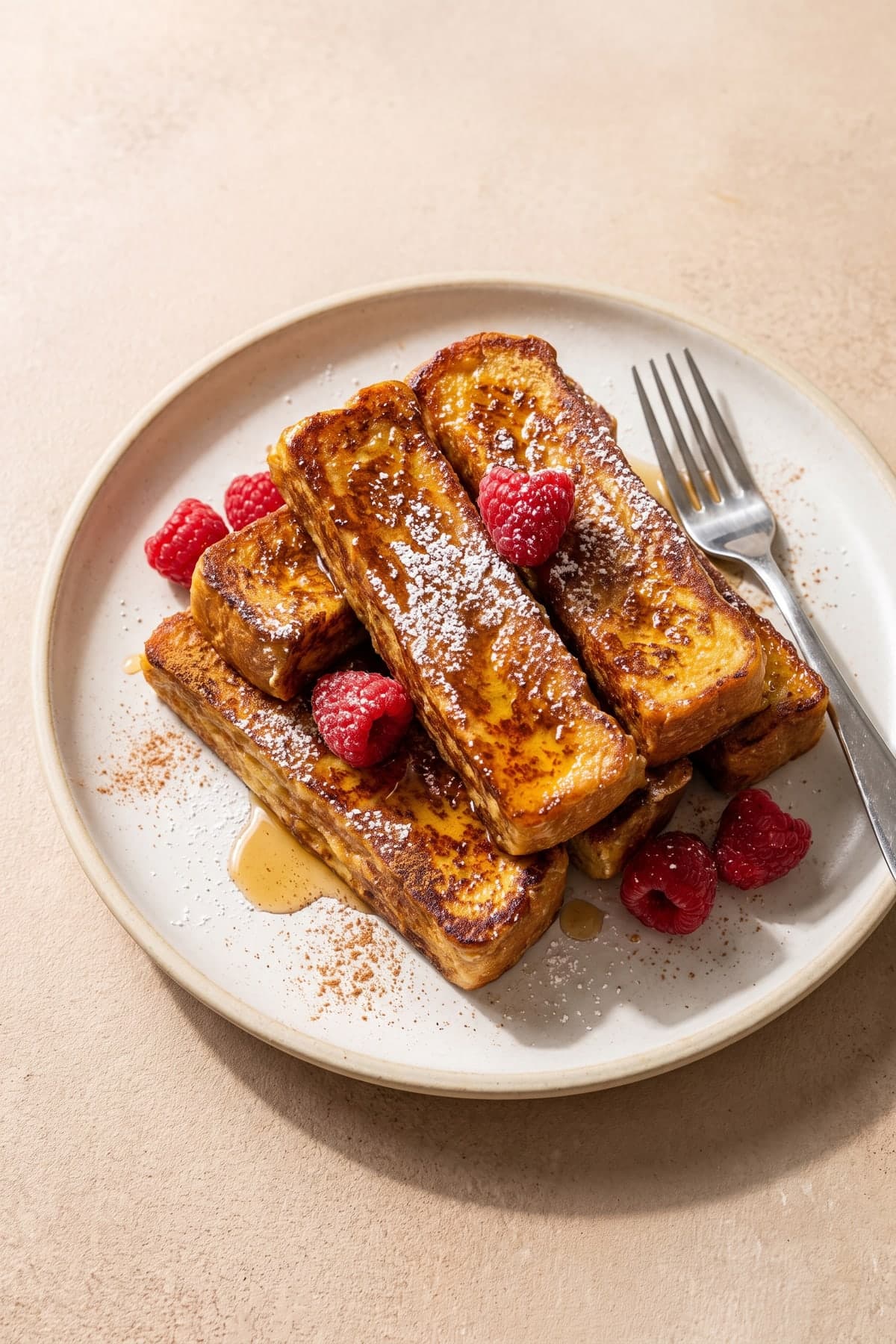
French Toast Sticks for the Freezer
40 min total18 sticks, serves 4Serves 420 min prep
Bake cinnamon French toast sticks on a sheet pan, freeze them separately, and reheat a few at a time for easy weekday breakfasts.