
Scrambled Eggs With Cottage Cheese and Visible Curds
20 min total2 servings12 min prep8 min cookServes 2Category: Eggs
- Quick
- One pan
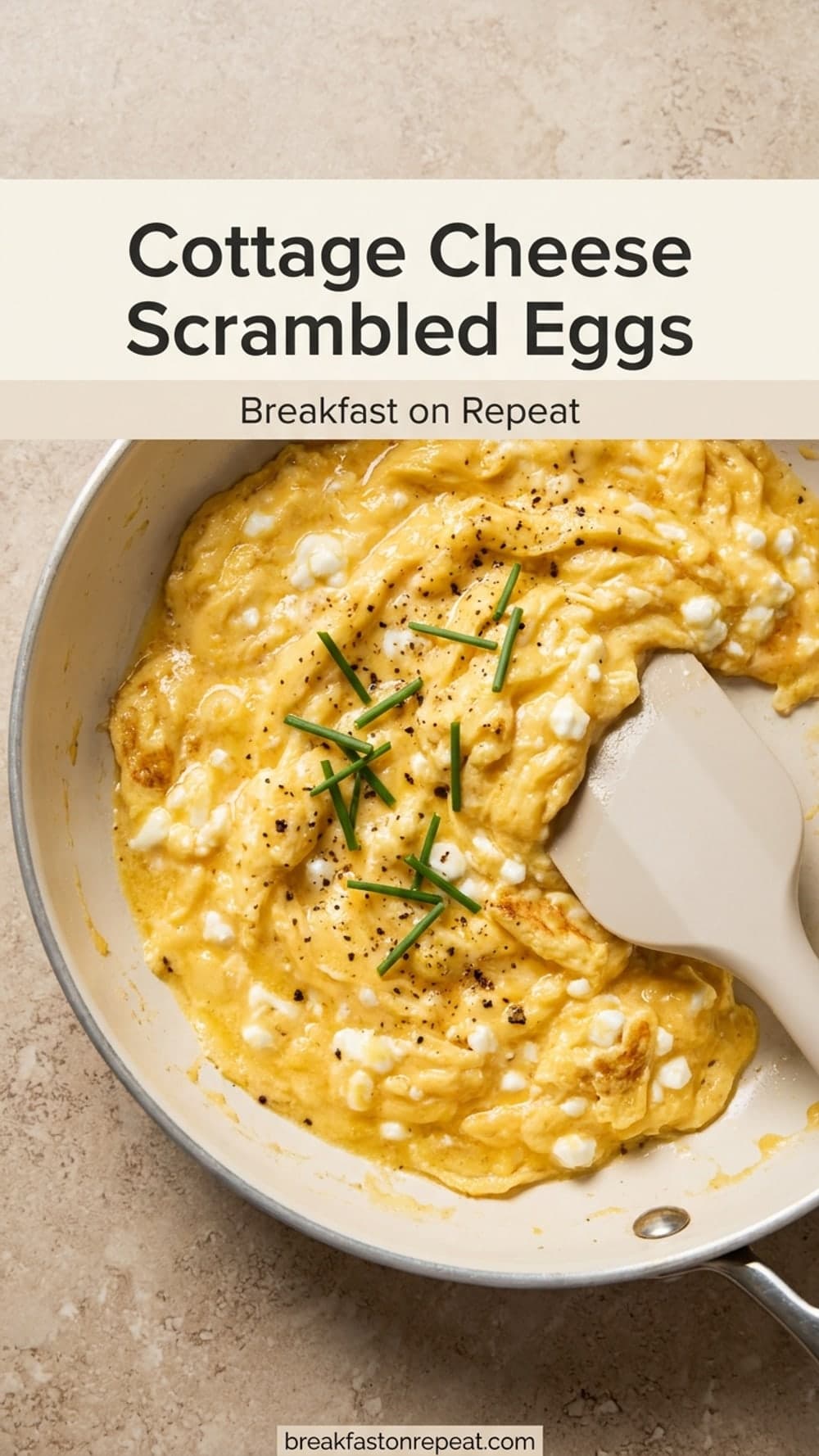
Scrambled eggs with cottage cheese are for mornings when you want eggs that stay soft without turning them into a sauce project. The cottage cheese folds into the eggs as distinct, tender curds, adding little pockets of creaminess rather than disappearing completely. That texture is the point, so choose a small-curd container and keep the heat low.
A skillet, flexible spatula, and seven unhurried minutes handle the job. Pull the pan while eggs look slightly glossy; residual heat finishes the set. Spoon onto toast, tuck into a tortilla, or eat from a bowl before coffee catches up.
Why this works
- Small-curd cottage cheese gives the finished eggs clear pockets of dairy instead of a uniformly blended texture. Adding it near the end keeps those curds visible and lets their moisture loosen the eggs gently.
- Low heat gives you time to sweep the eggs into soft folds before any edge turns dry. A flexible silicone spatula reaches the pan corners without shredding the curds.
- One skillet and ordinary refrigerator ingredients make this easy to scale. Spoon the eggs over toast, onto English muffins, into wraps, or alongside leftover rice.
Ingredients
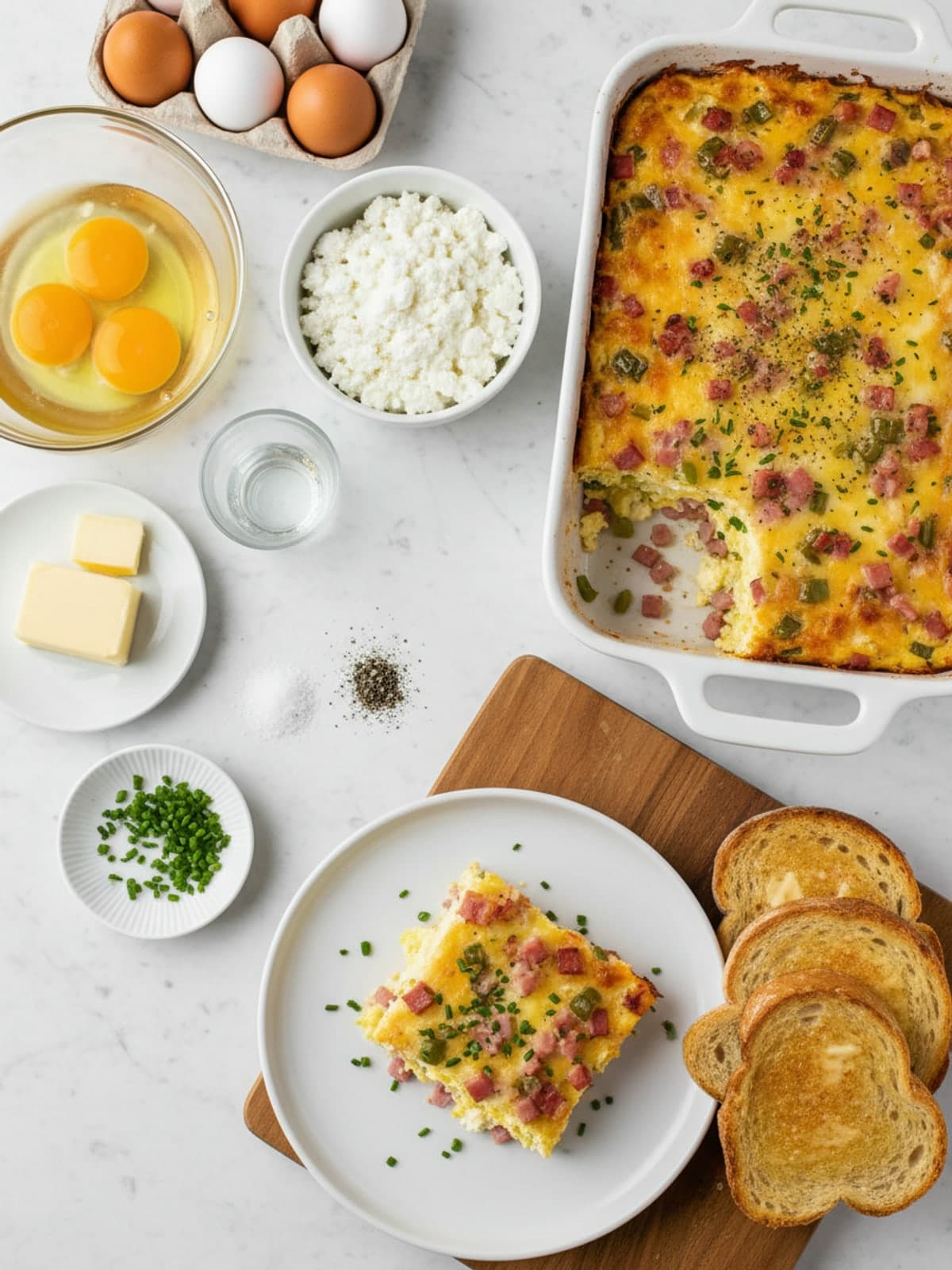
- 6 large cold eggs, preferably from a fresh carton (300 g)
- 1/2 cup small-curd, full-fat cottage cheese, stirred (113 g)
- 1 tablespoon unsalted butter, divided for the skillet (14 g)
- 1 tablespoon cold water, optional but helpful (15 g)
- 1/4 teaspoon kosher salt, plus more as needed (1.5 g)
- 1/8 teaspoon freshly ground black pepper (0.3 g)
- 2 tablespoons thinly sliced fresh chives, divided (6 g)
- 4 thick buttered slices sourdough toast, warm, for serving (160 g)
Ingredient notes
- Small-curd, full-fat cottage cheese is the practical choice because its curds remain distinct and its texture is less watery. Large-curd cottage cheese works, but break it up briefly with a spoon for smaller pockets throughout the eggs.
- Cold eggs are easier to beat evenly with the seasonings before they hit the skillet. Six large eggs make two generous portions, but halve everything for one person and use a smaller pan.
- Butter gives the eggs a gentle, rounded flavor and helps the spatula move smoothly across the skillet. Use olive oil if needed, although it brings a more noticeable flavor to the finished eggs.
- A spoonful of water creates a little steam during the early cooking stage. Skip it if your cottage cheese looks especially loose, or use it when the eggs need a bit more spreadability.
- Fresh chives add an onion note without the sharp bite of raw onion. Scallion greens, finely chopped dill, or parsley can fill in, but stir delicate herbs in near the end.
How to make Scrambled Eggs With Cottage Cheese and Visible Curds
Set up the pan
Place a nonstick skillet over low heat and set a flexible spatula beside it. Keep a warm plate nearby, because the eggs continue setting quickly once they leave the pan. Measure the cottage cheese now; adding it late is what keeps the curds visible instead of fully melting into the egg mixture.
Beat the eggs
Crack the eggs into a medium bowl. Add water, salt, pepper, and half the chives, then beat with a fork until the yolks and whites are fully combined with no clear streaks. Leave the cottage cheese out of this bowl so it does not get broken down by vigorous mixing.
Melt the butter
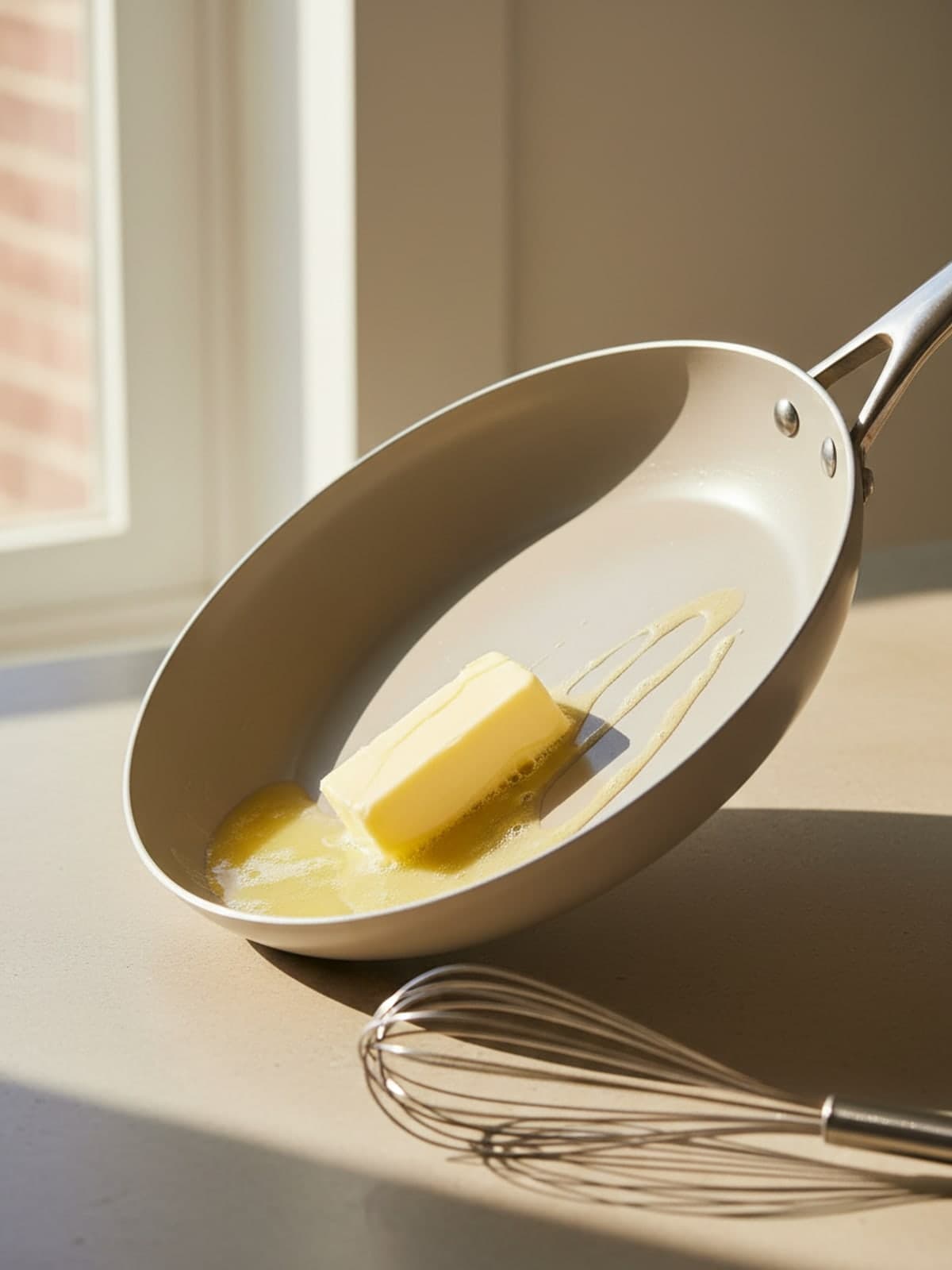
Add butter to the warm skillet and let it melt without browning. Tilt the pan so the butter coats the bottom and lower sides. If it begins to foam aggressively or color at the edges, move the skillet off the burner briefly; the pan is running hotter than the eggs need.
Cook soft folds
Pour in the beaten eggs and wait about 20 seconds. Use the spatula to drag cooked egg from the outer edge toward the center, then pause. Repeat slowly, turning the skillet as needed, until loose ribbons form and roughly two-thirds of the egg looks softly set.
Fold in cottage cheese
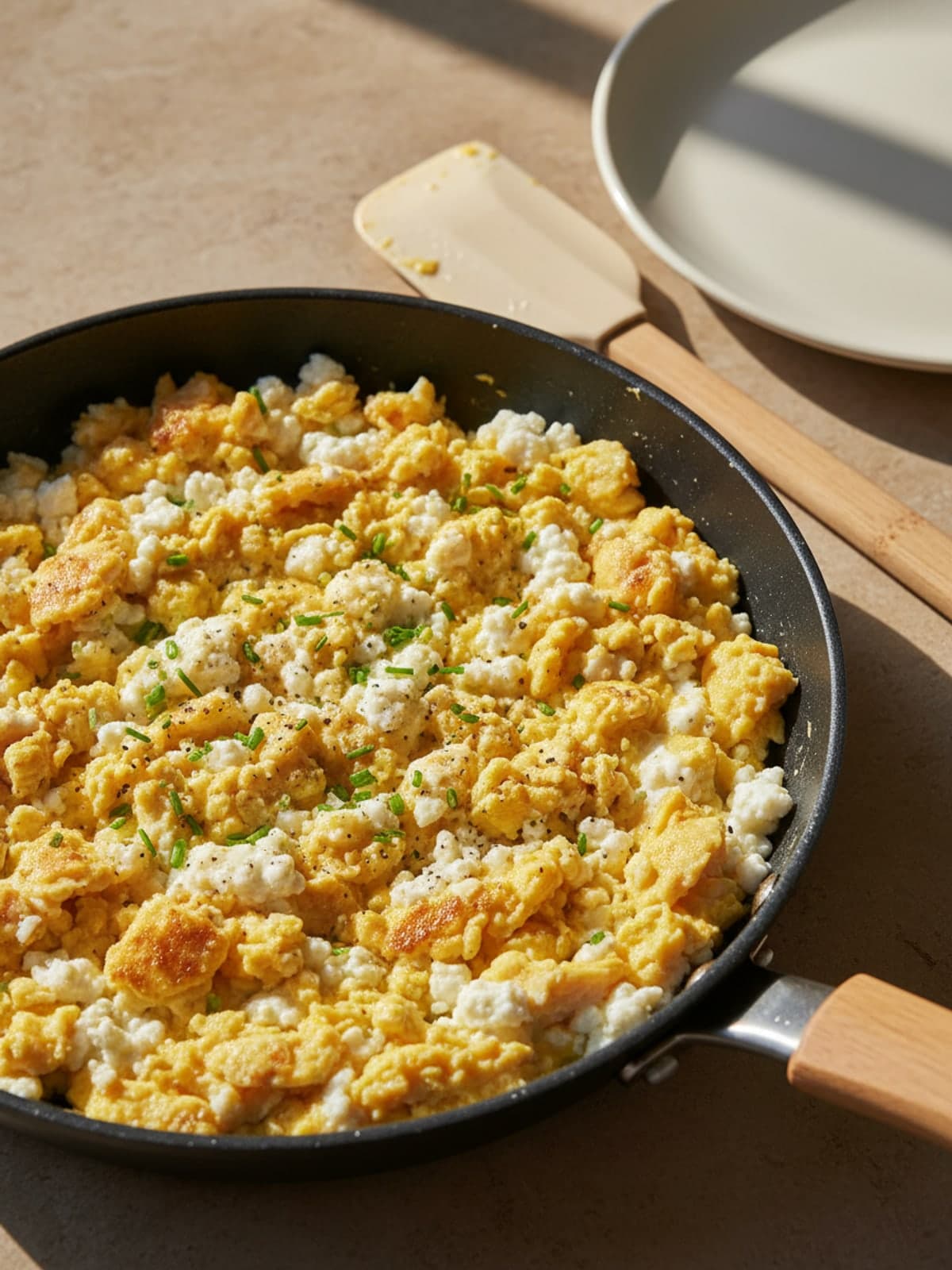
Scatter the cottage cheese over the soft eggs. Fold it through only three or four times, keeping clear curds rather than stirring until smooth. Continue cooking over low heat for about one minute, just until the egg surrounding the curds is mostly set but still looks glossy.
Finish off heat
Remove the skillet from the burner and fold once more. Let the eggs stand for 30 seconds, then taste and add salt or pepper if needed. Transfer immediately to warm toast or a bowl, and finish with the remaining chives while the folds are still tender.
The recipe
Scrambled Eggs With Cottage Cheese and Visible Curds
PrintLow-and-slow scrambled eggs folded with small-curd cottage cheese stay tender and creamy, while distinct dairy curds provide lightly tangy pockets throughout a breakfast that comes together in one skillet.
Course: Breakfast · Cuisine: Other
- Prep
- 12 min
- Cook
- 8 min
- Total
- 20 min
- Yield
- 2 servings
Nutrition Facts
Per serving. Recipe yield: 2 servings.
- Calories
- 541 kcal
- Protein
- 32.4 g
- Carbs
- 44.7 g
- Fat
- 24.9 g
- Fiber
- 2 g
- Sugar
- 4.7 g
- Sodium
- 1192 mg
For 2 servings, scaled from the per-serving figures. Recipe yield: 2 servings.
- Calories
- 1082 kcal
- Protein
- 64.8 g
- Carbs
- 89.4 g
- Fat
- 49.8 g
- Fiber
- 4 g
- Sugar
- 9.4 g
- Sodium
- 2384 mg
For 3 servings, scaled from the per-serving figures. Recipe yield: 2 servings.
- Calories
- 1623 kcal
- Protein
- 97.2 g
- Carbs
- 134.1 g
- Fat
- 74.7 g
- Fiber
- 6 g
- Sugar
- 14.1 g
- Sodium
- 3576 mg
Ingredients
Instructions
- Beat the eggs. Crack eggs into a medium bowl. Add water, salt, pepper, and one tablespoon chives, then beat with a fork until no clear streaks remain. Keep cottage cheese aside so its curds stay intact rather than dissolving into the raw eggs.
- Warm the skillet. Set a nonstick skillet over low heat. Add butter and let it melt without browning, tilting the pan to coat the bottom and lower sides. Keep a flexible spatula ready before adding the eggs; the butter should look quiet, not foamy or colored.
- Start the folds. Pour in the egg mixture and wait 20 seconds. Drag set egg from the outer edge toward the center with the spatula, then pause. Repeat slowly, turning the pan as needed, until soft ribbons form and about two-thirds of the eggs look set, with a little liquid egg still visible.
- Add cottage cheese. Fold the cottage cheese only three or four times to distribute the curds without smashing them. Cook over low heat for about one minute, until the surrounding eggs are mostly set and still glossy; remove the pan sooner if the edges begin to look dry.
- Rest and serve. Remove the skillet from heat and fold once more. Let the eggs stand 30 seconds, then taste and adjust seasoning. Spoon onto warm buttered toast and finish with the remaining chives.
Notes
- Small-curd cottage cheese keeps the most visible pockets. Break up large curds lightly with a fork before adding them to the partly set eggs.
- Keep heat low throughout. If butter browns or eggs hiss loudly, remove the skillet briefly, then return it once the pan calms.
- For one serving, use three eggs and halve the remaining ingredients.
- scrambled eggs with cottage cheese
- cottage cheese eggs
- soft scrambled eggs
- breakfast eggs
Tips
- Use a skillet that comfortably holds the eggs in a shallow layer. A crowded small pan makes thick egg layers that set before you can form tender folds, while an oversized pan can dry the edges too quickly.
- Do not whisk the cottage cheese into the raw eggs if visible curds are the goal. Add it when the eggs are partly set, then fold only enough to distribute it through the skillet.
- Stop cooking before the eggs look completely dry. The carryover heat from the skillet finishes the center during the short rest, which prevents firm, crumbly eggs by the time they reach the plate.
Serving and storage
Pile these eggs on buttered sourdough with sliced tomatoes and a shower of chives. They also fit neatly into a warmed flour tortilla with avocado and hot sauce, or over leftover roasted potatoes with a squeeze of lemon. For a lighter plate, add fruit and toast on the side. Keep salty toppings such as feta, bacon, or smoked salmon modest, then taste before adding more salt at the table.
Questions people ask
Why are my scrambled eggs with cottage cheese watery?
The skillet may be too hot, which forces liquid from the eggs and cottage cheese before the folds can set gently. Keep the heat low, use small-curd cottage cheese, and remove the pan while the eggs are still glossy. Also avoid adding wet vegetables unless they have been cooked down and drained first.
Can I blend cottage cheese into scrambled eggs?
Yes, but it makes a different result. Blending or whisking cottage cheese into raw eggs creates a more uniform, creamy mixture with few obvious curds. For the curds-and-all texture here, add cottage cheese only when the eggs are mostly set, then fold it through sparingly.
Ratings and reviews
No ratings yet. If you have cooked this, yours would be the first.
Thank you. Your rating has been counted.
You have already rated this recipe, so this one was not counted.
Please choose between one and five stars.
Reviews are limited to 600 characters. Nothing was saved.
Names are limited to 40 characters. Nothing was saved.
That is a lot of ratings in one hour. Please try again later.
Before you go
Keep cottage cheese in the fridge for the mornings when plain scrambled eggs feel a little thin. This is not a fussy brunch project; it is a low-heat skillet routine with a useful payoff. Save the method, especially the late cottage-cheese fold, then use it for toast, wraps, or a bowl of potatoes when the morning needs feeding.
Save this for later
Cottage Cheese Scrambled Eggs
Tags
- scrambled-eggs
- cottage-cheese
- eggs
- one-skillet-breakfast
Sources
- Leftovers keep 3 to 4 days in the refrigerator, and perishable food should be refrigerated within 2 hours.Leftovers and Food Safety | Food Safety and Inspection Service
Read next
Breakfast Casseroles
- Make-ahead
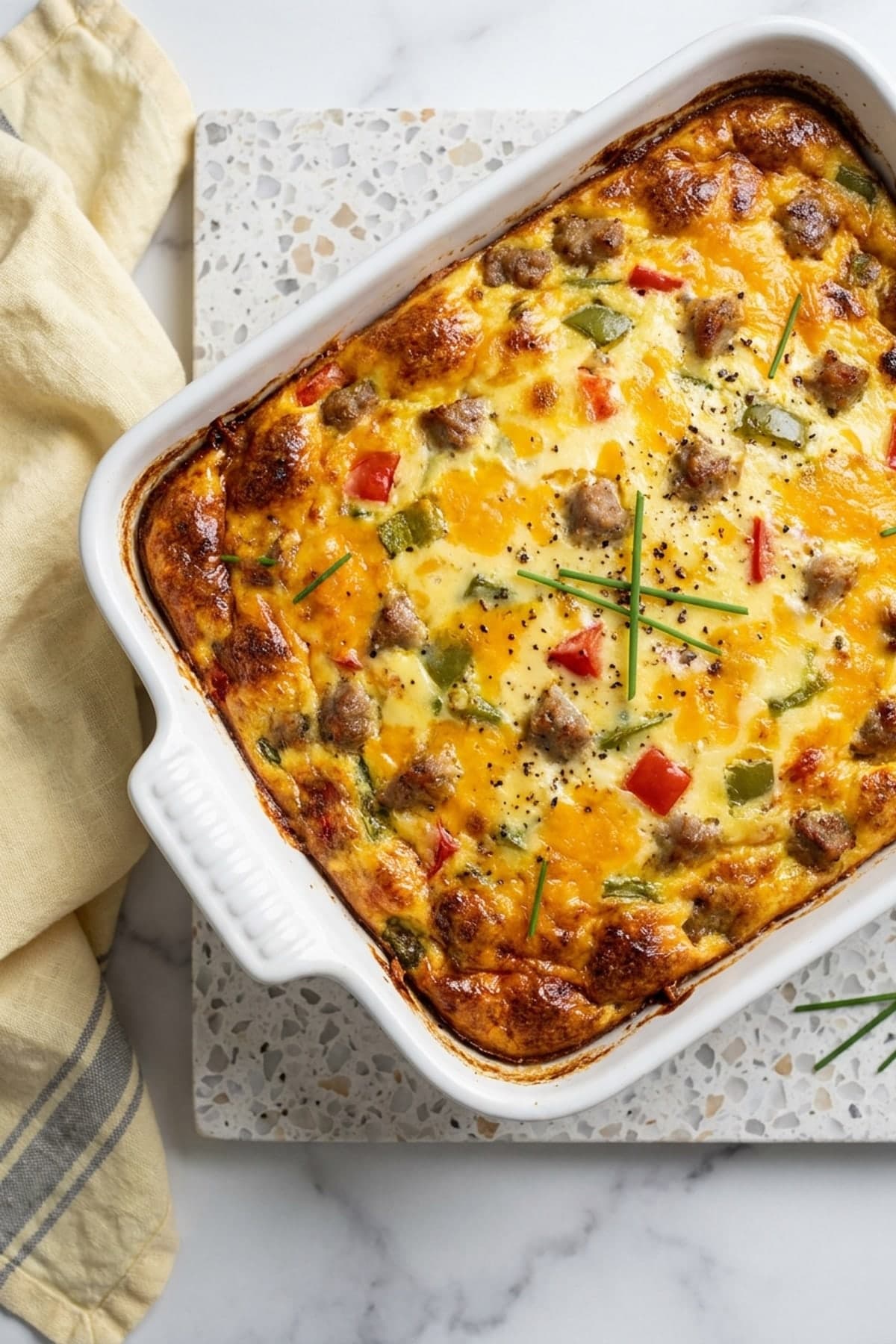
Hashbrown Breakfast Casserole With a Crisp Bottom Layer
1 hr 20 min total8 servingsServes 825 min prep
Measured ingredients, decisive texture cues, exact timing, freezing guidance, and a practical reheat make this breakfast casserole dependable.
French Toast Pancakes
- Sheet pan
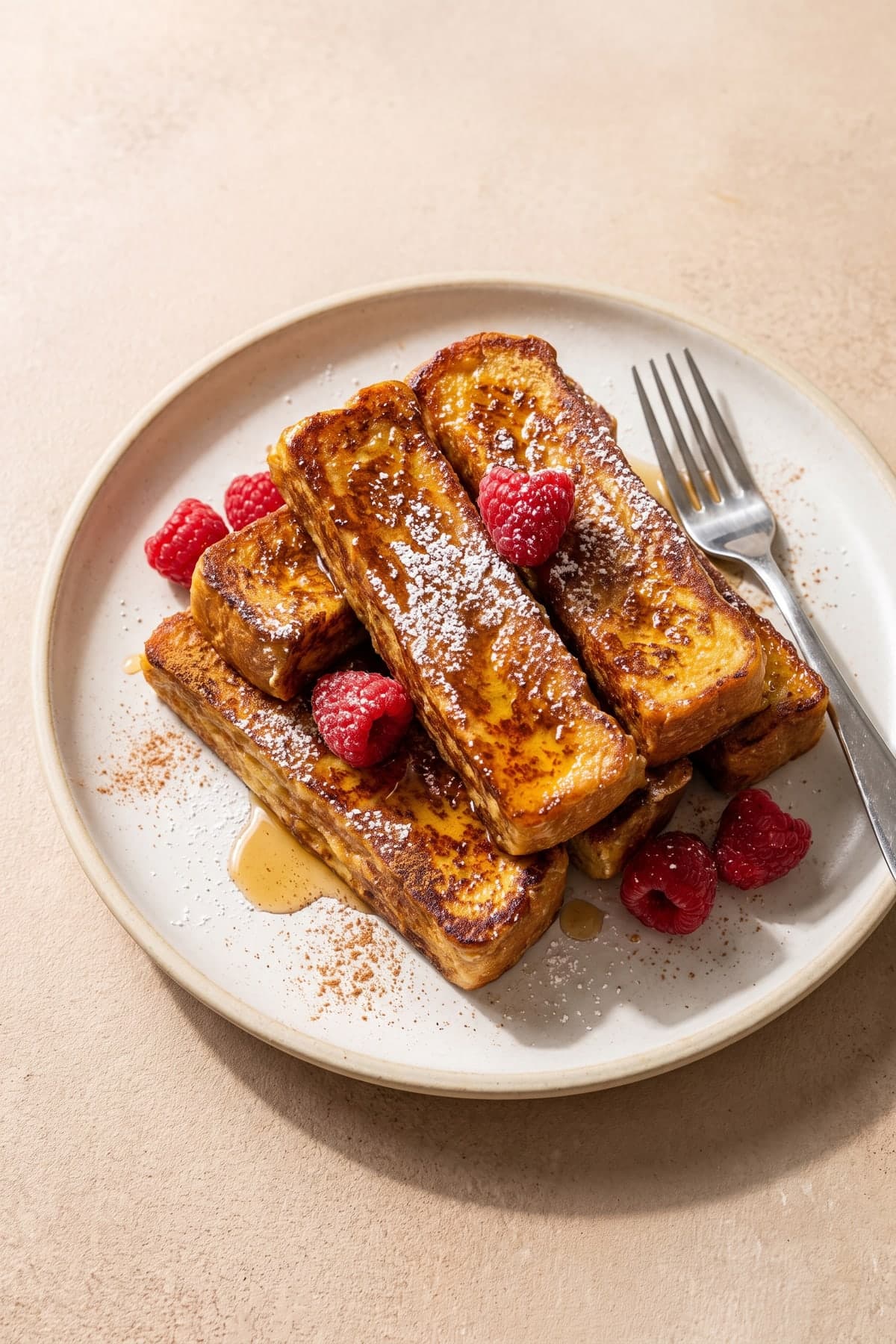
French Toast Sticks for the Freezer
40 min total18 sticks, serves 4Serves 420 min prep
Bake cinnamon French toast sticks on a sheet pan, freeze them separately, and reheat a few at a time for easy weekday breakfasts.

Eggs
Egg Recipes by Cooking Speed: 45 Fast Breakfast Ideas
Sort 45 egg recipes by real cooking time, from microwave mugs to baked casseroles, with reheat seconds and freezer notes for each.

Eggs
Egg Recipes Sorted by Actual Cook Time
Find 45 egg recipes arranged by cook time, from five-minute skillets to freezer-friendly breakfast burritos and baked egg dishes.

Eggs
Egg White Recipes: 25 Uses for Leftover Whites
Use leftover whites in 25 practical egg white recipes, including skillet breakfasts, freezer sandwiches, pancakes, sweets, and more.

Eggs
25 Egg White Recipes for Leftover Whites
Put leftover whites to work with 25 egg white recipes, from freezer friendly bites and wraps to waffles, cookies, and quick skillet meals.