
Fluffy Scrambled Eggs Without Milk or Cream
13 min total2 servings5 min prep8 min cookServes 2Category: Eggs
- Quick
Fluffy scrambled eggs do not need milk, cream, or a long ingredient list. They need gentle heat, a patient spatula, and eggs beaten until the whites and yolks are completely united. This version stays simple enough for an ordinary Tuesday, with butter for the pan and salt added near the end.
Use a nonstick skillet and keep the curds moving only after they begin to set. The goal is tender, softly piled eggs rather than dry pellets. They are quick for breakfast, but the same method works for a warm sandwich filling when the morning is already asking too much.
Why this works
- A thoroughly beaten egg mixture has no visible white strands, so the curds set at one pace and keep an even yellow color from start to finish gently.
- Low heat gives you time to fold the setting eggs into soft layers instead of scrambling them into small, dry pieces at the skillet edge too quickly or roughly.
- Butter coats the pan and contributes flavor, while salt added after the eggs leave the heat keeps the method direct, adjustable, and easy to scale for one or four.
Ingredients
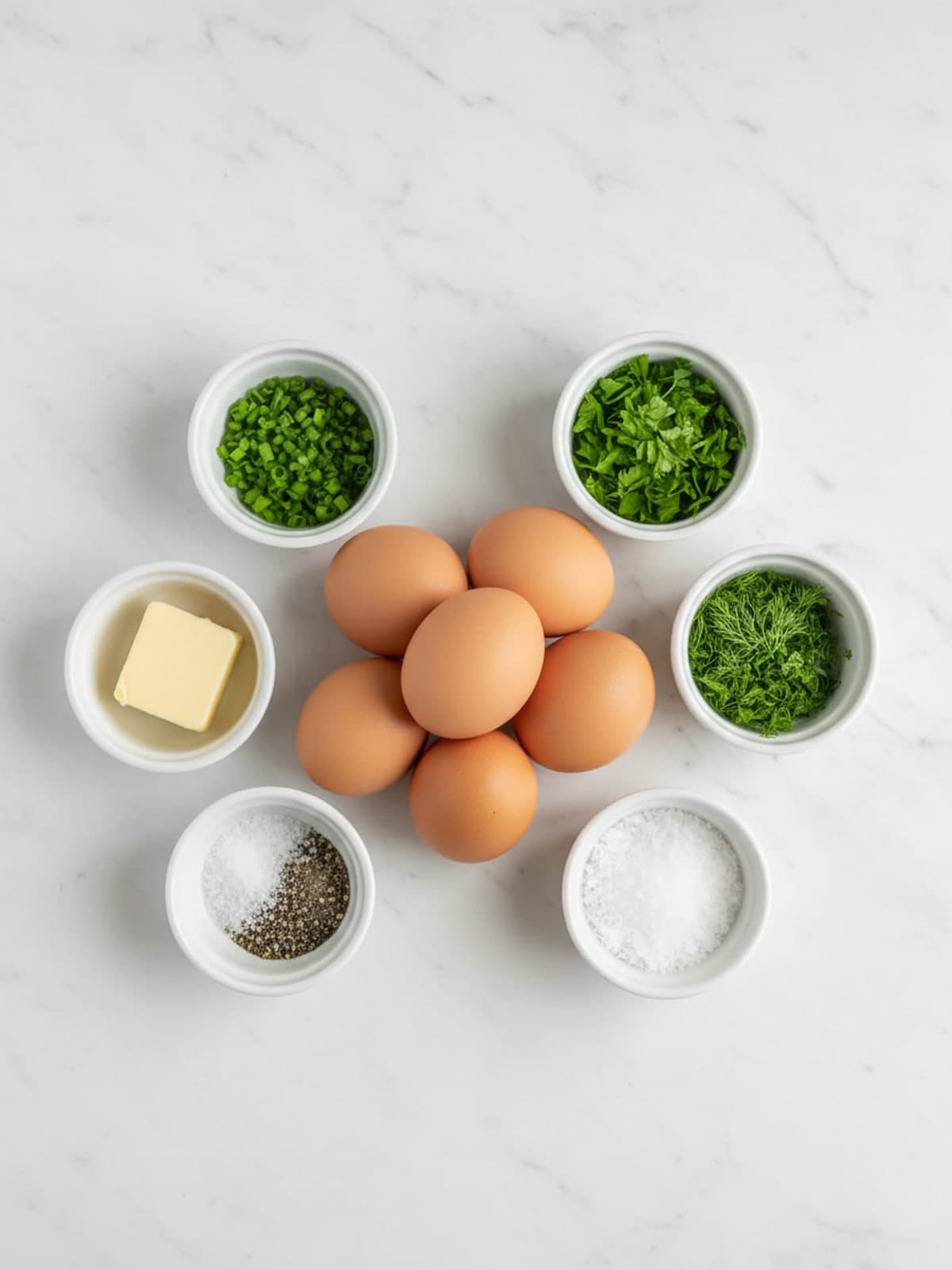
- 6 large eggs, cold (300 g)
- 1 tablespoon unsalted butter (14 g)
- 1/4 teaspoon fine kosher salt, plus more for serving (2 g)
- 1/8 teaspoon freshly ground black pepper, plus more as needed (0.3 g)
- 2 tablespoons thinly sliced fresh chives, optional (6 g)
- 2 teaspoons finely chopped flat-leaf parsley, optional (4 g)
- 1 teaspoon finely chopped fresh dill, optional (1 g)
- 1 pinch flaky salt, optional for serving (1 g)
Ingredient notes
- Large eggs are the whole structure here. Use cold eggs from the refrigerator, then whisk until the yolks disappear and the mixture looks uniform, with no clear strands clinging to the bowl or fork. Six eggs make a practical two-person skillet portion.
- Unsalted butter gives the pan a thin, flavorful coating and lets you control seasoning later. Use it before the skillet is hot enough to brown it; browned butter can leave little dark flecks and a stronger flavor.
- A 10-inch nonstick skillet gives six eggs room to spread into a shallow layer. A wider pan sets the eggs faster, so lower the burner and begin folding sooner; a crowded small pan can make the center lag behind.
- Fine kosher salt dissolves quickly over the finished eggs and is easier to distribute than coarse crystals. Hold it until the pan is off heat, then taste a small forkful before adding pepper, herbs, or cheese.
- Chives are optional, but their mild onion flavor suits eggs without making the pan wet. Slice them thinly and scatter them at the table, or fold them in after seasoning so their green color remains bright.
How to make Fluffy Scrambled Eggs Without Milk or Cream
Set up the pan
Place a 10-inch nonstick skillet over low heat. Set a flexible silicone spatula, serving plate, butter, and salt beside it. Scrambled eggs move quickly once they begin setting, and having the plate ready prevents extra time in the warm pan later.
Whisk until uniform
Crack the eggs into a medium bowl. Whisk with a fork or balloon whisk for about 30 seconds, scraping the bottom and sides, until the mixture is a single clear yellow color and lifts without streaks of white. Do not add milk or cream.
Melt butter gently
Add the butter to the skillet and let it melt slowly. Tilt the pan to coat the bottom, but do not let the butter foam hard or turn brown. The pan should feel warm rather than fiercely hot when the eggs arrive.
Let edges set
Pour in the beaten eggs. Leave them undisturbed for 15 to 20 seconds, until a thin cooked border appears around the edge. Run the spatula around that border and pull it inward, allowing uncooked egg to spread into the cleared space.
Fold broad curds
Continue drawing the eggs from the edges toward the center in slow, broad strokes. Pause briefly between folds instead of stirring constantly. When the eggs form soft, moist mounds with a little liquid egg still visible, reduce the burner to its lowest setting.
Finish off heat
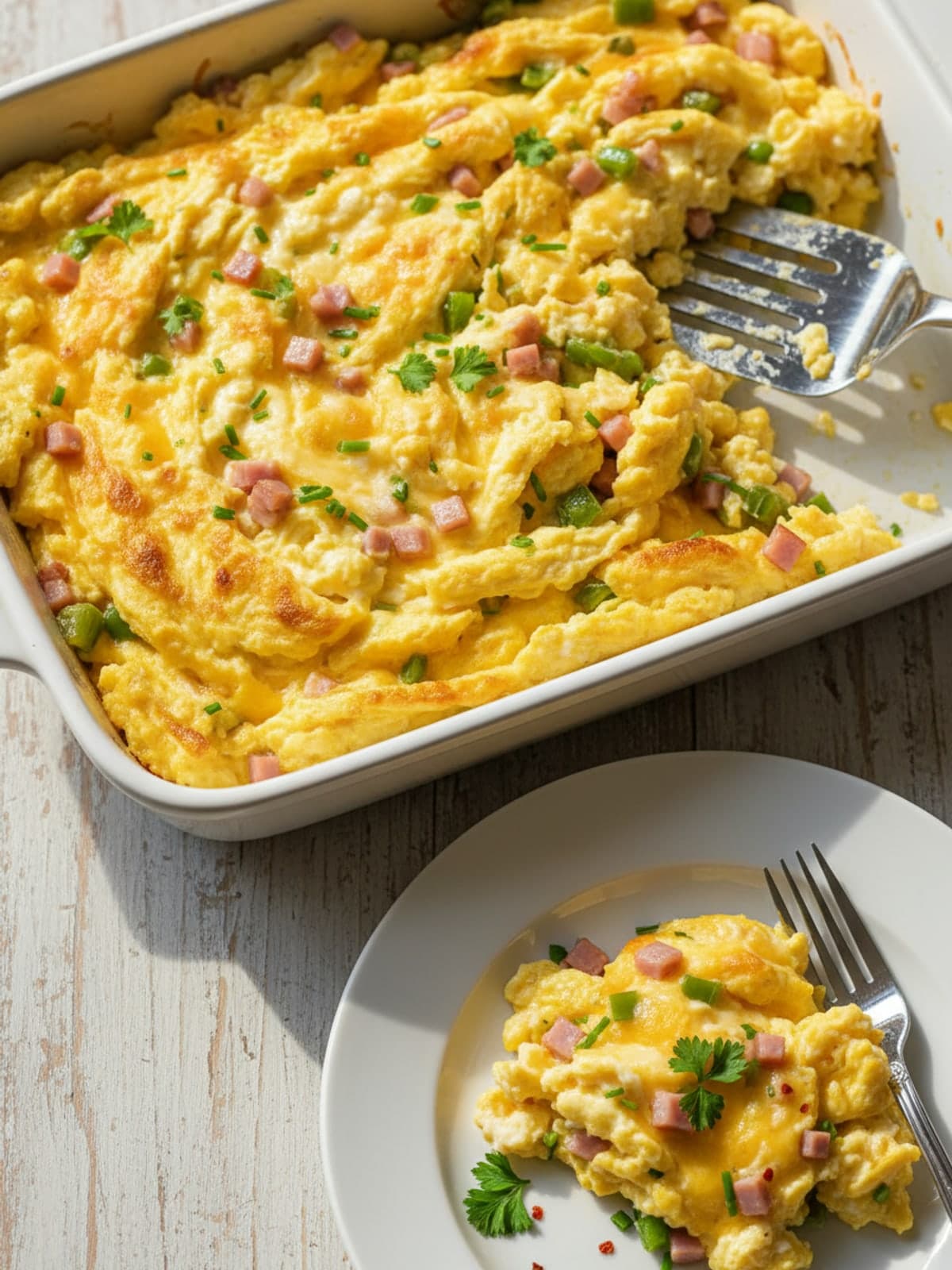
Keep folding until the eggs are softly set and reach 160°F in the center. Remove the skillet from heat, add salt and pepper, then slide the eggs onto the waiting plate. Finish with chives and serve immediately while the curds remain tender.
The recipe
Fluffy Scrambled Eggs Without Milk or Cream
PrintThese fluffy scrambled eggs use butter, low heat, and slow folds instead of milk or cream, creating tender curds with a clean egg flavor for two at breakfast.
Course: Breakfast · Cuisine: Other
- Prep
- 5 min
- Cook
- 8 min
- Total
- 13 min
- Yield
- 2 servings
Nutrition Facts
Per serving. Recipe yield: 2 servings.
- Calories
- 267 kcal
- Protein
- 19.1 g
- Carbs
- 1.5 g
- Fat
- 20 g
- Fiber
- 0.2 g
- Sugar
- 0.6 g
- Sodium
- 798 mg
For 2 servings, scaled from the per-serving figures. Recipe yield: 2 servings.
- Calories
- 534 kcal
- Protein
- 38.2 g
- Carbs
- 3 g
- Fat
- 40 g
- Fiber
- 0.4 g
- Sugar
- 1.2 g
- Sodium
- 1596 mg
For 3 servings, scaled from the per-serving figures. Recipe yield: 2 servings.
- Calories
- 801 kcal
- Protein
- 57.3 g
- Carbs
- 4.5 g
- Fat
- 60 g
- Fiber
- 0.6 g
- Sugar
- 1.8 g
- Sodium
- 2394 mg
Ingredients
Instructions
- Prepare skillet. Place a 10-inch nonstick skillet over low heat. Set a silicone spatula and serving plate beside the stove. Keep the plate ready before the eggs enter; final setting happens quickly.
- Whisk eggs. Crack eggs into a medium bowl. Whisk vigorously for about 30 seconds, scraping bowl, until yolks and whites become one even yellow mixture with no visible white streaks. Do not add milk, cream, or water.
- Melt butter. Add butter to warm skillet. Let it melt and coat bottom without browning. If it sizzles loudly or colors, lift skillet off heat briefly until pan settles.
- Set and fold. Pour in eggs and leave them undisturbed for 15 to 20 seconds. When a cooked ring appears at edge, pull it toward center with spatula. Let loose egg flow into each cleared section.
- Build curds. Repeat slow broad folds around skillet. Pause between strokes so eggs form large tender curds. Lower heat if bottom sets before you can fold it. Avoid chopping or constantly stirring eggs.
- Season and serve. When eggs are mostly set, fold until center reaches 160°F. Remove from heat, season with salt and pepper, and slide eggs onto waiting plate. Scatter with chives, parsley, or dill, if using, and serve immediately.
Notes
- For two smaller servings, halve every ingredient and use an 8-inch nonstick skillet. Cooking may finish one or two minutes sooner, so watch for the first set edge rather than the clock.
- Broad, soft curds are the goal, not tiny grains. If eggs dry, lower the heat next time and pause longer between folds.
- Chives add onion flavor; dill is brighter, while parsley stays neutral.
- fluffy scrambled eggs
- scrambled eggs without milk
- creamy eggs
- stovetop eggs
Tips
- Use a silicone spatula with a straight, flexible edge. It reaches the skillet curve and gathers the thin cooked layer before it turns into tiny, separate bits.
- Keep the burner low from the beginning. If the butter browns before the eggs go in, lift the skillet off heat for a minute, wipe it out, and restart with fresh butter.
- Do not beat air into the eggs for minutes. Thorough mixing matters more than foam; stop whisking once the mixture is completely uniform.
- Transfer the eggs as soon as they reach 160°F. The retained skillet heat continues setting the surface, so a lingering minute can change soft folds into firmer curds.
Serving and storage
Pile the eggs onto toasted sourdough with sliced avocado and a squeeze of lemon, or tuck them into warm tortillas with black beans and salsa. A few roasted cherry tomatoes or a side of fruit balances the soft texture without adding another pan. For a sandwich, layer the eggs with cheddar on an English muffin and eat it right away. Keep toast and eggs separate until serving so the bread stays crisp.
Questions people ask
Why are my scrambled eggs watery?
Watery eggs usually come from a skillet that is too hot, which makes parts of the egg tighten before the rest can set. Use low heat, let the edges form first, and fold in broad strokes. Also avoid adding vegetables that release liquid unless they are cooked and thoroughly drained first.
Can I cook these eggs in a stainless-steel skillet?
Yes, but use a well-seasoned skillet, enough butter, and very low heat. A nonstick skillet is more forgiving because the soft curds release easily. For a firm finish, cook egg dishes to 160°F in the center, then transfer them promptly to a plate.
Ratings and reviews
No ratings yet. If you have cooked this, yours would be the first.
Thank you. Your rating has been counted.
You have already rated this recipe, so this one was not counted.
Please choose between one and five stars.
Reviews are limited to 600 characters. Nothing was saved.
Names are limited to 40 characters. Nothing was saved.
That is a lot of ratings in one hour. Please try again later.
Before you go
Keep this one nearby for mornings when the carton is full and the plan is not. The method is small, but the order matters: beat thoroughly, use low heat, fold slowly, and plate without delay. Save it with your dependable toast or potato recipes, then adjust the herbs and pepper to match whatever is waiting in the refrigerator.
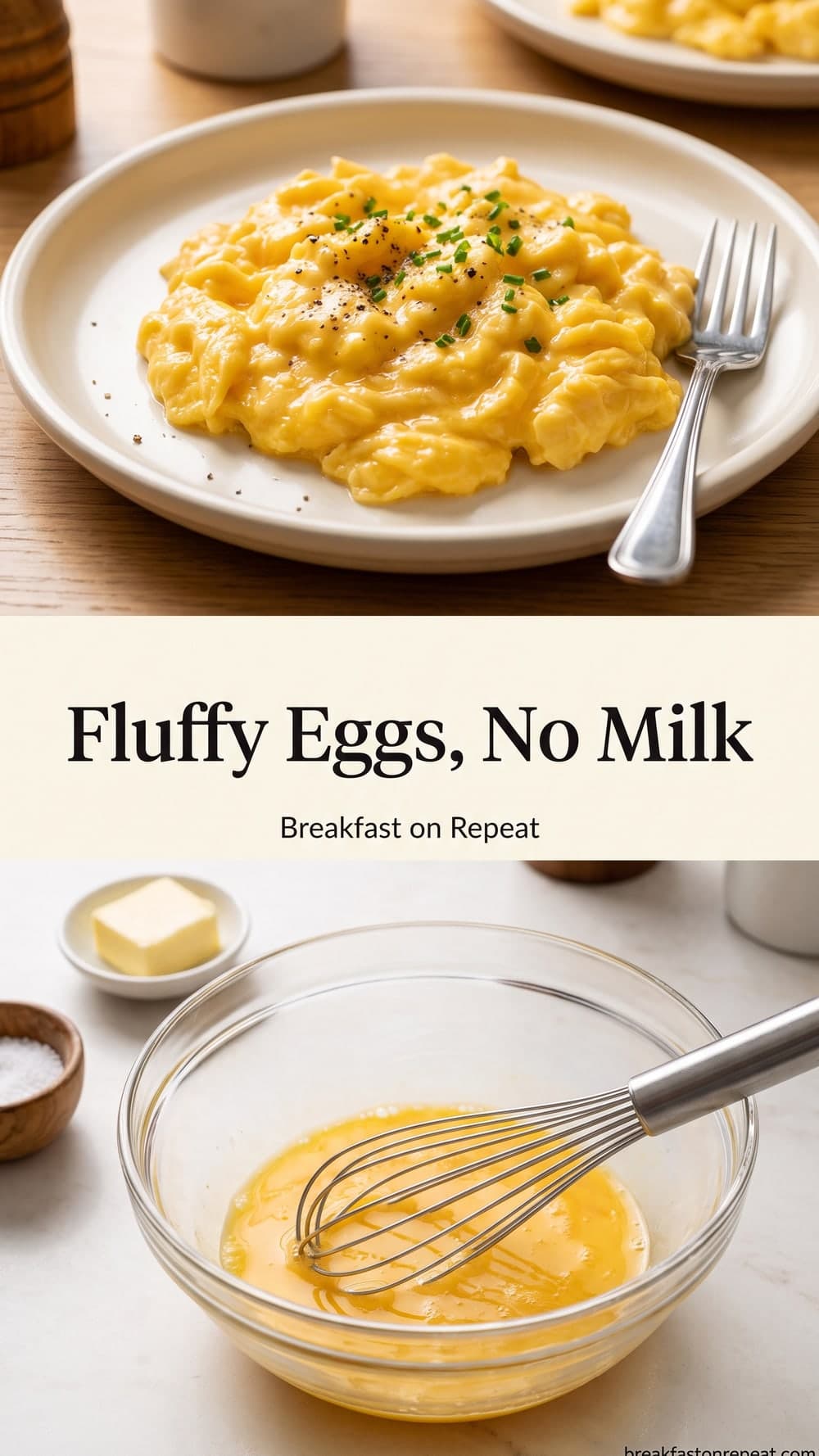
Save this for later
Fluffy Eggs, No Milk
Tags
- fluffy-scrambled-eggs
- eggs-without-milk
- stovetop-breakfast
- quick-eggs
Sources
- Egg dishes should be cooked to 160°F.What You Need to Know About Egg Safety | FDA
- Cooked egg dishes keep 3 to 4 days refrigerated.Cold Food Storage Chart | FoodSafety.gov
- Perishable food should be refrigerated within 2 hours.Leftovers and Food Safety | Food Safety and Inspection Service
Read next

Eggs
- Quick
Scrambled Eggs With Cottage Cheese and Visible Curds
20 min total2 servingsServes 212 min prep
Scrambled eggs with cottage cheese stay soft and creamy with distinct curds. Use low heat, a flexible spatula, and one skillet for an easy breakfast.
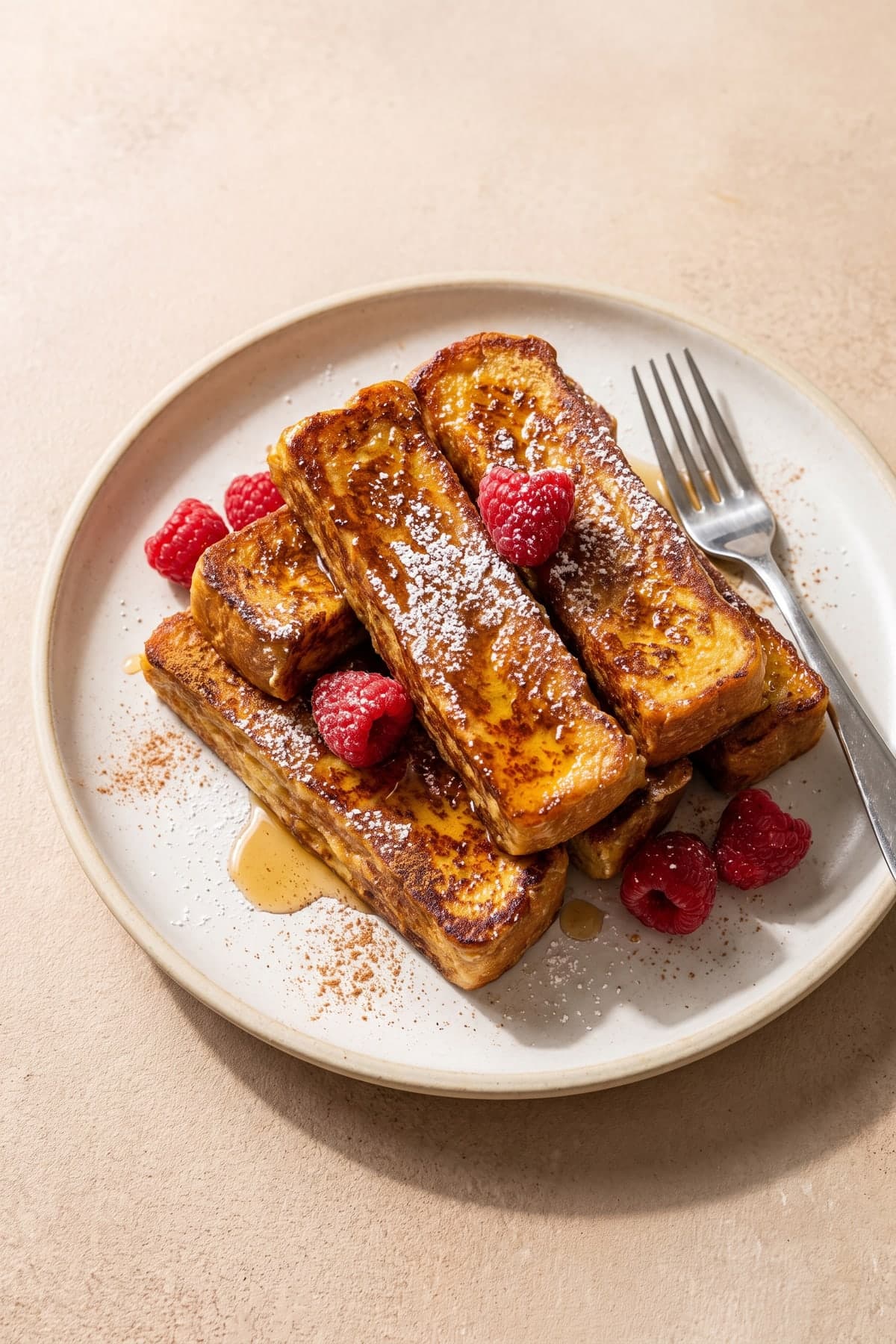
French Toast Pancakes
- Sheet pan
French Toast Sticks for the Freezer
40 min total18 sticks, serves 4Serves 420 min prep
Bake cinnamon French toast sticks on a sheet pan, freeze them separately, and reheat a few at a time for easy weekday breakfasts.

Eggs
Egg Recipes by Cooking Speed: 45 Fast Breakfast Ideas
Sort 45 egg recipes by real cooking time, from microwave mugs to baked casseroles, with reheat seconds and freezer notes for each.

Eggs
Egg Recipes Sorted by Actual Cook Time
Find 45 egg recipes arranged by cook time, from five-minute skillets to freezer-friendly breakfast burritos and baked egg dishes.

Eggs
Egg White Recipes: 25 Uses for Leftover Whites
Use leftover whites in 25 practical egg white recipes, including skillet breakfasts, freezer sandwiches, pancakes, sweets, and more.

Eggs
25 Egg White Recipes for Leftover Whites
Put leftover whites to work with 25 egg white recipes, from freezer friendly bites and wraps to waffles, cookies, and quick skillet meals.